

Blog Archive:
Beneath Our Feet

An Experience with International Soil Research Networks
By Adam Cobb, Postdotoral Researcher, Oklahoma State Univeristy, USA
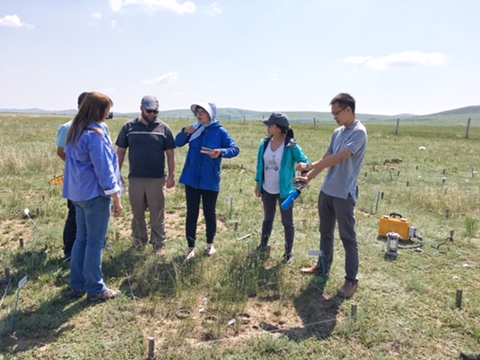
Collaborators discuss grassland soil carbon research near Hulanbuir, China. Photo credit Jiqiong Zhou
There is nothing quite like touching new soil. The soils of China are ancient, but this is my first chance to grab a handful. After leaving our hotel in Beijing at 4am, flying for three hours, and driving on a bombed-out road for another hour, we are in the steppe grasslands of Inner Mongolia in Northwest China.
We are here – with chestnut-colored soil in our hands – because of Jiqiong Zhou (soon to be Dr. Zhou) and her advisor, Dr. Yingjun Zhang. Sixteen months previously, Jiqiong (who also goes by Jolie) emailed Dr. Gail Wilson and asked if she could spend nine months with us at Oklahoma State University. Jiqiong’s research links above- and belowground influences on grasslands with particular emphasis on plant-microbial relationships, such as rhizobia/meliloti and arbuscular mycorrhizal symbioses, which is precisely Gail’s area of expertise.

Cattle grazing in the meadow steppe grasslands of Inner Mongolia, China. Photo credit Jiqiong Zhou
This PhD student exchange and research collaboration has been amazing. While Jolie was with us, she had the chance to visit the Konza Prairie Biological Research Station (NSF-LTER site) near Manhattan, Kansas, USA. We went up to establish grassland restoration plots, but took time to show her around the station, and particularly to see the bison. Later, she told us how lucky she thinks we are to research in such productive grasslands.
Back in China, her research grasslands are not as productive. With typically 300-400mm annual precipitation, they are a contrast to our tallgrass prairie systems. However, these semi-arid grasslands are critically important, not just for local sheepherders, but for soil ecologists. Climate models predict many mesic grasslands will become more arid during the 21st Century. It is crucial that we untangle the belowground drivers influencing aboveground productivity, plant species diversity, and ecosystem functions in semi-arid grasslands, if we are to manage our global grazing resources in a warmer and drier world.

Bison on Konza Prairie Biological Research Station near Manhattan, Kansas, USA. Photo credit Adam Cobb
This is where Jolie, and her colleagues in Dr. Zhang’s lab, conduct their valuable soil research. We walk across her plots, and see the yellow-flowered alfalfa (Medicago falcata) she established to rehabilitate these overgrazed areas. Belowground, she assessed how these reseeded legumes influence nutrient cycling, soil microbial communities, and soil metabolites. Today is a hot and sunny one, and we remark at how much data she has collected in these plots, often working by herself.
Jolie’s research is the combination of mechanistic assessments (e.g., microbial genomics) and applied questions. As part of the China Agricultural University’s College of Animal Science and Technology, she is keenly aware that these grasslands are provisioning ecosystems. Grazing treatments (real or simulated) are always part of the research design. Jolie is passionate about reseeded alfalfa because it can regenerate the landscape, increase incomes, and improve soil health.
Gail and I had an amazing experience with Jolie, Dr. Zhang, and their associates. We learned more about their culture, and we touched China’s soil. We are currently planning paired experiments assessing grassland plant and soil dynamics in both China and the USA. These collaborative research networks are key as we strive to conserve and restore global soils.

Soil Microbes in Ecological Restoration
This post originally appeared on the Restoration Blog from the Midwest-Great Lakes Chapter of the Society for Ecological Restoration
By: Elizabeth Bach, Global Soil Biodiversity Initiative (formerly Illinois Natural History Survey), Jonathan Bauer, Indiana University, Liz Koziol, Indiana University, USA
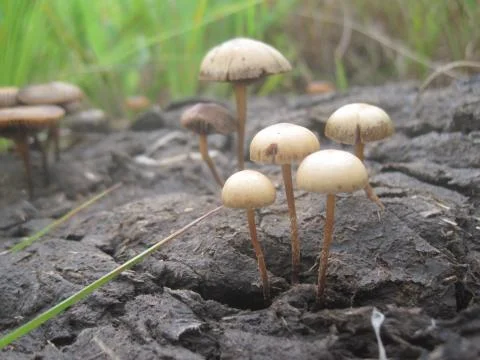
Increasingly, ecological restoration goals include belowground ecosystem services including reducing soil erosion, retaining soil nutrients, restoring plant-soil feedbacks, and potentially storing carbon to reduce CO2 concentrations in the atmosphere. Soil organisms are involved in providing all these services, as such, interest in soil communities is booming in the restoration community.
Within the tallgrass prairies of the Midwest and Great Lakes region, there has been exciting progress made in this area of research, with scientists advancing our foundational knowledge of soil ecology, gaining insights into how soil microbial communities respond to ecological management, and developing techniques for the reintroduction of soil microbial communities to restoration sites. At the 2016 meeting of the SER-MWGL, we organized a symposium featuring early and mid-career scientists actively contributing to this rapidly developing field. The symposium featured Dr. Kathryn Docherty (Western Michigan University), Dr. Sara Baer (Southern Illinois University Carbondale), Dr. Elizabeth Bach (Illinois Natural History Survey), Dr. Jonathan Bauer (Indiana University), and Liz Koziol (Indiana University).
Kathryn Docherty kicked-off the symposium sharing her research focused on the function of soil microbial communities and their recovery in restored tallgrass prairie.
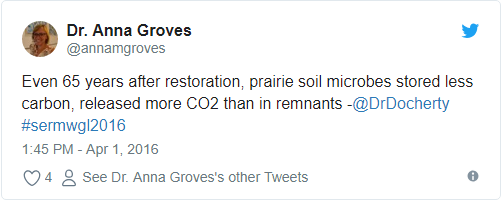
This is an important finding for two reasons. First, it emphasizes the importance of protecting the limited native prairie left in order to keep soil carbon out of the atmosphere. Second, microbial recovery may take much longer than aboveground recovery. However, it might be possible to restore soil communities and their effects on the soil. Docherty found that inoculation with microbes from remnant prairies and planting of diverse plant communities can stabilize microbe-driven carbon cycling.
Sara Baer built on these conclusions with a cross-continental dataset. Her work from restored grasslands in Nebraska, Illinois, Kansas, and the Free State, South Africa show that abiotic soil factors, like soil texture, play an important role in recovery of microbially-mediated soil functions like carbon and nitrogen storage. Even when aboveground plant community recovery was similar, belowground communities did not recover on similar trajectories. This provides another key insight, that soil type may be an important consideration when prioritizing sitesfor ecological restoration to meet goals focused on belowground ecosystem services.

Elizabeth Bach focused on soil fungal community recovery in restored and remnant prairies across Illinois. Supporting the conclusions of Docherty and Baer, Bach found distinct fungal communities in restorations compared with remnants, and this pattern was consistent on different soil types at multiple locations. In addition, microbial activity varied within the growing season, and these seasonal patterns were also similar across soil types and in remnants and restorations, although overall activity was greater on silty loam soils. These data are very important to restoration practices because they suggest some microbial recovery patterns are consistent across sites.
Jonathan Bauer dove deeper into soil fungal community relationships, sharing his work using fungi to facilitate the establishment of “late-successional” prairie plants:

Bauer’s work shows that fungi, particularly arbuscular mycorrhizal fungi that form mutualistic associations with plants, are important to the establishment and success of many desired plant species with high floristic quality in prairie restoration. Bauer showed that early successional species, many of which have low floristic quality, are most likely to establish in a restoration and are less mycorrhizal, such as Ambrosia artemesiifolia and Rudbeckia hirta. In contrast, plants that are late successional plants and of high floristic quality tend to be both very responsive to soil fungi and are less likely to establish from seed in a restoration, such as Amorpha canescens and Veronicastrum virginicum.
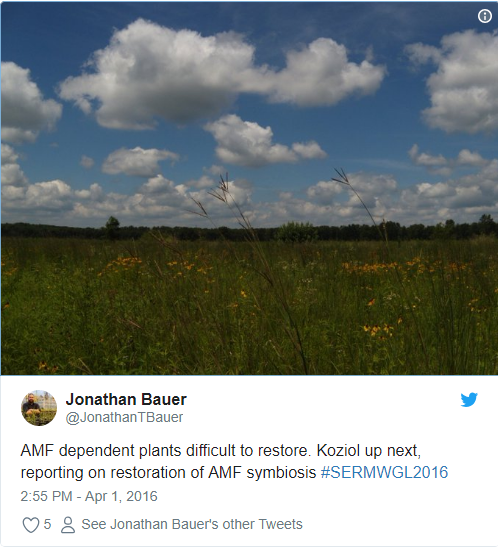
Liz Koziol rounded out the symposium sharing her exciting work using inoculations of soil microbial communities to improve late successional establishment in tallgrass prairie restoration.
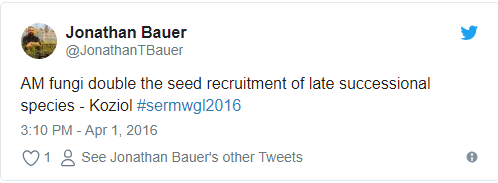

Koziol demonstrated that adding prairie microbial inocula, specifically arbuscular mycorrhizal fungi acquired from remnant prairie soils, can be effective at improving the establishment of high quality prairie plant communities from seed plantings. Liz found that the particular composition of arbuscular fungal species at a restoration site can have dramatic effects on the plant species that establish there, as some fungi promote weeds while other promote desirable species. Liz cautioned against many commercially propagated inocula sources, where origin and quality of the fungi is unknown. Instead, Koziol suggested that adding a diverse AM fungal inocula from an undisturbed reference site more quickly facilitates late successional prairie establishment.
The symposium ended with open questions for all speakers from the audience. The engaging discussion included questions about how restoration practitioners can incorporate new belowground knowledge and measure success of belowground recovery. Here’s what the panelists suggested:
Baer: easiest, quickest single measure of belowground recovery is soil bulk density, essentially the density of a known volume of soil. Soil density covaries with microbial communities and functioning
Docherty: get roots in the ground, establishing plants is key to microbial recovery, although belowground recovery will be much slower
Bach: feed the microbes to feed the full ecosystem, more roots and inputs to microbes will increase belowground functioning and feed the aboveground community
Koziol: consider inoculations, but source is very important. Consider fungal/microbial nurseries that produce native and locally adapted microbial inocula, just like plant nurseries
Bauer: target to site goals, different goals may require different actions, if goal is establishing a late-successional plant community, invest lots in AMF mutualisms
Relevant additional reading on the topic of soil microbes in restored environments: