

Blog Archive:
Beneath Our Feet

Around the world: Exploring soils and root of all life
This post originally appeared in the Human Nature blog from the Sustainability Leadership Fellows at the School of Global Environmental Sustainability at Colorado State University.
Written by Tandra Fraser, 2015-2016 Sustainability Leadership Fellow and Postdoc at the School of Agriculture, University of Reading, London.
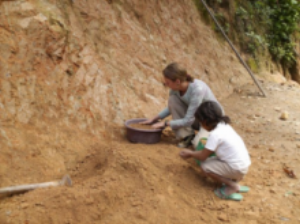
What do the Great Plains of North America, the tropical hillsides of Honduras and the valleys of Antarctica all have in common? The answer is soil, of course!
Soil is the foundation of terrestrial life on earth wherever you may travel. Located at the interface between the atmosphere, biosphere, lithosphere and hydrosphere, it is the naturally occurring surface layer formed by complex processes and interactions. Being raised on a farm in the Great Plains of Canada, I was connected to soil from a very young age as I went from making mud pies to growing food. Nowadays, as a soil scientist, I get to explore soil, its many uses, and its inhabitants.
Soil is the basis for much more than just agriculture. For example, in rural Honduras, the same soil that is used for growing staple crops such like maize, beans and coffee, is also used for building adobe houses, creating functional pottery, and even building stoves to cook the food they grow.
These same soils provide a home to countless soil organisms, including everything from large burrowing creatures such as badgers to microscopic worms, bacteria and fungi. Although we cannot see many of these species with the naked eye, they play an important role in all of our lives.
n many regions of the world, mineral fertilizers are not an option for crop growth and producers must depend on soil organisms for nutrient cycling to provide nutrients for plant growth. Organisms in the soil have evolved mechanisms to obtain nutrients. For example, many bacteria excrete enzymes into the environment when they do not have enough phosphorus to function and/or grow. These phosphatase enzymes can break down an unusable form of phosphorus that occurs naturally in the soil, into orthophosphate that can provide nutrition to the organism and will eventually be released into the environment and can be taken up by plants.
The critters that live in the soil, and their activities, involve many complex interactions between chemical, physical and biological components. These organisms aren’t just interesting to look at, they also provide essential ecosystem services upon which all plants, animals and humans depend. Although soils are extremely heterogeneous, organisms are contributing to decomposition of organic matter and nutrient cycling, regardless of the ecosystem.
Even in Antarctica, one of the windiest, driest and coldest places on earth, the soil is alive. Although the soil food web is less complex than it may be in a tropical forest, soil animals and the microbial communities play an essential role in the functioning of this pristine ecosystem. It is common to find nematodes, tardigrades and rotifers living in these soils. But even this region is not immune to global change as demonstrated by research as part of the McMurdo Dry Valley Long Term Ecological Research (LTER) Network. This site has been essential in demonstrating how the ecology in the soils of the region has been changing over the past 25 years. It also emphasizes the interconnectedness of the glaciers, lakes, streams, soils and air and the far reaching effects of human activities.
At all corners of the globe, soil and its life are constantly being threatened by human activities and global change. Land is being degraded at astonishing rates and this ultimately has an effect on food production, water quality, and pest and pathogen control, to name a few. The economic cost of land degradation is US$40 billion each year, as estimated by the United Nations Food and Agriculture Organization. As cities continue to expand, soils are paved over and organisms are unable to function, and humans, literally, become disconnected from the land, separated by a layer of concrete.
“The soil is the great connector of our lives, the source and destination of all.” - Wendell Berry, The Unsettling of America, 1977
Despite the fundamental importance of soil for all plant, animal and human life, it is often taken for granted. Scientists, policy makers and land managers must all work together to identify and implement solutions for conserving soil and all that live there. The Global Soil Biodiversity Initiative has been working to raise the profile of soil biodiversity and all its wonder around the world.
Soil Biodiversity in the European Commission Headquarters
Gerlinde B. De Deyn
Associate Professor at Wageningen University

As a European and Belgian citizen, I have seen the Berlaymont building in Brussels many times before in person and on TV or in newspapers when European issues were being addressed. I have always associated the building with politics and a beehive of translators to enable multi-language meetings.
Last week, however, my association to the Berlaymount building drastically changed. I visited the building for the first time and not alone… with me I brought thousands of springtails, millions of nematodes and at least as many bacteria along with a microscope to reveal their existence! I had not brought them along to show the security people, who attempted to ensure the little critters are not harmful and found just the contrary. Instead, I brought my little associates to show the 15,000 people that came to visit the EU open doors day in Brussels, 17th of May 214. On this day EU institutions open their doors to the public, so they can join in celebrations and learn more about European Union events and activities.

I participated in the EU open day as a Marie Skłodowska-Curie fellow, taking part in the stand of Research and Innovation by the European Commission. On show: roots with/without nodules, nematodes, springtails and mycorrhizal fungi.

My previous EU outreach activity, the EU Researchers’ Night in 2013 (you may remember my blog http://blog.globalsoilbiodiversity.org/article/2013/10/08/researchers-night-teaching-children-exchanging-research-andeating-bugs) proved to be a good preparation for this event. Of course, I could not do without the European Atlas of Soil Biodiversity AND the French version, L'Atlas Européen de la Biodiversité des Sols. Thank you, JRC Ispra for sending multiple copies of both straight to EC Brussels, which we distributed to very interested people. For all those who do not yet have a copy in English or French and would like one check out these links: http://eusoils.jrc.ec.europa.eu/library/maps/biodiversity_atlas/
http://eusoils.jrc.ec.europa.eu/library/maps/biodiversity_atlas/french.html
For all those who are currently writing their contribution to the Global Soil Biodiversity Atlas: keep going. It is well worth it and already quite a few people are looking forward to its appearance. I could of course not mention the Global Soil Biodiversity Atlas when talking about on-going projects!

The European Atlas of Soil Biodiversity, my buddy at the outreach activities! Thank you to all who contributed.
I had little time to explore the other stands given the overwhelming number of visitors to the research stands, but I was able to get a sense of what the other fellows are working on as we were setting up our stands. Some of the other work featured that day included: the collection of wave and wind energy, e-nose (detection and quantification of air pollution), and 3D-printing of food, … No insect tasting this time as far as I could see. When thinking about cross linkages between disciplines I can see potential applications of the 3D-printing and e-nose technology also in our field of soil ecology.
Consequences of deforestation on aboveground biodiversity
Thomas Crowther
Yale Climate and Energy Institute
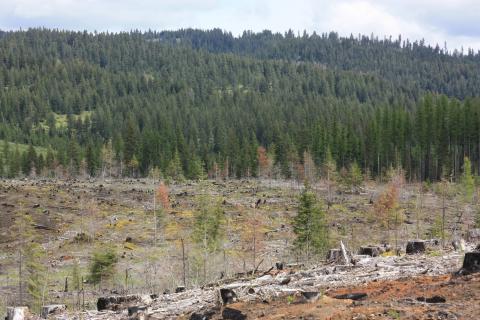
The consequences of deforestation for aboveground biodiversity have been a major scientific and political concern for decades. In contrast, despite being a dominant component of biodiversity that is essential to the functioning of natural ecosystems, the responses of belowground biodiversity to land-use change have only recently begun to receive attention. The advent of next generation sequencing has recently enabled us to comprehend, for the first time, the full extent of microbial biodiversity responses to land-use change.
Two studies conducted in the Amazonian rainforest suggest that, in contrast to plants and animals, bacterial diversity increases following forest removal. This increase is coupled with reduced bacterial biomass, effects which are driven by reductions in soil organic matter concentrations. However, on a continent-scale, effects of deforestation on organic matter concentrations are highly idiosyncratic, with negligible effects in some regions. No study has explored the consequences of this idiosyncrasy by investigating the effects of deforestation across multiple sites/biomes. Thus, we are limited in our capacity to identify global trends or unifying mechanisms governing microbial susceptibility to land-use change. Furthermore, although fungi are the dominant decomposing agents in forest ecosystems, they have been completely ignored in continent-scale studies.
We take advantage of a unique set of 11 well-maintained, long-term experimental research sites to explore the effects of deforestation on fungi, bacteria/archaea and their functional potential, across the Northern United States. Using Illumina sequencing we explore community-scale microbial responses across tropical, temperate and boreal biomes and identify the unifying principles governing the vulnerability of soil biodiversity to forest removal.
We reveal consistent effects of deforestation at the continent-scale, but the magnitude of the community response is highly variable, with strong effects of forest removal in some sites and negligible effects in others.
The magnitude of the effect was highly predictable, and governed almost exclusively by soil texture, effects of which are mediated by the increased capacity of fine-textured soil to retain soil organic matter following forest conversion. Mean annual temperature also explained the susceptibility of one metric of fungal community vulnerability, an effect driven by the specialized nature of mycorrhizal associations with forest trees at higher latitudes.
The strength of these relationships enabled us to predict (map) the vulnerability of microbial (fungal and bacterial) biodiversity to change in vegetation cover at the continent scale. Our model was validated using previously published data from single-site studies in Brazil. The microbial community changes were associated with distinct changes in heterotrophic soil respiration, providing a direct consequence of deforestation for terrestrial carbon exchange.
The highly predictable nature of microbial susceptibility, at the continent-scale, can serve as a guideline for future intensive forest management, and opens the door for a new generation of ecosystem models that incorporate entire microbial communities to anticipate the consequences of land-use conversion on biodiversity and carbon storage of forest ecosystems worldwide.
The study: Predicting the responsiveness of soil biodiversity to deforestation: a cross-biome study

Mapping biodiversity with environmental niche modeling (PG9)

Left: Figure 1. Schematic of the environmental niche modeling methodology. Environmental niche modeling uses a statistical model to combine community samples with maps of environmental variables to generate predicted diversity maps or range maps. In this example, most of the samples are from North America, so although a global prediction is shown, a prediction to just North America may be better warranted.)
Maps of biodiversity at global and continental scales plays a pivotal role in ecology, evolutionary biology, and conservation biology. Diversity maps give insight into the action of ecological and evolutionary processes at large scales, and they can guide management decisions. The diversity patterns of many macro-organisms are known; for instance, the global ranges of almost all known mammals, birds, and amphibians are available at a resolution of approximately 100 km. However, until recently, the ranges of many micro-organisms — including soil bacteria — have remained almost entirely unknown. In this post, I will describe an increasingly useful approach to inferring the diversity patterns and ranges of soil bacteria and other micro-organisms.
The reasons that the ranges of soil bacteria have remained elusive are at least two-fold.
First, sampling of soil bacterial communities has historically been sparse: Range maps of many macro-organisms are often based on many thousands of observations and museum records. By contrast, until recently the number of soil bacterial communities that have been sampled has been orders of magnitude smaller. However, the availability of cheaper and faster sequencing is rapidly changing this picture, and today numerous soil bacterial communities have been sequenced with additional surveys underway.
The second obstacle to mapping the ranges of soil bacteria is incomplete censusing of bacterial communities. Unlike macro-organism communities, many of which can effectively be censused given sufficient effort, fully assessing the diversity of bacteria at a location has been impossible. Although completely censusing most soil bacterial communities continues to remain impractical, improvements to sequencing technology have made it possible to get an increasingly complete picture of the bacterial communities.
Against this backdrop, we recently sought to ask not just whether we could map the ranges and diversity patterns of soil bacteria, but whether we could map the ranges and diversity patterns of soil bacteria across a largely extirpated ecosystem, the North American tallgrass prairie (Fierer et al, 2013, Reconstructing the Microbial Diversity and Function of Pre-Agricultural Tallgrass Prairie Soils in the United States. Science, 342:621-624). Historically, this ecosystem covered over 65 million ha of the United States. Today, as much as 99% of the tallgrass prairie has been lost to agriculture and other land use modification. These modifications have profoundly altered the soil communities. However, the bacterial communities that presumably inhabited the tallgrass prairie can still be sampled from the few tallgrass prairie relics that remain undisturbed, for instance in nature preserves and old cemeteries. We used samples to form these communities to infer the likely distributions of soil bacteria across the original extent of the tallgrass prairie.
To infer the distributions across the original tallgrass prairie extent, we used environmental niche modeling, a powerful methodology developed for studying the distribution of macro-organisms. To generate range maps, niche modeling combines (i) a limited number of community samples with (ii) maps of climate conditions and other environmental variables.
The idea behind niche modeling is straightforward: using the community samples, one infers the niches of taxa — e.g., bacterial OTUs or phylotypes – for the variables for which maps are available. For instance, if we had maps of precipitation and soil pH, we would check how the occurrence of an OTU of Acidobacteria depends on these variables. If it depends on these variables, for example the OTU is found only in samples with high precipitation and high pH, then we can draw its range by referencing the maps of precipitation and soil pH, shading in only regions that meet the OTU's precipitation and pH requirements.
Although the general idea behind environmental niche modeling is straightforward, the details are complicated. The challenges include: Out of the many possible environmental variables that might predict a distribution of an OTU, how do we choose the important ones? How do we model non-linear relationships between the occurrence of OTUs and environmental variables? How do we prevent overfitting? Can we reasonably assume niche conservatism through space? Do dispersal limitation and interspecific interactions substantially affect range boundaries? What regions of the inferred maps require excessive extrapolation in environmental space, and how can we control the amount of extrapolation? Can we map diversity patterns in addition to ranges?
A large body of ecological and statistical research has been devoted to addressing these and other questions, and sophisticated niche modeling methods have been developed. In many circumstances, these methods can allow the construction accurate range maps.
We applied these niche modeling methods to map the distributions of the tallgrass prairie bacteria. To make these maps across the original extent of the tallgrass prairie, we noted that climate conditions have changed little across this ecosystem in the last 150 years. Thus, if we found that a particular set of climate variables predicted the distribution of a taxon across the existing prairie relics, this would suggest that we could predict the original distribution across the prairie from the spatial distribution of this climate variable across the original extent of the tallgrass prairie. We found that climate variables were indeed excellent predictors for some taxa, and that we could additionally predict the spatial distributions of diversity across these region using climate variables. The results indicated that the diversity patterns of bacteria are sufficiently associated with climate variables that range maps can be constructed, and that their diversity patterns were driven largely by the distribution of Verrucomicrobia, a relatively little-studied phylum of bacteria.
Environmental niche modeling promises to be an important addition to soil microbial ecologists' computational toolbox. The application of environmental niche modeling to mapping tallgrass soil bacterial communities is but one example of the utility of this methodology. For instance, it may be useful for identifying microbial interactions, predicting the effects of climate change on microbial communities, and identifying unsampled regions that are likely to harbor beneficial or harmful bacterial taxa. Recent advances in sequencing technology, ongoing sampling of additional bacterial communities, and the development of the appropriate statistical tools are combining to make environmental niche modeling an increasingly practical and useful methodology for mapping the distributions of soil microbial communities.

Weathering the storms
One of the consequences of current climate warming is that the amount and intensity of extreme weather events is increasing. A rapidly growing number of studies show that these extreme events may have complex and often indirect ecological consequences, however, little is known about the role of soil biodiversity in these processes.
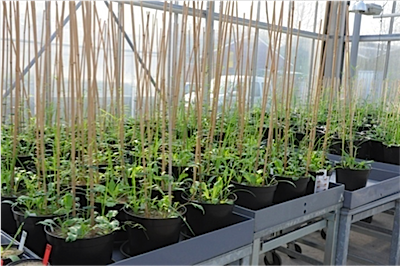
Photo by Annelein Meisner
In a recent paper in PNAS (2013; 110:9835-9838) Annelein Meisner and colleagues show that extreme weather events may tip the balance between native and exotic plant species in vegetation. The researchers dried and wetted soils before planting a mixed vegetation of native and genetically related exotic plant species. Although all soils were re-set to standard moisture conditions before planting, the differences in plant biomass distribution between natives and exotics were striking. In soils that had been dried, exotic plant species became dominant, whereas in control soils, exotics and natives were more in balance. The role of different nutrient availabilities leading to the shifts in plant dominance could be largely ruled out.
In a second experiment, soil samples were inoculated into sterilized soils and planted again with the same plant mixtures as before. Interestingly, most effects could be recalled, suggesting that soil microbes were responsible for the plant responses to the extreme weather events. This study revealed that soil biodiversity might memorize effects of extreme weather events, which may influence plant community composition that was established after the abiotic stress had been taken away.
The study by Meisner and colleagues shows that effects of extreme weather events - due to climate warming - may work out on ecosystems in quite unpredicted ways.
The study also gives rise to some questions.
First, what is the mechanism leading to dominance of the exotic plant species? It is increasingly recognized that feedback interactions between plants and soil properties influence plant community composition. The question now is how these feedback effects are organized. In most studies, plant-soil feedback effects are measured as net effects of all decomposers, pathogens, and symbiotic mutualists. Each of these major groups of soil biota can include hundreds to even thousands of species. The challenge will be to tease apart the contribution of the various groups, as well as the species within these groups in explaining how plant-soil feedback effects may depend on extreme weather events and other environmental conditions. This is a major issue for soil ecologists to study in the near future.
Second, it needs to be analyzed how the effects reported by Meisner and colleagues might work out in the field, where many other influences can affect plant performance, such as aboveground and belowground invertebrates, aboveground vertebrates, resource limitation, as well as other abiotic environmental conditions. Although these issues need more work, a fact is that extreme weather events have been reported to enhance plant invasions. A memorizing effect of the abiotic stress conditions in the soil biodiversity might provide a new explanation for plant invasiveness.
This study on effects of abiotic stress that can be memorized in the soil community is a demonstration of the complex involvement of soil biodiversity in plant community composition and ecosystem functioning.
Still, Pandora´s box does not seem to be fully opened yet. Plant-soil interactions are net effects of myriad interactions of plant roots with the diverse soil community. Some of these interactions can be positive, whereas others are negative. Studies during the past years have elucidated that soil biota can be much more specific in their interactions with plants than has been assumed for long. It is a major challenge in order to further explore soil biodiversity, its specificity, and effects on plant community dynamics.

From Archaeology News Network, credit to Marcel van Oijen