

Blog Archive:
Beneath Our Feet

Building mud castles: A perspective from brick laying termites
By Nikita Zachariah, Graduate Student, Centre for Ecological Science, Indian Institute of Science, Bengaluru, India

Termite mound construction using bricks.
Image by N. Zachariah
Walking in the wild or even in a metro city like Bengaluru you are sure to find animal homes in all their grandeur — bower bird nests, bee hives, spider webs and termite mounds. These aesthetically designed structures have always fascinated architects, naturalists and laypersons alike, yet we barely know how they are built — what are the basic building blocks or bricks in these constructions and how materials are chosen for these constructions.
In consultation with my PhD advisors Prof. Renee M. Borges and Prof. Tejas G. Murthy I decided to explore the physical, chemical and behavioural aspects of one such construction — the termite mound. Though made up of soil, termite mounds can stand in sun and rain for decades together without dissolving thanks to termite secretions that are mixed with soil during construction imparting ten fold increase to its strength. Termite mounds can house more than a million termite individuals and can reach a height of 10 metres. At a human scale this would correspond to a building 10 kilometres tall… taller than Mount Everest!! Termites construct these mounds without an architect, without a masterplan, in fact without even seeing the structure they are building. Yes, these termites are blind. Not only do termites engineer their mounds, they also engineer entire ecosystems making them drought resistant. Yet, little do we know about the basic building blocks of these mounds and what makes a geographic region conducive for mound construction.
I studied Odontotermes obesus species of termites in Bengaluru, India. It is widely distributed in the Indian subcontinent and makes mounds that are upto 2.5 meters tall. It aggregates moist soil particles into tiny balls which act as bricks during mound construction. The different castes of termites (such as major and minor termites) make different sizes of bricks which they jointly pack like golf balls in a jar with marbles filling the space between the balls thereby achieving tight packing and consequently high strength. Moreover, in the lab they were even able to use materials like glass beads for making bricks. Since termites used a totally unfamiliar material, glass beads, I was curious to know what else can they handle? In order to understand this I gave them every material I could get my hands on — metal powders, jellies, even tissue paper and paraffin wax!! To my surprise they used all the materials as long as they were able to walk and chew on them. But they do had their personal favourites, e.g. they loved granular materials over others and were equally willing to use non-familiar materials like glass beads as the familiar ones (soil). Other properties that determined the ease of handling were hydrophilic, osmotically inactive and nonhygroscopic nature, surface roughness, rigidity and presence of organic matter. These material properties along with the availability of moisture and favourable climatic conditions will determine the global geographic distribution of termites, a matter of considerable importance given their roles as ecosystem engineers. This study also takes us towards understanding how tiny termites make mounds that any engineer would envy.

Bricks made by different castes of termites.
Photo credit: N. Zachariah

Packing of large and small bricks during construction.
Photo credit: N. Zachariah
The study was published in the journal Scientific Reports (https://www.nature.com/articles/s41598-017-04295-3) and was featured in Science magazine (http://www.sciencemag.org/news/2017/07/thesetermites-can-use-glass-beads-build-mounds).
Lab webpage: Prof. Renee M. Borges (http://ces.iisc.ernet.in/renee/), Prof. Tejas G. Murthy (http://civil.iisc.ac.in/~tejas/)

Urban Expansion, Land Cover, and Soil Ecosystem Services
By Ciro Gardi, Scientific Officer, Animal & Plant Health Unit, European Food Safety Authority, Parma, Italy

We are aware, especially the readers of this blog, of the immeasurable value of soil and of its unique and essential role. The focus of the Global Soil Biodiversity Initiative is the variety of living forms that soil can host, and it is clear that in order to have soil biodiversity we need to have soil. In other words, we will not be able to protect soil biodiversity if we are not protecting the soil as whole. Unfortunately, there are several processes leading to soil degradation and the intensity and combination of them vary across the globe.
One of the most irreversible process, often overlooked, is represented by soil sealing, consequent the expansion of urban and industrial areas or the construction of transport infrastructures. The intensity of this process can be extremely high, especially in the countries with fast economic and/or demographic growth, and often it occurs at the expenses of the most valuable and fertile soils. After the soil is sealed, due to the construction of buildings, roads, etc., all the soil ecosystem services are lost or severely compromised. Not only to the capacity of soil to be used for agriculture, but also its capability to infiltrate water, to store carbon, etc.
A newly published book, Urban Expansion, Land Cover and Soil Ecosystem Services, is an accurate overview of the impact of urban expansion processes on the provision of soil ecosystem services. From the analysis of the magnitude and intensity of these processes at global scale, to the assessment of the impact of soil sealing and land take on the capability of soil to produce food and biomass. The role of soil in agricultural production is probably the most obvious: according to FAO, 95% of our food derive directly or indirectly from soil, and by to 2050 we will need to increase the food production by 70%. There are however other soil ecosystem services essential for human wellbeing, and more in general for the protection of life on the Earth. The regulation of water cycle and most terrestrial biogeochemical cycles rely on soil. The existences of the majority of terrestrial ecosystems also depend on soil.
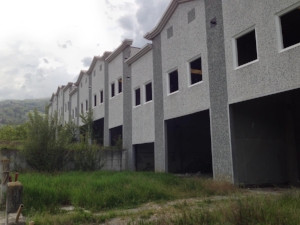
Often new residential, commercial or industrial buildings are realised only for speculative reasons and remain unused for ever. Photo credit: Ciro Gardi

Soil sealing prevents, or strongly compromise all soil ecosystem functions. This is an example of an exception: the vigour of this plant is able to break the asphalt coverage sealing the soil. Photo credit: Ciro Gardi

An example of a construction site. Soil is subject to several types of
degradation processes: compaction,contamination and finally sealing.
Photo credit: Ciro Gardi
It is essential then to have a more responsible use and planning of this strategic and pivotal non-renewable resource, sharing our knowledge of its values and role, with policy makers, land use and urban planners, but also citizens. In Europe, a public campaign has been recently launched (People4Soil - https://www.people4soil.eu/en ) to request the declaration of a soil protection Directive at the EU level. This is an example of the efforts of awareness raising that made possible to spread among citizens the comprehension of the role of soil, as essential element of the natural capital.
Learn more about the book here:
Cast in clay
By Max Helmberger, graduate student, New York State Agricultural Experiment Station, Geneva, New York, USA
Growing up an only child on a dirt road in the Northern Minnesota woods, I spent a lot of time outside, overturning the many thousands of glacier-strewn rocks around my house (at least the ones small enough to move) and gazing in awe at the centipedes, isopods, and invasive European earthworms underneath (which were promptly relocated to our compost bin). My first interest in soil in an academic context came the year after I graduated from high school, when I took a soil science course at my local community college. That class instilled in me a firm conviction that soil is humankind's most important natural resource, and clued me in to the fact that, in soil, there's far more than meets the eye.
After transferring to the University of Minnesota in Duluth to major in Biology, I took an entomology class and worked as a research assistant in an aboveground plant-insect ecology lab. I had always loved insects, arthropods, and invertebrates in general, and I greatly enjoyed the coursework and research experience, but wanted to connect it with my love of soil. I started searching Google Scholar for “soil arthropods”, and a few dozen soil ecology articles later, I was hooked, and I eventually sought out and accepted a M.S. position in the lab of Dr. Kyle Wickings at the New York State Agricultural Experiment Station, a satellite campus of Cornell University located in Geneva, New York. What I didn't know as I was reading all those papers, was that I would end up reporting all the knowledge I gained from them in a most unusual way.
Clay animation, for those unaware, is a form of stop-motion animation in which clay models are photographed, moved slightly, photographed again, and so on. The pictures are strung together and played in rapid succession to give the appearance of movement. Wallace and Gromit is arguably the most famous example of the medium. When I was 7 years old, my grandmother took me to an hour-long class in clay animation. I made a video of an anthropomorphic flower dancing to some sort of classical music riff. The VHS tape is certainly hiding somewhere in my house. Fast forward to my undergraduate entomology class, and I drew on those old memories for the course's final project to make a clay animation video on the life cycle of the gallmaking fly Eurosta solidaginis, the main study organism of my research advisors’ laboratory. The video was crude by my current standards, but got me a good grade in the class nevertheless.
At Cornell, where I'm currently working on my M.S. in Entomology, I’ve had the opportunity to draw from a unique funding source called the Extension/Outreach assistantship. Instead of working off a grant or being a teaching assistant (something difficult to do when based at a satellite research campus rather than the main university campus), I earned my stipend via progress on a variety of extension and outreach projects of my advisor's and my own devising. When applying for the assistantship and listing my project objectives, my advisor and some of the faculty members on the Extension/Outreach assistantship committee were skeptical until they saw the E. solidaginis video as a proof-of-concept, and in Spring semester of 2017, I was off to the races. To avoid some of the mistakes I made with my previous clay animation, I was very careful with how I went about planning and "filming" the videos. I wrote out all of my narration in advance as well a clear script of what specific actions I would portray. Then, I timed myself reciting the narration for each scene, and so could know in advance how many frames of animation I needed. This, combined with a nice DSLR camera as a Hanukkah present from my parents, would allow for much more cohesive and polished videos than my tale of the gallmaking fly. In the end, I produced three videos, Life Cycle of Entomopathogenic Nematodes, The Soil Food Web, and Ecosystem Services in Agriculture (though the latter includes some functions performed by aboveground organisms). My funding next semester will be from the same Extension/Outreach assistantship, so I plan to produce at least one more video in addition to my other projects, possibly two. From start to finish (writing the script, creating the models, creating the set, taking the photographs, editing the video, and recording the narration), each video took me between 15 and 20 hours to make. Each video consists of 350-400 individual images, with some being repeated here and there. They’ve been received well in the department, and the entomopathogenic nematode video has even been incorporated into several extension talks. The rest of the videos have ben showcased in a few classroom settings, and I am hoping to further expand their reach. I plan to make at least two additional videos in the fall, as I will again be funded through an Extension/Outreach assistantship.
My ultimate goal is that these videos provide an accessible way of communicating soil ecology and biodiversity to lay audiences, especially young ones. Despite being the prototypical "science nerd" growing up, and being an avid consumer of books, documentaries, and Web resources about the natural world, many of the soil animals I read about during my first forays into the primary literature were completely unknown to me. I had no idea there were mites beyond dust mites and the various parasitic taxa, and certainly didn't know there were any mites as cute as a galumnid oribatid. I had never even heard of diplurans, symphylans, pauropods, and some of the other more obscure soil organisms. I knew what a pseudoscorpion was, but didn’t know I could find them in the peat bog less than a mile from my house. And that rubbed me the wrong way. It's hard for young people to learn about the marvels of soil biodiversity, especially on their own. I know that 7 year-old Max would have gotten much more out of these videos than from one about a dancing flower, and he would have started playing around with Tullgren funnels much earlier than junior year of college. As such, if you enjoy my videos, I encourage you to share them however and wherever you like. They are available online as a YouTube playlist.

What lies beneath: South Africa’s megadiversity of soil biota Part III
By Dr. Charlene Janion-Scheepers & SERG members
This is the final in a three-part blog series highlighting the rich soil biodiversity found in South Africa.

In our previous blog we discussed some key findings of our review on the rich soil biodiversity of South Africa. In this last blog we want to highlight some key conservation priorities, threats to soil biota and some future directions we think are necessary for the advancement of soil biota research in South Africa.
Threats to soil biota in South Africa
Global drivers, such as land degradation, exploitation, pollution, climate change and
biological invasions, are serious threats to South African biodiversity. For many understudied groups even the identification of invasive species are problematic, while the impact of these invasives on the indigenous species are also unknown. Climate change will probably directly and indirectly favour invasive species in all South African ecosystems, thus the identification and assessment of distributions of invasive species should become a research priority for all soil biota groups.
Other threats to soil biota include intensified land-use. The livelihoods of people in South Africa depend in many ways on the continued functioning of the soil ecosystem, thus there is an urgent need for basic biodiversity knowledge in order to facilitate the soil ecosystem research required to assess sustainability.

Conservation
Soil dwelling species are usually classified as Data Deficient in the IUCN red list criteria. This appears to be related to the limited number of soil biota researchers, difficulties in identification, and inherent logistic difficulties in surveying and sampling. Even the most basic IUCN Red List criteria require a reasonable understanding of the taxonomy and distribution of individual species. The results from our review agree with previous findings, that many taxonomic groups of soil biota could not be assessed for conservation status due to a lack of baseline data. However, exceptions do exist, and the recent First Atlas of the Spiders of South Africa provides an excellent model of what is possible. In addition, the inclusion of endemic soil biota in conservation planning should be the next step to ensure soil habitat conservation.
Future research directions
The major issues that need to be addressed were clear: funding needs to be put in place to:
Train taxonomists
Consolidate and curate existing collections for improvement of data storage and management
Capture existing data
Fill gaps identified in this paper, especially focusing on the functional roles of soil biota
Use our existing and growing expertise as a base to tackle a continental deficiency in our understanding of soil ecosystems
Use current taxonomic expertise to facilitate the development of DNA barcode libraries
Sampling areas that have been poorly studied should be a priority for future work, which includes the Nama-Karoo, Northern Cape and Eastern Cape

Fig. 1: A schematic example of an integrative sampling approach.
In South Africa, funding and expertise is required in a coordinated research framework. Successful examples of this approach have been demonstrated for Europe, such as BISQ and EcoFINDERS. The development of an integrative sampling approach to sampling soil communities (Fig. 1) should be initiated in South Africa to place taxonomic knowledge in an ecological context and develop monitoring tools to provide valuable advice for soil health management. Such an overall strategy for South African soil biota research is needed, which recognises that although different research priorities exist for each group, sharing and contrasting experiences will help advance our knowledge across the board. We see the formation of SERG as the first of many steps towards the goal of an integrative approach to soil ecosystem research in South Africa.
Soil Biodiversity in the European Commission Headquarters
Gerlinde B. De Deyn
Associate Professor at Wageningen University

As a European and Belgian citizen, I have seen the Berlaymont building in Brussels many times before in person and on TV or in newspapers when European issues were being addressed. I have always associated the building with politics and a beehive of translators to enable multi-language meetings.
Last week, however, my association to the Berlaymount building drastically changed. I visited the building for the first time and not alone… with me I brought thousands of springtails, millions of nematodes and at least as many bacteria along with a microscope to reveal their existence! I had not brought them along to show the security people, who attempted to ensure the little critters are not harmful and found just the contrary. Instead, I brought my little associates to show the 15,000 people that came to visit the EU open doors day in Brussels, 17th of May 214. On this day EU institutions open their doors to the public, so they can join in celebrations and learn more about European Union events and activities.

I participated in the EU open day as a Marie Skłodowska-Curie fellow, taking part in the stand of Research and Innovation by the European Commission. On show: roots with/without nodules, nematodes, springtails and mycorrhizal fungi.

My previous EU outreach activity, the EU Researchers’ Night in 2013 (you may remember my blog http://blog.globalsoilbiodiversity.org/article/2013/10/08/researchers-night-teaching-children-exchanging-research-andeating-bugs) proved to be a good preparation for this event. Of course, I could not do without the European Atlas of Soil Biodiversity AND the French version, L'Atlas Européen de la Biodiversité des Sols. Thank you, JRC Ispra for sending multiple copies of both straight to EC Brussels, which we distributed to very interested people. For all those who do not yet have a copy in English or French and would like one check out these links: http://eusoils.jrc.ec.europa.eu/library/maps/biodiversity_atlas/
http://eusoils.jrc.ec.europa.eu/library/maps/biodiversity_atlas/french.html
For all those who are currently writing their contribution to the Global Soil Biodiversity Atlas: keep going. It is well worth it and already quite a few people are looking forward to its appearance. I could of course not mention the Global Soil Biodiversity Atlas when talking about on-going projects!

The European Atlas of Soil Biodiversity, my buddy at the outreach activities! Thank you to all who contributed.
I had little time to explore the other stands given the overwhelming number of visitors to the research stands, but I was able to get a sense of what the other fellows are working on as we were setting up our stands. Some of the other work featured that day included: the collection of wave and wind energy, e-nose (detection and quantification of air pollution), and 3D-printing of food, … No insect tasting this time as far as I could see. When thinking about cross linkages between disciplines I can see potential applications of the 3D-printing and e-nose technology also in our field of soil ecology.

Succession of glacial soils

The world of soils is incredibly diverse and heterogeneous and we are just starting to understand the scope of its complexity. Not only do soils harbor much of the earth’s genetic diversity, but soil environmental conditions can change vastly over distances of only millimeters. The distribution and diversity of soil animals and microorganisms, along with their influence on ecosystem processes, also changes across these micro-distances.
When faced with such complexity, scientists can focus their efforts on relatively simple soil systems to begin to link patterns to processes.
From the tropical Andes of Peru to the icefields of Alaska, glaciers are rapidly melting. As ice melts, we are left with an annually resolved gradient in soil development. Substrates closest to the glacial terminus are the youngest while substrates furthest from the terminus are older. Deglaciated landscapes, with their barren rock and lack of vascular plant cover, often appear to be devoid of life. On the contrary, a growing number of observational studies show that glacial soils, albeit low diversity, are teeming with microscopic organisms that take up residence immediately following the retreat of ice. Looking at how soil biota and the soil environment develop with time in these relatively simple landscapes may help us to unravel the relationships between community structure and ecosystem function that may be otherwise obscured in more complex soil systems.

But before we can link patterns and processes, we must first establish whether or not soil microbial communities undergo succession – the orderly and predictable change in community composition and function with time. In my own work, I am examining microbial communities at glacial sites in both North and South American continents. It appears that young glacial soils host bacterial communities that are very different in terms of structure and function when compared to communities originating from older parts of the landscape. In other words, bacterial communities from distant locations (Peru, Washington, and Alaska) undergo successional change that results in a predictable community composition regardless of site. The graph of points depicts this pattern. Each point indicates a unique soil bacterial community and early communities are much more different than older soil communities. The next step for this work is to understand the drivers of successional change.

We are becoming increasingly aware of the links between the aboveground and belowground biota in ecosystems. Plants have repeatedly been shown to drive microbial activity in soils. Recent work from Shawn Brown and Ari Jumpponensuggests that during early ecosystem succession, the presence of plants can shape soil bacterial communities. As well, studies have demonstrated that soil biota wield a strong influence on the diversity and productivity of plant communities. One relatively unknown question is how the succession of belowground communities is related to the succession of aboveground communities. This is an exciting frontier of research that myself and others are currently working on.
Following a major ecosystem disturbance, soil fauna and microorganisms play a particularly important functional role in soil fertility re-development by driving rock mineral weathering, nutrient recycling, and steadily building up organic matter. The work of Christian Schurig and colleagues from the Damma Glacier in Switzerland highlights this last point and their findings show that in developing systems organic matter largely comes from the cells of dead bacteria and fungi.
Though glacial retreat is one specialized type of ecosystem disturbance, there are many other natural and human caused disturbances that influence microbial communities and their functions. The study of natural gradients may offer us some insight into how to maintain and restore degraded systems.
More information about Sarah Castle’s research can be found here: www.cfc.umt.edu/biogeochemistry

Mapping biodiversity with environmental niche modeling (PG9)

Left: Figure 1. Schematic of the environmental niche modeling methodology. Environmental niche modeling uses a statistical model to combine community samples with maps of environmental variables to generate predicted diversity maps or range maps. In this example, most of the samples are from North America, so although a global prediction is shown, a prediction to just North America may be better warranted.)
Maps of biodiversity at global and continental scales plays a pivotal role in ecology, evolutionary biology, and conservation biology. Diversity maps give insight into the action of ecological and evolutionary processes at large scales, and they can guide management decisions. The diversity patterns of many macro-organisms are known; for instance, the global ranges of almost all known mammals, birds, and amphibians are available at a resolution of approximately 100 km. However, until recently, the ranges of many micro-organisms — including soil bacteria — have remained almost entirely unknown. In this post, I will describe an increasingly useful approach to inferring the diversity patterns and ranges of soil bacteria and other micro-organisms.
The reasons that the ranges of soil bacteria have remained elusive are at least two-fold.
First, sampling of soil bacterial communities has historically been sparse: Range maps of many macro-organisms are often based on many thousands of observations and museum records. By contrast, until recently the number of soil bacterial communities that have been sampled has been orders of magnitude smaller. However, the availability of cheaper and faster sequencing is rapidly changing this picture, and today numerous soil bacterial communities have been sequenced with additional surveys underway.
The second obstacle to mapping the ranges of soil bacteria is incomplete censusing of bacterial communities. Unlike macro-organism communities, many of which can effectively be censused given sufficient effort, fully assessing the diversity of bacteria at a location has been impossible. Although completely censusing most soil bacterial communities continues to remain impractical, improvements to sequencing technology have made it possible to get an increasingly complete picture of the bacterial communities.
Against this backdrop, we recently sought to ask not just whether we could map the ranges and diversity patterns of soil bacteria, but whether we could map the ranges and diversity patterns of soil bacteria across a largely extirpated ecosystem, the North American tallgrass prairie (Fierer et al, 2013, Reconstructing the Microbial Diversity and Function of Pre-Agricultural Tallgrass Prairie Soils in the United States. Science, 342:621-624). Historically, this ecosystem covered over 65 million ha of the United States. Today, as much as 99% of the tallgrass prairie has been lost to agriculture and other land use modification. These modifications have profoundly altered the soil communities. However, the bacterial communities that presumably inhabited the tallgrass prairie can still be sampled from the few tallgrass prairie relics that remain undisturbed, for instance in nature preserves and old cemeteries. We used samples to form these communities to infer the likely distributions of soil bacteria across the original extent of the tallgrass prairie.
To infer the distributions across the original tallgrass prairie extent, we used environmental niche modeling, a powerful methodology developed for studying the distribution of macro-organisms. To generate range maps, niche modeling combines (i) a limited number of community samples with (ii) maps of climate conditions and other environmental variables.
The idea behind niche modeling is straightforward: using the community samples, one infers the niches of taxa — e.g., bacterial OTUs or phylotypes – for the variables for which maps are available. For instance, if we had maps of precipitation and soil pH, we would check how the occurrence of an OTU of Acidobacteria depends on these variables. If it depends on these variables, for example the OTU is found only in samples with high precipitation and high pH, then we can draw its range by referencing the maps of precipitation and soil pH, shading in only regions that meet the OTU's precipitation and pH requirements.
Although the general idea behind environmental niche modeling is straightforward, the details are complicated. The challenges include: Out of the many possible environmental variables that might predict a distribution of an OTU, how do we choose the important ones? How do we model non-linear relationships between the occurrence of OTUs and environmental variables? How do we prevent overfitting? Can we reasonably assume niche conservatism through space? Do dispersal limitation and interspecific interactions substantially affect range boundaries? What regions of the inferred maps require excessive extrapolation in environmental space, and how can we control the amount of extrapolation? Can we map diversity patterns in addition to ranges?
A large body of ecological and statistical research has been devoted to addressing these and other questions, and sophisticated niche modeling methods have been developed. In many circumstances, these methods can allow the construction accurate range maps.
We applied these niche modeling methods to map the distributions of the tallgrass prairie bacteria. To make these maps across the original extent of the tallgrass prairie, we noted that climate conditions have changed little across this ecosystem in the last 150 years. Thus, if we found that a particular set of climate variables predicted the distribution of a taxon across the existing prairie relics, this would suggest that we could predict the original distribution across the prairie from the spatial distribution of this climate variable across the original extent of the tallgrass prairie. We found that climate variables were indeed excellent predictors for some taxa, and that we could additionally predict the spatial distributions of diversity across these region using climate variables. The results indicated that the diversity patterns of bacteria are sufficiently associated with climate variables that range maps can be constructed, and that their diversity patterns were driven largely by the distribution of Verrucomicrobia, a relatively little-studied phylum of bacteria.
Environmental niche modeling promises to be an important addition to soil microbial ecologists' computational toolbox. The application of environmental niche modeling to mapping tallgrass soil bacterial communities is but one example of the utility of this methodology. For instance, it may be useful for identifying microbial interactions, predicting the effects of climate change on microbial communities, and identifying unsampled regions that are likely to harbor beneficial or harmful bacterial taxa. Recent advances in sequencing technology, ongoing sampling of additional bacterial communities, and the development of the appropriate statistical tools are combining to make environmental niche modeling an increasingly practical and useful methodology for mapping the distributions of soil microbial communities.
Ethanol production, environmental sustainability and soil biodiversity in Brazil

Preparing the mololith to extract soil macrofauna according TSBF methods in a sugarcane crop in Goiás state.
Brazil has become a reference in the production and marketing of renewable energy through the strengthening of the ethanol productive chain from sugarcane, recognized as the most efficient in the agroenergy industry.
A number of advantages qualify Brazil to take the lead of energy agriculture and the bioenergy market on a global scale. The possibility to allocate new lands for sugarcane cultivation, without reducing the area used for food agriculture or causing deforestation of native forests are some of the advantages. An additional 5,720,000 ha in planted area with sugarcane would be required to achieve the objectives of ethanol production for 2020, and approximately 88% of this expansion will come from areas previously used as pasture, specially degraded pastures.
However, what about the environmental sustainability of this expected expansion of sugarcane cropped area in Brazil? How will these changes in land use affect the biogeochemical cycles of carbon, nitrogen and phosphorus, greenhouse gases (GHG) emissions, and above and belowground biodiversity? Still what are the effective indicators for environmental sustainability? These are some of the issues that impose non-tariff trade barriers to Brazilian ethanol from sugarcane.

The main land use change for sugarcane production in the center-south part of Brazil.)
To answer these questions, we are developing a research project to evaluate the main land-use sequence for ethanol production in Brazil, i.e., the conversion of native vegetation to pasture and them to sugarcane production without straw burning. This conversion model will be analyzed in three different locations in the Cerrado biome. The following sustainability indicators were selected by the research team: i) GHG emissions in the life cycle; ii) soil quality, especially the changes in soil C/N/P stocks due the land use change; and iii) above and belowground biodiversity. The challenge is to propose a way of integrating the different indicators of environmental sustainability, usually treated individually.
The importance of soil biodiversity for the terrestrial ecosystem through its ecosystem services such as regulation of carbon sequestration in the soil, reducing GHG emissions, maintenance of the physical structure and water-holding capacity of the soil, providing nutrients for plants and control of phytopathogens, makes the evaluation of soil biodiversity a key indicator of the long-term environmental sustainability.
The land use changes greatly affect the soil fauna since the structure and abundance of soil organisms are very sensitive to changes in vegetation cover. In our study we are applying different sampling methods suited to the biology and ecology of the organisms from soil micro, meso, and macrofauna. The identification of biological communities whose presence/absence, abundance, and conditions under which individuals are present show correlation with the anthropic factor will allow the grouping of bioindicators of the degree of change and environmental balance in the sugarcane agroecosystem. To bind the soil organisms to its ecosystem services, the biota will be ordered by key functional groups, i.e., sets of species that have similar effects on ecosystem biogeochemical or biophysical processes in a specific level.

An integrated view of the environmental sustainability indicators
The evaluation of cost-effectiveness will identify the indicators of high-performance to represent the environmental changes due to land use sequence evaluated in this research and the indicators that are also economically and logistically feasible for application in such studies. Our proposal will still classify the indicators hierarchically in order to suggest a protocol with minimal analysis to evaluate the environmental sustainability of sugarcane production.
The information obtained from this project may be used by decision makers of federal government programs such as the Agriculture Program of Low Carbon, Forest Investment Plan, Action Plan for Prevention and Control of Deforestation and Fires in Cerrado and Program to Stimulate Sustainable Agricultural Program.
Bottom, clockwise from top left: Sampling in a pature in Goiás state, Preparing the mololith to extract soil macrofauna according TSBF methods in a pasture in Goiás state, After a working morning, Manual sorting of macrofauna in the Lab


Interactions in soil and otherwise

“What the heck are microarthropods?”
In the fall of 2002, I was sitting in a common area at my undergraduate alma mater, William Jewell College. I was entering my second year of college and all was well but I was contemplating reenlisting in the US Army. I had joined after high school and served for 5 years. While I really enjoyed college, I was ultimately unsure what my career would be. As I was sitting there determining my next move in life, I was presented with a crossroads in the form of my spectacled undergraduate advisor who asked, “Do you want to go to Puerto Rico this summer and study litter microarthropods?” Admittedly, I only heard the first half of that sentence.
Later I thought, “What the heck are microarthropods?”
But it was this simple interaction and the summer research trip that followed which changed the course of my life and brought the amazing world of soil to light. It was made all the more remarkable by the fact that I was collecting live soil microarthropods, spending hours in front of a scope, or on my hands and knees with my nose inches from the soil surface (see video below).
It was during these episodes that I came to realize the tenacity of pseudoscorpians, the nervousness of collembola, and the slow methodical movements of orabatid box mites. The culmination of efforts spent meticulously picking small microarthropods was to manipulate community structure, altering species interactions, and observe its effect on litter decomposition rates. I collected some data and the results were interesting but the combination of a tropical storm and graduate school preparation distracted me from ever wrapping up this project.
All was not lost though; in grad school I was exposed to a whole new level of diversity in soil: microbial diversity. While not as exciting with regards to direct observation, the diversity of function between communities was astounding.
I was able to demonstrate how microbial function differed between communities and the role that resource legacies play in those differences. Yet, I was still fascinated by how interactions might shape these communities and their function, as I had expected it to shape microarthropod community function in Puerto Rico. In my mind I was envisioning competitive antibiotic battles and coordinated release of extracellular enzymes driven by quorum sensing (see image to the right).
In fact, my lab recently explored the role of quorum sensing in litter decomposition. We found that inhibiting quorum sensing led to decreased decomposition but only when the litter was chemically complex. When the litter was chemically simple, the role of quorum sensing was negligible. This may mean that this facilitative interaction is more important when resources are limited, or at least require more costly enzymes to degrade. When resources are abundant then, does this mean that competitive interactions dominate? Ecological theory predicts this possibility but definitive proof is circumstantial.

Now, I’ve returned to my earlier interest in soil microarthropods while continuing my exploration of soil microbial communities. My lab is now beginning to understand the interactions between these often separately studied groups. We’re just in the initial stages but have found that some combinations of microarthropods suppress microbial decomposition (see image bottom left). We’ve also found that, not surprisingly, microarthropods inoculate their habitat with microbes. This raises interesting possibilities concerning whether or not there are facilitative interactions between microarthropods and the microbes they disperse and whether or not co-occurrence between these two groups is generally negative or positive (a sort of microbe-microarthropod feedback). Next we hope to introduce microarthropod predators into the mix and examine their effect on ecosystem processes.
Yet, why stop there? Why not also begin to examine how changes in species interactions aboveground influence those belowground and vice versa?
I’ve been involved in work recently that illustrates one side of this interaction. That is how changes in the trophic structure of aboveground communities can have a marked influence on the function of belowground communities.

What about the other side? There are indications that it happens. For example, the presence of predators alters the distribution of earthworms in the soil profile leading to changes in plant nutrient availability. This has obvious implications for aboveground communities. Yet, we often study aboveground and belowground communities in isolation and speculate on how they might affect each other. We need to mechanistically understand the interactions between the worlds above and beneath our feet.
So to sum it all up, interactions are important from simple meetings that change the outcome of careers to trophic cascades and interspecific competition that can change the outcome of litter decomposition. This isn’t a radical thought and many are exploring the role of interactions in soil (see Felicity Crotty’s blog from October 21st). But, I think that it’s the interactions in these communities and across communities, particularly above- and belowground, that bring their diversity to life and are likely to shed light on the role of these organisms with regards to ecosystem processes.
A whole week of soils

No, I am not joking, there is a whole week dedicated to soil: the “Global Soil Week - Losing Ground?”. In a clear and warm Berlin (Germany), the 2nd Global Soil Week (GSW) took place from the 27th to 31st of October. The GSW is an initiative of the Global Soil Forum, which was established by the Institute for Advanced Sustainability Studies (IASS) in 2011. GSW is also supported within the framework of the Global Soil Partnership (GSP), launched in 2011 by the Food and Agriculture Organization (FAO) and a group of partners with the aim of improving global governance of the world’s soil resources to guarantee healthy, productive soils for a food-secure world.
Global Soil Week was again a major success this year. More than 500 participants from over 70 different countries discussed soil related matters at a Global scale for four days. It was nice to see people from all over the world attending the plenaries all together, dividing into more than 20 different sessions throughout the four days and chatting about soil during coffee breaks.
GSW is not only meetings and discussions, you can also get dirty! There were many stands showing new and unusual uses of soil: from paint colors created from soils to the canvas of sand from deserts and “seedballs” of soil allowing seeds to be spread throughout our cities.
The “nexus” was chosen as a key word of the event and “Losing ground?” was the driving force of the entire week. Many discussions focused their attention on different aspects, not only the physical loss of soil (soil sealing), but also the necessity to not lose more “ground” and begin moving towards a more sustainable management of soil. Of course, losing soil also means losing organisms living in it, i.e. its biodiversity.

Global Soil Week attendees get down and dirty, putting a plant on a city sidewalk. Photo from Global Soil Week website's photo gallery.
A delegation of the Global Soil Biodiversity Initiative (GSBI) attended GSW and had the great opportunity to co-host the session titled “Get it, Use it, Improve it: Global Soil Information”. Even if this sounds a bit enigmatic, the mission of the session was clear: debating the necessity (and urgency) to reach uniformity in handling soil data. We are all studying soil, yet we often use different parameters and tools, leading to difficulties in comparing results and drawing reliable conclusions. Also the surveys on soil biodiversity require standard procedures in order to obtain more valuable outcomes.
The session was well chaired by Ronald Vargas (FAO) and divided into two parts. The first part was dedicated to discussing the importance of having a global and standard system to collect and analyze soil data (a full list of speakers and presentations is available at the above link to the session’s program). The second part was organized by the GSBI. Dr. Fatima Moreira (Federal University of Lavras, Brazil), Dr. Philippe Lemanceau (INRA Dijon, France), Dr. Luca Montanarella (EC JRC, Italy) and Dr. Alberto Orgiazzi (EC JRC, Italy) had the honor of representing the Initiative.

GSBI's Luca Montanarella signs his name on the event banner in soil paint. Photo from Global Soil Week website's photo gallery.
Fatima introduced the GSBI and the GSB-Assessment, Philippe stressed the importance of studying soil biodiversity at a large scale by showing the good example of the European project ECOFINDERs, Alberto presented (for the first time at an official event) the GSB-Atlas and Luca moderated the final discussion. Participants responded positively to our inputs; particularly concerning the Atlas. Specifically highlighted was the importance of distributing it as widely as possible (e.g., translation into as many languages as possible and use of new e-tools) in order to make it one of the main means of raising awareness of soil biodiversity across the general public.
"Sure, there is still a lot of work to do, but we have the strong feeling that the path we took is the right one."
Despite the fact that the delegation of “soil biodiversity people” was quite small, we saw a great and ever-increasing interest in this important issue. We think that the presence of GSBI was important and confirmed that it is high time for soil biodiversity to be included in all future discussions in order to achieve sustainable implementation of soil management strategies. Sure, there is still a lot of work to do, but we have the strong feeling that the path we took is the right one.
Finally, a couple of personal wishes for the next GSW (by the way, we wrote these comments in the final evaluation sheet and hope they will listen to us):
To have a more significant attendance of soil scientists. I think that decisions need to be taken with the contribution and support of research.
To make the event open to the general public. People need to be involved in order to understand the beauty and fascination of soil and its (bio)diversity.
Last thing left to say? See you at the 3rd Global Soil Week in 2014!!
Identifying with soil fauna

This small tube contains all the springtails extracted from one kilogram of soil, in a grassland springtails and mites are the most abundant animals and can be found to be as numerous as 40,000 per m2. The soil as an ecosystem is absolutely bursting with life, in one hectare of productive soil there is the equivalent weight of one cow of bacteria, two sheep of protozoa and four rabbits of soil fauna!
When I started my PhD a few years ago now, I remember my supervisor advising me to spend time at the microscope to get an idea of the soil fauna I would be investigating as part of my experiments, and to start to grasp the diversity and beauty I would be seeing. The microscope had a camera attachment, which meant I could easily photograph unusual or interesting specimens, without too much difficulty or time wasted (although invariably much time was spent trying to obtain the perfect photograph of that individual I’d never seen before!).
Today much of my time is spent promoting “healthy soils” as part of the PROSOIL project (http://www.aber.ac.uk/prosoil/). One of the main aims is to promote soil biodiversity to farmers and the public, most of whom have never considered soil fauna as anything more than “creepy crawlies” that are more likely to be causing problems than increasing plant yields.
All farmers have heard of are wireworms (Agriotes sp.), leatherjackets (Tipulid sp.) or cutworms (Agrotis sp.), however few know about springtails or mites, or just how small and numerous they are. Each year soil organisms can process an amount of organic matter equivalent in weight to 25 tonnes per hectare. Reductions in earthworm abundance for example have been found to diminish water infiltration rates by over 90%!
Seeing is believing they say? When studying organisms that live in an environment often referred to as “a black box”, or opaque, it is difficult to comprehend the effects of predation or optimal foraging theory.
Ideas on feeding preferences become based on proxy measures like enzymes, stable isotopes or gut content analyses. All are useful measures to try and elucidate the soil food web, but none cover all scenarios.
Only 0.25% of the actual soil is alive, however it is one of the most diverse and biologically active ecosystems on the planet, with the biodiversity of soil fauna exceeding the above-ground diversity by several orders of magnitude in many habitats.


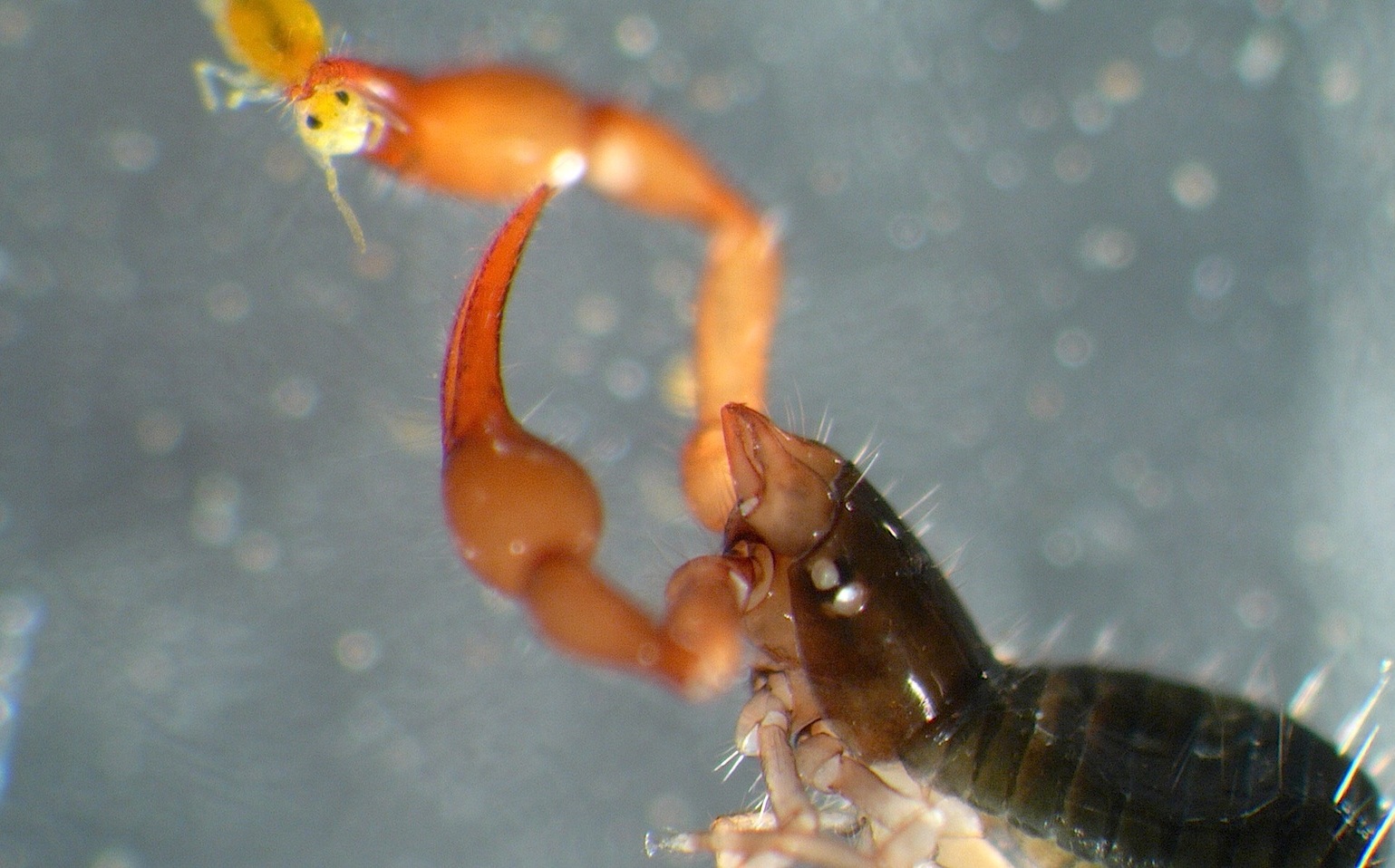

Clockwise from top left:
1) This scanning electron microscope (SEM) image, shows the hypopi (non-feeding / dispersal) stage of an astigmatid mite. Clearly visible on its notogaster (back) are fungal spores, adhering to it. As this is the dispersal stage of the astigmatid mites’ development, the fungal spores are likely to be dispersed with it, to a greater distance than if they had adhered to a different mite.
2) At times photographs can be used to illustrate unusual situations, for example from a pitfall trap, a sminthurid collembolan was found caught in the pincers of a pseudoscorpion, although we know that springtails are prey for these top predators, it is rarely seen.
3) A photograph can be a very good teaching tool, particularly if similar looking specimens are actually different suborders. On the left is an astigmatid mite, whilst on the right is an oribatid mite. The hairiness of the Astig is clearly visible as are the apodemes, in comparison to the Oribatid which has noticeable genital and anal shields, as well as aggenital and adanal shields visible.
4) A photograph illustrating just a tiny portion of the diversity from a soil fauna sample, won first prize in the Agriculture, Food, Diet and Health category in the Biotechnology and Biological Sciences Research Council (BBSRC) science photo competition (February 2010); Featured in Science 327, (2010) p1183 – Random Samples: A World in a Grain.
Unfortunately, due to this immense diversity and opacity, expertise in taxonomy has suffered. There are labs of nematologists, acarologists or microbiologists, but few that try to identify the diversity of taxa to the same level. Teaching soil ecology to students is hampered by these limitations that have already been set.
The ability of visualising interactions at the microscale has increased our understanding of the interactions occurring between the soil fauna. It is thought that soil fauna have a large influence of the microflora community. Ingestion of spores can increase the likelihood of sporulation; faecal pellets can form a large nutrient pulse that can be colonised by bacteria – providing a food source for later; the soil fauna can also be used as a dispersal mechanism, transferring spores to new habitats.
The soil food web has the greatest diversity of species and the greatest number of interactions between species of any food web studied. This is why continuing to investigate these interactions and visualising them is of vital importance to the study of this ecosystem.
Felicity Crotty is also on the editorial board for Beneath Our Feet. Check out her bio on our site here.