

Blog Archive:
Beneath Our Feet

What lies beneath: South Africa’s megadiversity of soil biota Part III
By Dr. Charlene Janion-Scheepers & SERG members
This is the final in a three-part blog series highlighting the rich soil biodiversity found in South Africa.

In our previous blog we discussed some key findings of our review on the rich soil biodiversity of South Africa. In this last blog we want to highlight some key conservation priorities, threats to soil biota and some future directions we think are necessary for the advancement of soil biota research in South Africa.
Threats to soil biota in South Africa
Global drivers, such as land degradation, exploitation, pollution, climate change and
biological invasions, are serious threats to South African biodiversity. For many understudied groups even the identification of invasive species are problematic, while the impact of these invasives on the indigenous species are also unknown. Climate change will probably directly and indirectly favour invasive species in all South African ecosystems, thus the identification and assessment of distributions of invasive species should become a research priority for all soil biota groups.
Other threats to soil biota include intensified land-use. The livelihoods of people in South Africa depend in many ways on the continued functioning of the soil ecosystem, thus there is an urgent need for basic biodiversity knowledge in order to facilitate the soil ecosystem research required to assess sustainability.

Conservation
Soil dwelling species are usually classified as Data Deficient in the IUCN red list criteria. This appears to be related to the limited number of soil biota researchers, difficulties in identification, and inherent logistic difficulties in surveying and sampling. Even the most basic IUCN Red List criteria require a reasonable understanding of the taxonomy and distribution of individual species. The results from our review agree with previous findings, that many taxonomic groups of soil biota could not be assessed for conservation status due to a lack of baseline data. However, exceptions do exist, and the recent First Atlas of the Spiders of South Africa provides an excellent model of what is possible. In addition, the inclusion of endemic soil biota in conservation planning should be the next step to ensure soil habitat conservation.
Future research directions
The major issues that need to be addressed were clear: funding needs to be put in place to:
Train taxonomists
Consolidate and curate existing collections for improvement of data storage and management
Capture existing data
Fill gaps identified in this paper, especially focusing on the functional roles of soil biota
Use our existing and growing expertise as a base to tackle a continental deficiency in our understanding of soil ecosystems
Use current taxonomic expertise to facilitate the development of DNA barcode libraries
Sampling areas that have been poorly studied should be a priority for future work, which includes the Nama-Karoo, Northern Cape and Eastern Cape

Fig. 1: A schematic example of an integrative sampling approach.
In South Africa, funding and expertise is required in a coordinated research framework. Successful examples of this approach have been demonstrated for Europe, such as BISQ and EcoFINDERS. The development of an integrative sampling approach to sampling soil communities (Fig. 1) should be initiated in South Africa to place taxonomic knowledge in an ecological context and develop monitoring tools to provide valuable advice for soil health management. Such an overall strategy for South African soil biota research is needed, which recognises that although different research priorities exist for each group, sharing and contrasting experiences will help advance our knowledge across the board. We see the formation of SERG as the first of many steps towards the goal of an integrative approach to soil ecosystem research in South Africa.
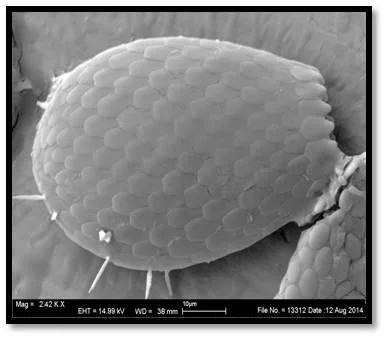
Soil protistology: a rising star?!
By: Valentyna Krashevska1, Stefan Geisen2
1Post-doc University of Goettingen, Germany
2Post-doc Netherlands Institute of Ecology, the Netherlands
Part 4 in our 4 part soil protist series

Image: Testate amoebae Euglypha
Soil protistology, despite a long history, is a rather unexplored field with many things to be studied. In the last three blogs we pointed out several of those points including unknown, yet huge diversity and abundance and the fundamental functional importance of protists in the soil food web and for plant growth promotion. They also are highly promising bioindicators to assess soil quality and allow palaeological reconstructions; for the latter, especially testate amoebae, which often have a rigid shell, play a key role.
At PROTIST 2016, around 200 protistologists are gathering, yet, less than 10 % of the participants work in soils. This is surprising taken into account that even editors of general ecological or soil journals are increasingly understanding the potential in the field of soil protistology; just in the last 12 months, three papers purely focusing on soil protists (nematode feeding protists, huge diversity of parasitic protists in soilsand parasitic protists in soil animals) were in the spotlight and received highlight articles (1, 2, 3, respectively). Many recent studies found their place in the highest (ecological) journals and this trend is likely to continue.
Now it is the time to actually jump on that train and bring this understudied field to the next level; many exciting discoveries are awaiting to be made, which might well outweigh findings on the other, better studied microbial groups of bacteria and fungi. This especially counts for integrating soil protist work with work on other soil organisms and in more general ecological studies!
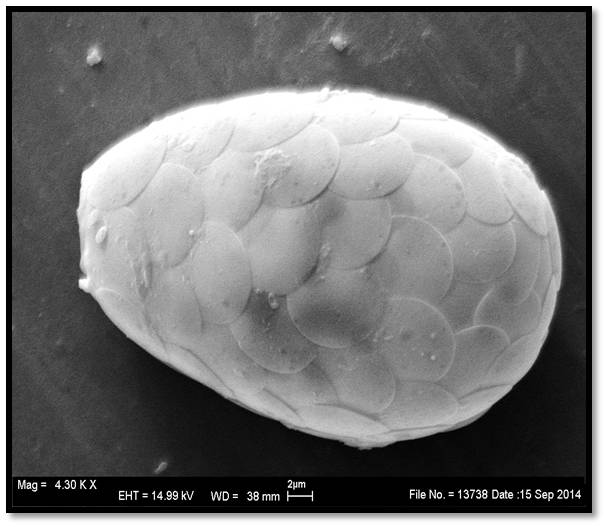
Testate amoebae Tracheleuglypha
Soil education through students
As we try to put the finishing touches to an edited volume on soil and plant growth, we are finding that a lot of discussion revolves around the diversity of soil organisms and their importance in driving soil processes. However, what is striking is exactly how little we still know about the interactions between these organisms and how they are involved in the ecosystem services that soil provides.
I wonder if this has something to do with the way biology, in many departments, is moving away from traditional biology, as I was taught, towards a more molecular and biochemical approach to the subject. In my day we were expected to know something about taxonomy of most groups of organisms and, although I have never been a great taxonomist, I do know how to distinguish between major groups of organisms and be able to get further in some selected groups.

Benjamin Franklin Bridge. Linking Philadelphia and Camden, NJ. The 2013 Soil Ecology Society Conference was held in Camden this past summer.
To my current class in ‘Advanced Soil Ecology’ (which is not truly advanced as most of these graduate students have not had the opportunity to be exposed to a general soil ecology course), the fact that there is such a diversity of organisms in soil is an eye-opener.
Two students from this class come to mind. Like many of our graduate students, they have full time jobs, and have realized that, perhaps, these organisms might be important.
One student works for a company that sells products to farmers to improve physical properties to soils, but had no awareness that soil organisms exist and may do something important that might relate to the products they sell.
I recently spent a morning with the main personnel of the company, at the invitation of the graduate student, talking with them about the diversity of organisms in soil and what they do. I got the impression that this was an exciting revelation to them and something they needed to explore further as it might impinge on how they could use their products to better effect, or how biotic factors may adversely affect their product’s success.
The second student works as an environmental consultant and deals with restoration of sites. Her current project has been involved with oil pipelines, where she has been trying to get contractors to pay more attention to the order in which they back fill with the soil horizons they have excavated. As she has been telling them more about what she is learning in class about the importance of soil biodiversity and its role in soil processes, the contractors have been more careful about what they are doing and can see that a healthy and diverse biota may help with the restoration of the site. Perhaps one-by-one we can chip away at education and get our messages across.
I have been lamenting the loss of traditional organismal based biology as I see this happening in one of my home departments. With the recent establishment of a Computational and Integrative Biology Program it has been decreed that all new members of our department must have a strong link to this program.
The interpretation of the program is that it should concentrate on genomics and metagenomics and associated modeling with an emphasis on the medical applications. I have no objections to this diverting part of the faculty into these areas, but the trend has been for every new hire to posses the skill sets and interest in these areas, leaving organismal biology sadly wanting.
It is heartening to see, however, that we still maintain a small hard core of students that have an interest in ecology (some completed their MS degrees by only taking the entire course offerings of the two faculty who teach ecological subjects).
The up and coming metagenomic, transcriptomic and proteomic methods offer great advances in our understanding of soil processes, especially those mediated by the microflora, and I see a greater need for ecologists and molecular biologists to work together to progress this area of science.
Despite my reservations about the direction in which my own department is going, I am heartened to see how successful the Soil Ecology Society has been in stimulating the interest of graduate students in soil ecology. Our recent meeting consisted of about 50% students participants, all of whom were doing excellent research. Their enthusiasm was evident and I look forward to seeing many of them taking over leadership roles in the society, pushing forward with educating others about the vital importance of soil and soil biodiversity in a world that seems to be very slow in altering positions on environmental problems that may have global implications. The Global Soil Biodiversity Initiative is an important step forward in this education initiative from which I hope future soil ecologists will benefit.
Soil biology’s bright future

In Uganda, University of New Hampshire undergraduate student Michael Casazza crosses a river with local help to access a forest on the edge of Kibale National Park. Soils from the forest and nearby agricultural fields are being compared in a study of the socioeconomic factors driving agricultural sustainability in a region with one of the planet’s highest rates of population growth.
It’s an exciting time to be a soil biologist; as we develop new tools, connect increasingly to other disciplines, and expand our funding opportunities, we are showing that soil biological processes strongly affect the environmental quality and productivity of ecosystems both regionally and globally. With these discoveries we are making ourselves increasingly relevant in a world where natural resources are limited, and it’s not hard to see the signs of our field’s success. Consider, for example, the rising impact factors of journals such as Biogeochemistry and Soil Biology & Biochemistry and the diversity of academic institutions that now employ soil biologists. A quick look at the current Soil Science Society of America jobs page shows four academic jobs with soils in soil biology, but only one in soil physics, and none in soil chemistry.
Our field is finally hot but, as one of my colleagues who’s a soil physicist reminds me, these things ebb and flow. The top spot in soil science was once occupied by soil physicists helping restore soil ecosystems suffering from massive soil losses via erosion; by soil pedologists describing soil characteristics and their potential uses for an expanding human population; and by soil chemists pushing crop yields to new heights. While impactful, highly relevant research is ongoing in these areas of soil science, the momentum seems to be with soil biology. Here I explore two thoughts about how we can maintain this momentum. The first relates to expanding research efforts in agricultural systems, and the second to how important it is for soil biologists to embrace the different sub disciplines within soil science.

Cover crops like the ryegrass shown here are grown in the offseason between cash crops. They diversify simple rotations and provide a number of aboveground benefits such as reducing insect and disease pressure. However, plant diversification effects on belowground processes in both agricultural and unmanaged plant communities remain poorly understood.
Soil biologists have been making important contributions to understanding nutrient cycles at global scales and to understanding ecosystem responses to pollution, climate and other stressors at local and regional scales. In answer to the question ‘where next’, there are as many answers as there are soil biologists but my vote goes with the need to better understand soil biological processes in agricultural systems. There is no ecosystem type that our society depends upon more or, arguably, that harms its surrounding environment more, and yet they remain underappreciated and poorly understood. For example, agricultural systems are the principal source of global nitrous oxide emissions and pollute our waterways, but how can we sustain and increase crop productivity in soils that lose little N to the environment remains unanswered. Soil biology has an important role to play in answering these questions.
Because of their highly simplified plant communities, intense soil disturbance, and high rates of nutrient inputs, agricultural systems provide a testing ground for some of ecology’s most pressing questions, including relationships between plant communities and belowground ecosystem functions. In my lab, we have been comparing rotations that produce more than one crop over time to monocultures to test questions about soil responses to diversifying plant communities (e.g. McDaniel et al. 2013; Figure 1). Different rotation crop types can also be compared in order to separate the effects of diversity, per se, from the effects of including specific crop functional groups, such as legumes. Recent studies have also taken advantage of the inherent differences in decomposer communities between agriculture and grassland soils to provide new insights into decomposition dynamics (e.g. Wickings et al. 2012), while my own and other’s labs have contributed to our understanding of how nitrogen influences soil organic matter (Gillespie et al. 2013; Grandy et al. 2013). Our understanding of soil ecosystems is improved by these studies, which will also help guide management practices on the 40% of the planet’s land currently used for agricultural production.
My second point relates to the dependence of soil biology on the other branches of soil science, so when disciplines such as pedology are deprioritized we lose important context for our work. The loss of pedologists at land grant universities has many causes but is dismaying, especially when considered in light of its impact on soil biology and other soils research. Among other things, pedologists often bring a perspective that spans broad spatial and temporal scales that many soil biologists don’t routinely consider (Schimel and Chadwick, 2013). Even within the broad area of soil biology, important areas such as faunal ecology and taxonomy are being overwhelmed by current interests in microbes. Microbes may be the engines in the soil, but both microbes and the processes they mediate are strongly controlled by factors outside the realm of traditional soil microbiology. While soil biogeochemistry captures some of the interdisciplinary connection inherent in soil biology, it’s not a substitute for maintaining strengths in all areas of soil science.
Student training in soil biology is also negatively impacted by the slow drain of faculty from sub-disciplines that aren’t trendy, something I’ve come to appreciate recently. When I was a mid-career PhD student about 10 years ago I was attending the biannual meeting of the Soil Ecology Society where several accomplished elder statesmen were lamenting the poor training many soil microbiology graduate students were receiving. They argued that graduate students were crossing over into soil microbiology from other backgrounds (e.g. zoology) without ever developing a comprehensive background in soil science. At the time my opinion was that these students were bringing a fresh perspective unencumbered by outdated classes. While I still see this student crossover into soils as a positive, I also now see the value in some formal background in the foundations of soil science. Since my student days, I have been continuously amazed by how complex the soil matrix can be. I’ve observed that many of our most important discoveries in soil biology are related to the interactions between this complex matrix and the organisms inhabiting it, and thus come to appreciate the importance of taking at least a few classes in different areas of soil science. Recently, I’ve sent new PhD students without backgrounds in soil science to the Summer Soil Institute at Colorado State University (http://soilinstitute.nrel.colostate.edu/), where they explore hands-on the physical, biological, and chemical components of soil. This short course is not a substitute for full-length classes in soil science but it helps students from different backgrounds begin to transition into becoming soil scientists.
This and the next generation of soil biologists appear well positioned to play an important role in solving our planet’s environmental crisis (Figure 2), which is inextricably linked to population growth and our ever-increasing demand for agricultural products. To make the most of our opportunity requires engagement with the entire breadth of soil science sub disciplines to critical answer questions in agricultural and other key ecosystems.