

Blog Archive:
Beneath Our Feet

Assessing Amazonia Biodiversity: Beyond the Taxonomic Impediment
By Camila Ritter, PhD. student, University of Gothenburg

Amazonia is the largest tropical rainforest with the highest level of species diversity in the world. However, most of what is known about patterns of biodiversity in this area is based on large-sized and well-studied organisms such as mammals, birds, amphibians, and flowering plants. Because these macro-organisms constitute just a small fraction of the world’s total biodiversity (vertebrates represent only about 0.7% of all species of eukaryotes, for instance), and no consensus has been reached on whether poorly studied taxonomic groups such as arthropods and micro-organisms follow the same distribution patterns as macro-organisms, it is urgent to put more efforts in this ‘hidden’ biodiversity.
However, to achieve this goal we must overcome a severe obstacle: the so-called taxonomic impediment. Considering that it takes, on average, 21 years from the first collection of a species until its formal description, we would have to wait another 1,200 years to catalogue all extant species. That is unacceptably slow, and we need to develop and validate new methods for faster, more cost-effective, and objective biodiversity assessments, which do not rely on manual identification of specimens. Fortunately, molecular tools have opened a new research window on biodiversity through genetic data. With methods such as metabarcoding, it is now possible to quantify phylogenetic diversity of any locality without the need for a priori classification of specimens.
In an effort to assess the main patterns of biodiversity distribution in Amazonia, we have sequenced genetic markers from both prokaryotes and eukaryotes from a range of soil and litter samples. We targeted four locations covering the different kinds of habitat (tropical rainforest, seasonal flooded forests, and naturally open areas) of the Amazonia. If we find that environmental genetic diversity and traditional taxonomic metrics are highly correlated, that would mean that biodiversity can be rapidly and cost-effectively assessed without the demand of taxonomic experts. This result would facilitate the detection and protection of areas of high biodiversity and would allow taxonomists to focus on species descriptions and the biology of the underlying organisms, rather than routine specimen identifications. If these variables, however, are found not to be correlated, it would mean that despite centuries of research we still know virtually nothing about how the great majority of the world’s biodiversity is distributed.

Naturally open area on Amazonia. These areas have an insular distribution in “seas” of tropical forest and are associated with white sand soil. This picture was taken on “Reserva da Campina”, close to Manaus, AM, Brazil.
Photo credit C.Ritter

The tree shows the water mark from flood season of Várzea, seasonally flooded forest.The mark indicates a flood height of around 15 meters.
Photo credit C.Ritter
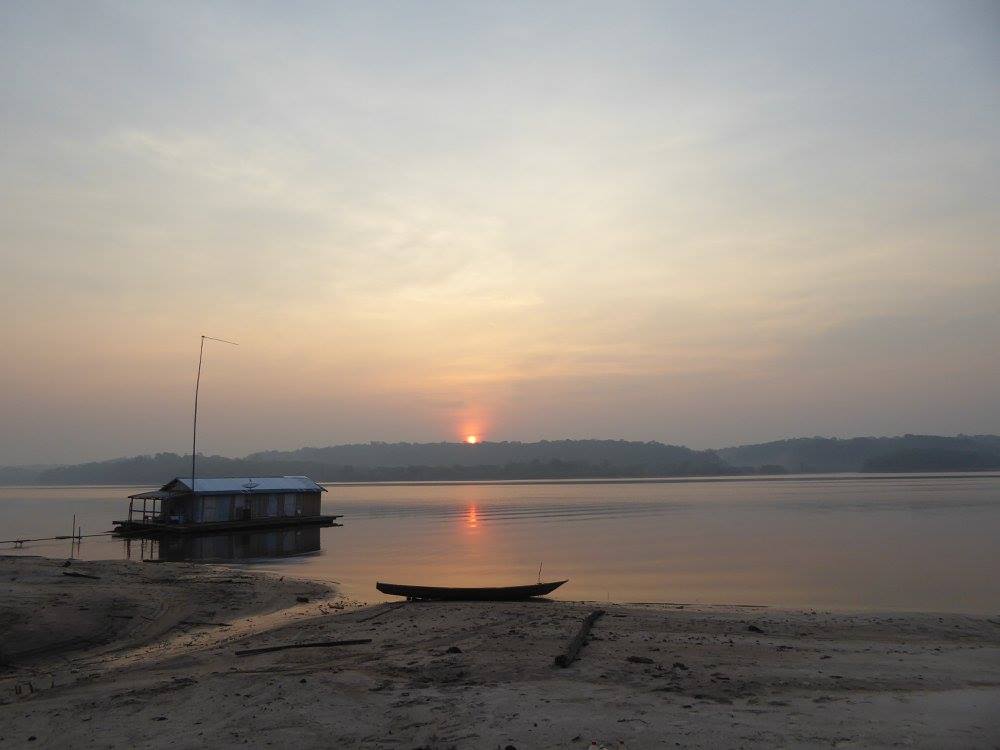
Sunrise on the Cuieras river, “Reserva do Cuieras”, close to Manaus, AM, Brazil.
Photo credit C.Ritter

Camila Ritter taking notes from field work.
Photo credit: N. Slobozian

Biodiversity in a warmer world: lessons from soil nematodes
By Madhav Thakur, postdoctoral researcher, German Centre for Integrative Biodiversity Research (iDIV)

Predatory female nematode Clarkus sp. Image by M. Ciobanu
John Haldane, the famous evolutionary biologist, popularized the immense diversity of beetles by writing: “The creator, if he exists, has an inordinate fondness for beetles”. I wonder if Haldane was aware of nematodes. Nematodes are incredibly diverse and abundant tiny worms living almost everywhere on planet Earth. Some estimates point that we may have a million of nematode species on Earth. I remember Tom Bongers, a world-known nematode taxonomist, in his lectures saying every time one samples a forest soil, s/he is likely to find a new species of nematodes.
At the beginning of my PhD in 2013, I got interested in how on-going climate warming affects biodiversity. At this point, I already was familiar with the free-living nematodes in the soil, and in particular, impressed by their omnipresence in any environment. After the consultations with my PhD supervisor, Prof. Nico Eisenhauer, I decided to investigate whether warmer soil harbours less or more diversity of nematodes. Fortunately, I was offered to investigate nematode diversity in a long-term climate warming experiment in the meadows of Cedar Creek in Minnesota, USA. This climate warming experiment was unique for two reasons: 1) Climate warming was experimentally crossed with plant diversity and, 2) Plant diversity treatments in this experiment were the part of the BigBio experiment, which is one of the oldest biodiversity experiments in the world. Further, I was very excited to work with Prof. David Tilman, who is the principal investigator of this experiment, and well-known for his contributions for our understanding of the causes and consequences of biodiversity.

Aerial view of Biodiversity & Climate experiment. Image by J. Miller
Once I was able to collect nematodes and identify them with the help of colleagues (Dr. Marcel Ciobanu in particular), I started getting back at the warming and biodiversity question. Since we understand biodiversity in many different ways, I calculated many different metrics of biodiversity and see whether I could find any consistent pattern. The most striking and consistent pattern was that warming both increased and decreased nematode diversity. The key was whether the nematodes were from plant monoculture soils or from the soil of diverse plant communities. Warmer plant monocultures were lower in nematode diversity, whereas warmer diverse plant communities were higher in nematode diversity. Although these results were exciting, I did want to explore further. With the help of Dr. Oliver Purschke, I investigated whether warming also structures nematode communities in a given way. Indeed, the results revealed that nematodes were taxonomically more similar than expected in warmer soils independent of plant diversity. So even if warming increased nematode diversity in diverse plant communities, nematode communities become increasingly similar. We published these results recently in Science Advances.
The climate warming and biodiversity question will stay with ecologists for a longer time. Our results do provide some clues by using one of the most diverse and abundant organisms. At this stage, I am even more curious by the question how general are our results. Whether Haldane’s beetles, or our nematodes, biodiversity in a warmer world is very likely to be different than the past and present biodiversity.
Reference
M. P. Thakur, D. Tilman, O. Purschke, M. Ciobanu, J. Cowles, F. Isbell, P. D. Wragg, N. Eisenhauer (2017), Climate warming promotes species diversity, but with greater taxonomic redundancy, in complex environments. Science Advances 3, e1700866. Doi: 10.1126/sciadv.1700866.
Cast in clay
By Max Helmberger, graduate student, New York State Agricultural Experiment Station, Geneva, New York, USA
Growing up an only child on a dirt road in the Northern Minnesota woods, I spent a lot of time outside, overturning the many thousands of glacier-strewn rocks around my house (at least the ones small enough to move) and gazing in awe at the centipedes, isopods, and invasive European earthworms underneath (which were promptly relocated to our compost bin). My first interest in soil in an academic context came the year after I graduated from high school, when I took a soil science course at my local community college. That class instilled in me a firm conviction that soil is humankind's most important natural resource, and clued me in to the fact that, in soil, there's far more than meets the eye.
After transferring to the University of Minnesota in Duluth to major in Biology, I took an entomology class and worked as a research assistant in an aboveground plant-insect ecology lab. I had always loved insects, arthropods, and invertebrates in general, and I greatly enjoyed the coursework and research experience, but wanted to connect it with my love of soil. I started searching Google Scholar for “soil arthropods”, and a few dozen soil ecology articles later, I was hooked, and I eventually sought out and accepted a M.S. position in the lab of Dr. Kyle Wickings at the New York State Agricultural Experiment Station, a satellite campus of Cornell University located in Geneva, New York. What I didn't know as I was reading all those papers, was that I would end up reporting all the knowledge I gained from them in a most unusual way.
Clay animation, for those unaware, is a form of stop-motion animation in which clay models are photographed, moved slightly, photographed again, and so on. The pictures are strung together and played in rapid succession to give the appearance of movement. Wallace and Gromit is arguably the most famous example of the medium. When I was 7 years old, my grandmother took me to an hour-long class in clay animation. I made a video of an anthropomorphic flower dancing to some sort of classical music riff. The VHS tape is certainly hiding somewhere in my house. Fast forward to my undergraduate entomology class, and I drew on those old memories for the course's final project to make a clay animation video on the life cycle of the gallmaking fly Eurosta solidaginis, the main study organism of my research advisors’ laboratory. The video was crude by my current standards, but got me a good grade in the class nevertheless.
At Cornell, where I'm currently working on my M.S. in Entomology, I’ve had the opportunity to draw from a unique funding source called the Extension/Outreach assistantship. Instead of working off a grant or being a teaching assistant (something difficult to do when based at a satellite research campus rather than the main university campus), I earned my stipend via progress on a variety of extension and outreach projects of my advisor's and my own devising. When applying for the assistantship and listing my project objectives, my advisor and some of the faculty members on the Extension/Outreach assistantship committee were skeptical until they saw the E. solidaginis video as a proof-of-concept, and in Spring semester of 2017, I was off to the races. To avoid some of the mistakes I made with my previous clay animation, I was very careful with how I went about planning and "filming" the videos. I wrote out all of my narration in advance as well a clear script of what specific actions I would portray. Then, I timed myself reciting the narration for each scene, and so could know in advance how many frames of animation I needed. This, combined with a nice DSLR camera as a Hanukkah present from my parents, would allow for much more cohesive and polished videos than my tale of the gallmaking fly. In the end, I produced three videos, Life Cycle of Entomopathogenic Nematodes, The Soil Food Web, and Ecosystem Services in Agriculture (though the latter includes some functions performed by aboveground organisms). My funding next semester will be from the same Extension/Outreach assistantship, so I plan to produce at least one more video in addition to my other projects, possibly two. From start to finish (writing the script, creating the models, creating the set, taking the photographs, editing the video, and recording the narration), each video took me between 15 and 20 hours to make. Each video consists of 350-400 individual images, with some being repeated here and there. They’ve been received well in the department, and the entomopathogenic nematode video has even been incorporated into several extension talks. The rest of the videos have ben showcased in a few classroom settings, and I am hoping to further expand their reach. I plan to make at least two additional videos in the fall, as I will again be funded through an Extension/Outreach assistantship.
My ultimate goal is that these videos provide an accessible way of communicating soil ecology and biodiversity to lay audiences, especially young ones. Despite being the prototypical "science nerd" growing up, and being an avid consumer of books, documentaries, and Web resources about the natural world, many of the soil animals I read about during my first forays into the primary literature were completely unknown to me. I had no idea there were mites beyond dust mites and the various parasitic taxa, and certainly didn't know there were any mites as cute as a galumnid oribatid. I had never even heard of diplurans, symphylans, pauropods, and some of the other more obscure soil organisms. I knew what a pseudoscorpion was, but didn’t know I could find them in the peat bog less than a mile from my house. And that rubbed me the wrong way. It's hard for young people to learn about the marvels of soil biodiversity, especially on their own. I know that 7 year-old Max would have gotten much more out of these videos than from one about a dancing flower, and he would have started playing around with Tullgren funnels much earlier than junior year of college. As such, if you enjoy my videos, I encourage you to share them however and wherever you like. They are available online as a YouTube playlist.

What lies beneath: South Africa’s megadiversity of soil biota Part I
By Dr. Charlene Janion-Scheepers, Postdoctoral Research Fellow, Monash University, Australia
This is the first in a three-part blog series highlighting the rich soil biodiversity found in South Africa.

Soils are integral to agricultural productivity, biodiversity and the maintenance of ecosystem services. However, soil ecosystem research depends on foundational biological knowledge that is often missing. In a recent review published in Pedobiologia, we review the current knowledge on the soil biota of South Africa. The paper outlines the literature and sampling methods used to assess soil biota, the available taxonomic expertise and depository of main collections within South Africa, the availability of identification guides and online resources, and the status and distribution of described species.
This review was the result of two workshops held by the Soil Ecosystem Research Group in South Africa (SERG). We are a soil biodiversity research group that provides a platform for linking and promoting research on soil organisms. One of the first priorities identified by SERG was the need to collate and mobilise data and collections such that we can consolidate and compare the state of knowledge of each group. We also identified that foundational work on soil organisms is needed to facilitate research on soil health, as was outlined in our paper The unknown world: Understanding soil health in South Africa.

The first Soil Health Workshop held at the XVII Entomological Society of Southern Africa Congress in Bloemfontein, 6 July 2011.
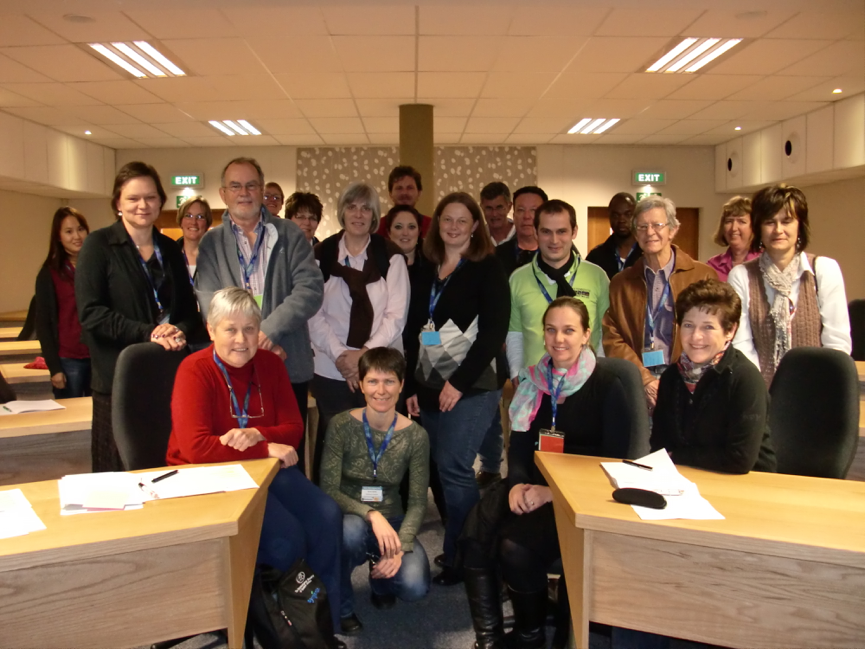
Second workshop of the Soil Ecosystem Research Group held at the XVIII Entomological Society of Southern Africa Congress, 2 July 2013, North West University, Potchefstroom.
In our next blog What lies beneath: South Africa’s megadiversity of soil biota (part II) we will discuss the rich soil biodiversity found in South Africa.

Decomposers and the City
By Alessandro Ossola PhD, The University of Melbourne, Australia and US National Academy of Science, Engineering and Medicine NRC Associate c/o NRMRL-USEPA, Cincinnati, OH.
Cities are generally associated with grey jungles of concrete, glass and steel. Where the urban land is still profitable for new development, little chance is left for the soil to persist unsealed. When this happens, soil is generally heavily compacted, polluted, its biota depleted and ecological functioning greatly reduced. Urban soil faces a complex and uncertain future of irrigation, fertilization, transportation, remediation and molestation which is rarely observed in natural and agricultural soils. Urban soil is ultimately associated with a mere substrate where to build new above- and below-ground structures and infrastructures to connect our modern cities. Despite their intrinsic complexities, cities and the soils underneath represent useful pre-constructed laboratories to extend our knowledge about soil functioning, its biodiversity and resilience towards a variety of stressors and habitat management practices.
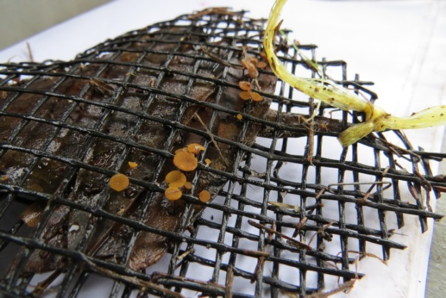
Figure 1.

Figure 2.
Figure 1, Figure 2. Fungi colonizing Eucalyptus globulus litter in litter bags exposed in an urban park characterized by complex vegetation and high litter mass in Melbourne, Australia.
In a paper published this week in Ecosystems, we asked whether relatively small changes in the complexity of vegetation, litter and soil characteristics driven by urban green spaces management were translated into differences in superficial organic matter microbial decomposition and detritivore comminution. Since the 90’s, microbial decomposition processes have been measured in cities and towns mostly in forest remnants along urban-rural gradients. Surprisingly, to date no studies measured superficial decomposition or comminution processes in areas, such as urban parks, which make up most of the green space in cities worldwide. This is likely due to the intrinsic difficulties and risks (e.g. people, mowers, animals, etc) in undertaking litter bags experiments in these habitats. In our study, we found that the simplification of urban habitats in Melbourne, Australia, and particularly of the understory vegetation, significantly decreased decomposition and comminution rates of two substrates in litter bags (i.e. Eucalyptus globulus leaves and pea straw). This is likely determined by drier conditions under simple urban vegetation, where water availability might represent a stronger limiting factor for the activity of both microbes and detritivores compared to temperature. The soil function in structurally complex urban parks was comparable to that of woodland remnants, and the age since land use change from agricultural land to urban park (40-100 years) did not affect decomposition and comminution processes. This suggests that urban soils can recover their function towards that of remnant ecosystems if enough time has transpired and proper management measures are taken. The volume of the understory vegetation was positively related to the species richness of macrofauna detritivores, which in turn significantly enhanced comminution rates. More than 70% of detritivores sampled were European exotic species. The relation between species richness of numerous soil organisms and soil processes have been largely investigated through mesocosm experiments in the last century, but rarely observed or tested in the field.

Figure 3.
Figure 3. Relationship between urban understory volume, species richness of macrofauna detritivores and Eucalyptus globulus litter mass remaining after 1 year litter bag experiment.
While the ecological exploration of cities started decades ago, we have just begun to investigate the functional role of urban organisms and particularly the soil biota. Worldwide, cities can represent useful laboratories to test new hypotheses and questions about the role of biophysical factors, human management, environmental legacies, soil biodiversity and their complex interactions upon soil functioning. Time is ripe to dig into!