

Blog Archive:
Beneath Our Feet
Global Worming
Dr. Rüdiger M. Schmelz
71 new species of earthworms and enchytraeids in a Zootax Special Issue in honor of András Zicsi (1928-2015)
Seventy-one new species of earthworms and enchytraeids – small whitish relatives of earthworms – have been uncovered in a Special Issue of the journal Zootaxa (Nº 4496). More than 100 authors have contributed in 40 articles to the 575 pages volume. The species were found in 15 different countries of South America, Africa, and Eurasia. This volume was published to commemorate András Zicsi (1928-2015), the eminent German-Hungarian earthworm taxonomist. It provides a good overview on the current state-of-the-art of earthworm taxonomy, with respect to methods, styles and standards of description, geographical and thematic focus. DNA-sequencess are increasingly used to corroborate or even to establish new species, even though detailed morphological descriptions remain the backbone of earthworm taxonomy.

A highlight of the Zootaxa Special Issue on earthworms: a second marine littoral earthworm species, Pontodrilus longissimus. Up to now only one truly marine littoral species of earthworms had been known, the peregrine Pontodrilus litoralis. The second species was discovered by the specialist and "earthworm species hunter" Samuel James with a short look at the material ("this is a new species"), but it's a long way from discovery to valid description. This work was carried out in the group of Somsak Panha at the Chulalongkorn University of Bangkok. The paper includes a revision of the sister species P. litoralis and a comparison of both species at DNA-level. Left: Three specimens right after fixation. Right: Drawings of taxonomic structures, morphology and anatomy. Bottom: Molecular comparison of the new species with its sister species. From Seesamut et al., Zootaxa 4496, pp. 218-237, with permission of the authors.
Earthworm taxonomy is not an ivory tower discipline. Many species are discovered in areas where people live, work, and sustain their livelihood. Because of their body size they are often known by the locals before science gets hold of them. Farmers are interested in the species that live on their lands. Sustainable agriculture is unthinkable without earthworms. The amount of endemic species with a narrow distribution range—and therefore with risk of extinction due to soil degradation or land use change—is tremendous. So earthworm taxonomy really matters. This volume increases the number of known species by 1%, a small but notable proportion!
The editorial can be downloaded here.
Global diversity of earthworms and enchytraeids (Clitellata): papers in honor of András Zicsi (1928–2015) (ed. Rüdiger M. Schmelz). Zootaxa 4496, 575 pp.; 30 cm. Magnolia Press, Auckland, New Zealand. ISBN 978-1-77670-496-5 (paperback).
ISBN 978-1-77670-497-2 (Online edition). Orders via magnolia@mapress.com.
Dr. Rüdiger M. Schmelz is taxonomist of enchytraeids and Zootaxa subject editor for Oligochaeta.

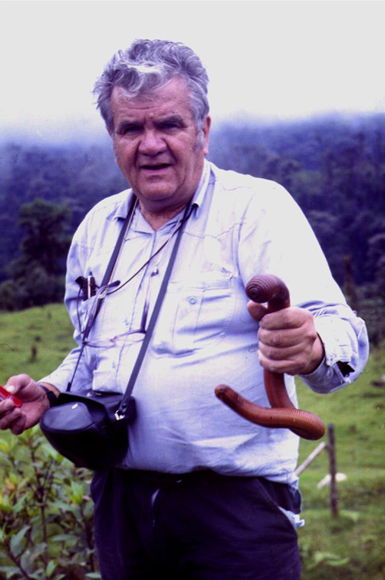
András Zicsi and Martiodrilus ischuros Zicsi, 1990 in Santa Rosa, Prov. Pichincha, Ecuador, April 1990. This deep-burrowing giant earthworm was well-known to the local people; they knew when and where it would crawl up to the surface. András Zicsi (1928-2015) was Hungarian but his mother-tongue was German. He was a researcher in the Soil Zoology Group at the Hungarian Academy of Sciences and gave courses at the Eötvös Loránd University in Budapest. In 137 papers he described 237 new species of earthworms, mostly from Europe and South America; he erected and revised numerous genera, wrote identificatin keys ... His earthworm collection – among the largest worldwide – consists of roughly 100.000 specimens and more than 800 species. His legacy is now continued by one of his students, Csaba Csuzdi, the leading European earthworm taxonomist.
Photo by: Csaba Csuzdi.

Earthworms in the National Parks
By: Mac Callaham, USDA Forest Service Southern Research Station, Georgia, USA

Photo from George Washington Memorial Parkway.
I plop down into my seat as I board the flight. I give a brief nod of greeting to my neighbor, and notice that he is (like me) of an age which might indicate that he could expect to pass the flight time in conversation, rather than totally absorbed in a liquid crystal display.
I start with a standard question, “Are you headed out, or headed home?” And we’re off!
When it’s my turn, I tell him that I’m headed out to a conference where I’ll give a presentation on my research on earthworms. I know this is a topic that will keep the conversation rolling all the way from Atlanta to New York… fortunately, we have refreshments!
It’s generally true that people are interested in earthworms, and even more so when I tell them that I study invasive earthworms. People are also quite interested – and protective – of their National Parks, so I find that I usually have an attentive audience when I talk about my work on earthworms in the Parks.
“Invasive earthworms?!?” they exclaim. “There’s more than one kind?” they gasp. Then in rapid succession: “Where do they come from? What do they do? How do you know they’re invasive?” and more. I do my best to answer them, and eventually get around to describing the work that my colleagues and I have been doing at the Great Smoky Mountains National Park (GSMNP) in Tennessee, and the George Washington Memorial Parkway (GWMP) in Virginia and Washington, DC.
In the GSMNP it’s an introduced Asian worm that’s moving into the Park from the edges. This worm is one that’s sold as bait, and goes by the trade name of “Alabama Jumper.” It’s aptly named, because (although not technically from Alabama) they definitely jump. When molested these worms can flip and twist and throw themselves up off the ground, sometimes catching several inches of air in the process. This species is a cause for concern because where it becomes established, it can reach very high densities, and it consumes much of the fallen leaves on the forest floor. These leaves are habitat for lots of other invertebrates, as well as some larger animals like salamanders. It’s no surprise that the GSMNP is considered a hotspot of biodiversity for forest floor creatures like millipedes and salamanders considering the rugged, inaccessible terrain, the lush vegetation, and the warm and wet conditions that predominate. On the other hand, it is a bit surprising, and alarming that one introduced earthworm species can outcompete these other forest floor dwellers, and impact their numbers and diversity, but this is exactly what our team has documented in recent years.
At the George Washington Memorial Parkway (GWMP) in Washington DC, we sampled earthworms and other soil invertebrates to help catalog the existing biodiversity of the Parkway and its constituent Parks (including Great Falls NP). We were also interested in whether the past history of human uses of the land could be detected in the soil animal community. There’s evidence that major disturbances can contribute to the establishment of non-native earthworm species, and the GWMP provided a great opportunity to examine this relationship with well documented history of soil disturbances ranging from the canal-building activities at Great Falls Park in the 1780s, through the Civil War entrenchments, and on into contemporary disturbances. We’ve uncovered good news and bad news with this work. On the one hand we’ve found what we believe to be an undescribed native species of millipede at one of the GWMP network parks (Turkey Run Park), but on the other hand, we found several individuals of a European earthworm species that has never been reported in North America before our sampling.

Alabama Jumper.
Photo © Susan Day / UW Madison Arboretum
All this brings up a couple of important points. First, we still don’t seem to have a good handle on the species diversity that we have native to the soils of North America, and second, there are new species introductions happening all the time, and we don’t have a good handle on what these introductions will mean for the native species. Will this latest introduced species become invasive? Will it choke out some native species, or otherwise decrease our native biodiversity? Is there any way to control these invasive species?
Out the window, our flight from Atlanta to New York has skirted the eastern slope of the Smoky Mountains, and passed within sight of the National Mall in DC. My new friend leans over and looks down on these landscapes. He is reflective.
“Wow, there’s a lot going on down there that I never thought about before…”
I nod knowingly. I tell him that few people ever really think about what’s going on right under their feet, but I tell him that now he’s one of the lucky ones.

Soil Carbon Modelling with Soil Fauna and Humus Forms
By Cindy H. Shaw, Oleg Chertov, and Darrell Hoffman*

An example of a mull humus form.
Image by D.Hoffman
Soil fauna are key agents in different types of organic debris processing in the forest floor and mineral topsoil, resulting in humus forms. The humus form that develops at any given site is the result of the amounts and types of litter inputs (such as wood, leaves, roots) from local vegetation, temperature and moisture conditions, and the dynamics of soil biota including fauna, fungi, and bacteria. Humus forms are most broadly divided into three orders: mor, moder, and mull. Each order is associated with a set of physical properties that are easily observed and are related to processes occurring in the forest floor and the underlying mineral soil.

An example of a moder humus form.
Image by C.McNalty
Mors are characterized by a distinct boundary between organic and mineral soil horizons, often with plentiful plant roots and fungal hyphae throughout the organic layers. Mulls develop when there is sufficient mixing of organic and mineral soil often resulting from the activities of soil fauna; they have a relatively thick, dark, mineral Ah horizon enriched with organic matter.
Moders are humus forms with properties that transition between those of mors and mulls. The orders can be further divided into groups described by horizon types (such as L, F, H, Ah), which indicate the stage of decomposition, or include descriptors for composition (such as woody, fungal mossy).
The activities of different organisms and the interactions among them have direct consequences for carbon dynamics, as they are the agents driving rates of mineralization and respiration, as well as stabilization, and sequestration. Although the actions of soil fauna mediate the cycling and storage of carbon, the direct effects of these organisms can be difficult to study, and until now have not been included in carbon models. In addition, most carbon models focus on predicting carbon emissions because of the great interest in greenhouse gases, and they neglect the formation and storage of soil organic matter, which is important in carbon sequestration.

An example of a fungal mor humus form.
Image by C.McNalty

An example of a woody mor humus form.
Image by C.McNalty
Recently, a model developed by scientists in Russia, Germany and Canada, Romul_Hum (the soil module of the individual tree forest growth model EFIMOD), integrates knowledge of humus form development, soil fauna food webs, dynamics of fungi and bacteria, and the resultant formation and stabilization of carbon in soil organic matter. Romul_Hum accounts for the many belowground interactions (fungivory, bactivory, predator-prey relationships) between soil fauna, bacteria, and fungi and how these interactions are regulated by the qualities of incoming vegetative material. Unlike other models, which treat decomposers as a homogenous group, Romul_Hum uses variations in the ratios of fungal to bacterial biomass, and the ratios of carbon to nitrogen in the fungal and bacterial biomass. Based on published soil fauna data, different types of food webs are defined for combinations of decomposers and types of horizons in humus forms. An earthworm module was developed with parameters for for food palatability, ingestion and egestion, food consumption, lifespan, excretion, and assimilation efficiency. It is especially important to understand the effects of earthworms interacting with other soil fauna activities in Canada as earthworms are invasive to Canada’s large boreal forest (see blog: Earthworm invasions in northern forests). As earthworms spread through the Canadian boreal forest, they will change the carbon dynamics and carbon balance of the ecosystems.

An invasive earthworm and lepidoptera larva in a boreal forest soil sample.
Image by C.McNalty
Romul_Hum could be used to predict, understand, and quantify those changes. The types of changes to the forest carbon cycle from invasive earthworms is dependent on the species of earthworm(s) present. These changes can include mixing organic material in the forest floor with the mineral soil below, shifting the balance between fungal and bacterial biomass, and stabilizing carbon in soil organic matter as it moves through the gut of the earthworm, or as earthworms ingest and stabilize faeces produced by meso-fauna. Beyond these effects, earthworms can change the food and habitat available for other groups of soil fauna, such as nematodes, mites, and springtails, affecting the survival and success of meso-faunal populations.

The Forest Floor Recovery Index
Image by D.Hoffman
By acknowledging and accounting for the complex interactions between soil faunal food webs and their habitat (humus forms), the modelling approach of Romul_Hum provides a means to evaluate how management, and potentially climate change, affects relationships between soil fauna biodiversity and soil carbon sequestration. In Europe, humus form classification is currently being refined within the HUMUSICA project. In Canada, humus forms are used as part of a system (Forest Floor Recovery Index) to evaluate the success of reclamation after mining.
*Cindy Shaw (cindy.shaw@canada.ca(link sends e-mail)) is a Research Scientist, and Darrell Hoffman (darrell.hoffman@canada.ca(link sends e-mail)) is a Forest Soil Research Assistant, for the Canadian Forest Service at Natural Resources Canada. Oleg Chertov is a scientist who has worked in Russia, Germany, and Finland, and created the Romul_Hum models with Alex Komarov

Romul_Hum predictions of soil carbon stocks and their distribution between the mineral Ah and organic O horizons, depending on presence of mesofauna and
earthworms.
Image by O.Chertov

Earthworm invasions in northern forests
By Erin Cameron, Postdoctoral Researcher, Helsinki University, Finland
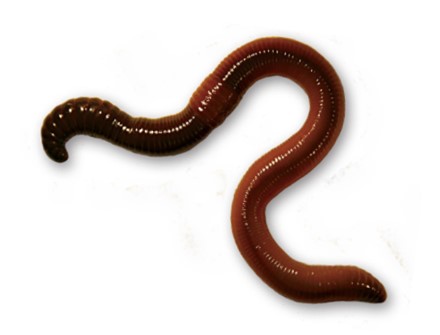
Lumbricus terrestris. Image by E. Cameron
Finishing my paper route always took longer on rainy days when I was a kid – I had to walk slowly to avoid stepping on earthworms and occasionally I stopped to move them off the sidewalk. I would never have believed that earthworms were invasive in much of Canada and the northern United States! In those previously glaciated areas, there are no native earthworms, but instead only European earthworms that were introduced to North America with the arrival of European settlers.
Earthworm populations can only expand about 5 to 15 meters per year on their own, and consequently people play a key role in their spread. For my master’s thesis with Dr. Erin Bayne at the University of Alberta, I tried to determine how earthworms were spreading in Alberta’s boreal forest. I was sold on the research question once I realized that I’d need to canoe or kayak across lakes to test whether earthworms were most common near boat launches where anglers might dump their earthworm bait. After a couple near misses but only one capsizing incident, we found that earthworms were present at approximately 70% of the boat launches and roads sampled, but only 35% of far shores and less than 15% of forest interiors. They were also more likely to occur at older roads than more recently built roads, suggesting that earthworms were introduced by vehicle traffic (their eggs can become stuck in tire treads) not during construction of the roads.
After examining how earthworms were being introduced, we started to investigate their effects in the boreal forest. Surprisingly to most people, earthworms do not always improve soil health or benefit other organisms. When exotic earthworms invade forests where there are no native earthworms, they consume leaf litter layers, mix organic and mineral soil horizons, and affect nutrient cycling. These impacts on soil structure and ecosystem functioning can then lead to cascading effects on other organisms. In northern Alberta, we found that earthworms decreased the thickness of the leaf litter layer, reduced the abundance and diversity of microarthropods, and decreased plant biomass, depending on the species. Not all species were negatively affected though – one of the key predators of earthworms, the American robin, was more likely to occur in areas where earthworms were present.
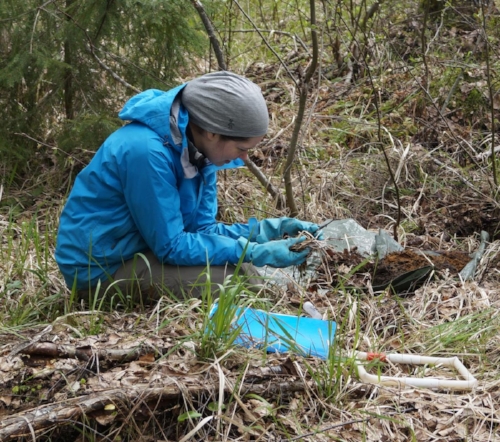
Sampling for earthworms in the boreal forest. Image by R. Rocha
Earthworm invasions are at an earlier stage in northern boreal forests than temperate hardwood forests, where the deep burrowing and mineral soil dwelling species that cause the largest changes are more widespread. At our study sites, the most common species is a litter dwelling species called Dendrobaena octaedra. But because most people are not aware that earthworms are invasive, they continue to introduce earthworms by dumping their bait, moving soil, or not cleaning their tires when travelling to remote areas. We started a citizen science project to collect data on earthworm distributions across Alberta, which at the same time serves to increase public awareness about earthworm invasions: http://worms.educ.ualberta.ca
However, earthworm invasions are occurring globally, rather than only in North America. We also lack data on distributions of native and exotic species of earthworms at broad scales, making it difficult to determine the key factors driving their distributions. To address this issue, we started a working group (sWORM; https://www.idiv.de/?id=429) at the German Centre for Integrative Biodiversity Research (iDiv) to synthesize data on earthworm distributions. Let us know if you have earthworm data and want to participate!
Further reading:
Cameron EK, Bayne EM, Clapperton MJ. 2007. Human-facilitated invasion of exotic earthworms into northern boreal forests. Ecoscience 14: 482-490.
Cameron EK, Bayne EM. 2012. Invasion by a non-native ecosystem engineer alters distribution of a native predator. Diversity and Distributions 18: 1190-1198.
Craven D et al. 2016. The unseen invaders: introduced earthworms as drivers of change in plant communities in North American forests (a meta-analysis). Global Change Biology 23: 1065-1074.