

Blog Archive:
Beneath Our Feet

The Mysterious Case of the Microbe in the Soil
By Emm Fulk, graduate student, Rice University, Houston, TX, USA

Microbial biosensors sense and environmental signal and,
in response, produce a measurable reporter such as a gas.
Image by E. Fulk
Flagella? Check. Cell wall? Check. Cheesy music? Yes, that's right. What's a microbial detective without a melodramatic theme song?
Studies of soil microbiology have traditionally - and necessarily - been conducted from the outside in. Net fluxes of nutrients and gases from the soil environment can be chemically measured. High-throughput sequencing techniques can give metagenomic data, which provides a snapshot of the general composition of a soil microbiome. This is, essentially, a stakeout - we can get a general sense of a soil community by observing the surrounding environment and may be able to infer some activities by measuring who and what comes in and out. These strategies give us an overall picture of soil communities and their net interactions within the ecosystem but lack the spatial, temporal and chemical sensitivity to fully understand the internal dynamics of soil microbiomes.
We need a microbe on the inside.
The idea of using living microbes as biosensors is not especially new. To survive and adapt to new environmental stresses, such as nutrient or water deprivation, microbes have evolved networks to sense these changes and adapt their metabolism accordingly. Tying these naturally-evolved systems to a measurable reporter (for example, a fluorescent protein) is a logical step for understanding how microbes interact with their environment. Think of a light bulb and a light switch. The light switch senses whether it is on or off. The light bulb reports on the ON/OFF state of the light switch. Even if you can't see the switch, you can infer whether it is on or off by looking at the light bulb. Likewise, we can detect when a particular environmental condition elicits a microbial response by monitoring
the production of the reporter.
I know just the microbe for the job… he's sensitive, discreet and reports only to me.
For microbial biosensors to be useful in soil, their sensors and reporters must both be suitable for monitoring interesting
environmental conditions - for example, drought conditions, concentrations of nitrogen or carbon species, or cell-cell
communication signals. Sensors for -osmotic stress, nitrate, quorum sensing molecules and various heavy metals have been or are being
developed. These systems must also be sensitive to an environmentally relevant level of the signal. If too sensitive or not sensitive
enough, reporter production is not triggered at the right times to give useful information. Ideally, reporters need to be measurable in
situ. Traditional fluorescent or pigmented reports can't be used because, well, you can't see them in soil. Expanding our toolbox of
reporters would allow us to monitor cell growth as well as environmental response and to measure multiple signals.
The name's coli. Escherichia coli.

In standard biosensors without memory, microbes produce a reporter directly
in proportion to the level of signal. In biosensors with memory, the reporter is induced by the first instance of the environmental cue and remains on thereafter. The top cartoon shows how these two scenarios compare at the level of individual microbes. The bottom graph illustrates how reporter production differs at the whole-sample level. Image by E. Fulk
Even after engineering a useful biosensor, it remains to find suitable host microbe. Most synthetic biology is initially done in E. coli, because it is relatively well understood and easy to engineer. E. coli can also a good first organism to test biosensor function. Expanding our ability to engineer other microorganisms is a key challenge both for biosensors in soil ecology and for synthetic biology as a whole. Numerous other organisms - for example, several soil-dwelling Pseudomonas species - have successfully been engineered as biosensors. However expanding our repertoire of bacterial hosts will enable biosensors to be used in more microbial communities.
Where were the suspects on the night of the…high nitrate concentration?
Recent developments in synthetic biology have greatly expanded our ability to manipulate microbes and perform increasingly difficult computations. For example, microbes can now be programmed to produce a reporter only if both signal 1 AND signal 2 are present. Other logic functions (1 OR 2, 1 AND NOT 2, etc.) could allow for studying specific combinations of environmental conditions, such as in hot spots or during hot moments.

Around the world: Exploring soils and root of all life
This post originally appeared in the Human Nature blog from the Sustainability Leadership Fellows at the School of Global Environmental Sustainability at Colorado State University.
Written by Tandra Fraser, 2015-2016 Sustainability Leadership Fellow and Postdoc at the School of Agriculture, University of Reading, London.
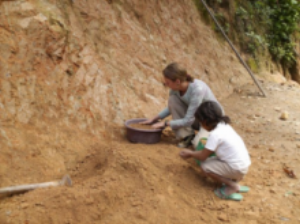
What do the Great Plains of North America, the tropical hillsides of Honduras and the valleys of Antarctica all have in common? The answer is soil, of course!
Soil is the foundation of terrestrial life on earth wherever you may travel. Located at the interface between the atmosphere, biosphere, lithosphere and hydrosphere, it is the naturally occurring surface layer formed by complex processes and interactions. Being raised on a farm in the Great Plains of Canada, I was connected to soil from a very young age as I went from making mud pies to growing food. Nowadays, as a soil scientist, I get to explore soil, its many uses, and its inhabitants.
Soil is the basis for much more than just agriculture. For example, in rural Honduras, the same soil that is used for growing staple crops such like maize, beans and coffee, is also used for building adobe houses, creating functional pottery, and even building stoves to cook the food they grow.
These same soils provide a home to countless soil organisms, including everything from large burrowing creatures such as badgers to microscopic worms, bacteria and fungi. Although we cannot see many of these species with the naked eye, they play an important role in all of our lives.
n many regions of the world, mineral fertilizers are not an option for crop growth and producers must depend on soil organisms for nutrient cycling to provide nutrients for plant growth. Organisms in the soil have evolved mechanisms to obtain nutrients. For example, many bacteria excrete enzymes into the environment when they do not have enough phosphorus to function and/or grow. These phosphatase enzymes can break down an unusable form of phosphorus that occurs naturally in the soil, into orthophosphate that can provide nutrition to the organism and will eventually be released into the environment and can be taken up by plants.
The critters that live in the soil, and their activities, involve many complex interactions between chemical, physical and biological components. These organisms aren’t just interesting to look at, they also provide essential ecosystem services upon which all plants, animals and humans depend. Although soils are extremely heterogeneous, organisms are contributing to decomposition of organic matter and nutrient cycling, regardless of the ecosystem.
Even in Antarctica, one of the windiest, driest and coldest places on earth, the soil is alive. Although the soil food web is less complex than it may be in a tropical forest, soil animals and the microbial communities play an essential role in the functioning of this pristine ecosystem. It is common to find nematodes, tardigrades and rotifers living in these soils. But even this region is not immune to global change as demonstrated by research as part of the McMurdo Dry Valley Long Term Ecological Research (LTER) Network. This site has been essential in demonstrating how the ecology in the soils of the region has been changing over the past 25 years. It also emphasizes the interconnectedness of the glaciers, lakes, streams, soils and air and the far reaching effects of human activities.
At all corners of the globe, soil and its life are constantly being threatened by human activities and global change. Land is being degraded at astonishing rates and this ultimately has an effect on food production, water quality, and pest and pathogen control, to name a few. The economic cost of land degradation is US$40 billion each year, as estimated by the United Nations Food and Agriculture Organization. As cities continue to expand, soils are paved over and organisms are unable to function, and humans, literally, become disconnected from the land, separated by a layer of concrete.
“The soil is the great connector of our lives, the source and destination of all.” - Wendell Berry, The Unsettling of America, 1977
Despite the fundamental importance of soil for all plant, animal and human life, it is often taken for granted. Scientists, policy makers and land managers must all work together to identify and implement solutions for conserving soil and all that live there. The Global Soil Biodiversity Initiative has been working to raise the profile of soil biodiversity and all its wonder around the world.