

Blog Archive:
Beneath Our Feet
Soil protistology: a rising star?!
By: Valentyna Krashevska1, Stefan Geisen2
1Post-doc University of Goettingen, Germany
2Post-doc Netherlands Institute of Ecology, the Netherlands
Part 4 in our 4 part soil protist series

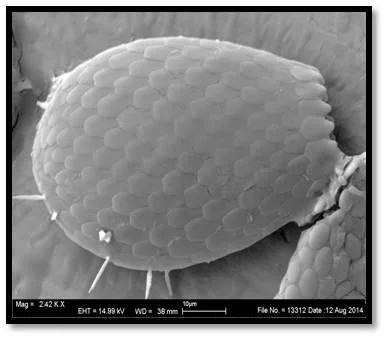
Image: Testate amoebae Euglypha
Soil protistology, despite a long history, is a rather unexplored field with many things to be studied. In the last three blogs we pointed out several of those points including unknown, yet huge diversity and abundance and the fundamental functional importance of protists in the soil food web and for plant growth promotion. They also are highly promising bioindicators to assess soil quality and allow palaeological reconstructions; for the latter, especially testate amoebae, which often have a rigid shell, play a key role.
At PROTIST 2016, around 200 protistologists are gathering, yet, less than 10 % of the participants work in soils. This is surprising taken into account that even editors of general ecological or soil journals are increasingly understanding the potential in the field of soil protistology; just in the last 12 months, three papers purely focusing on soil protists (nematode feeding protists, huge diversity of parasitic protists in soilsand parasitic protists in soil animals) were in the spotlight and received highlight articles (1, 2, 3, respectively). Many recent studies found their place in the highest (ecological) journals and this trend is likely to continue.
Now it is the time to actually jump on that train and bring this understudied field to the next level; many exciting discoveries are awaiting to be made, which might well outweigh findings on the other, better studied microbial groups of bacteria and fungi. This especially counts for integrating soil protist work with work on other soil organisms and in more general ecological studies!
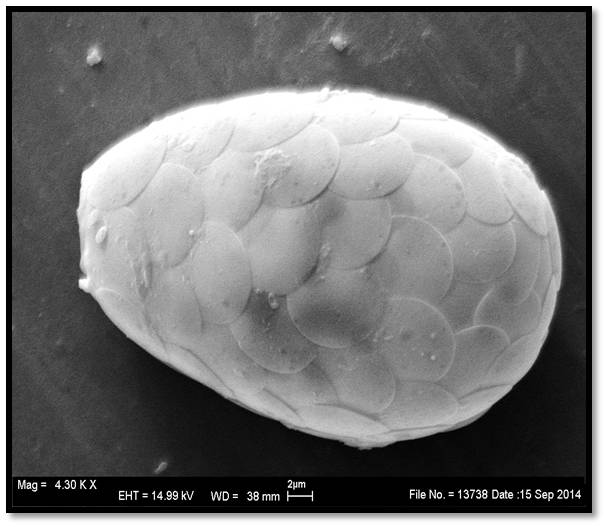
Testate amoebae Tracheleuglypha
Protists, the overseen guardians of soil microbiome function
By Assistant Professor Dr. Alexandre Jousset, Utrecht University, The Netherlands
This is part 3 in a 4 part blog series on soil protists.
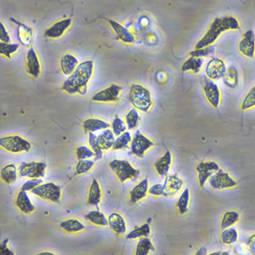
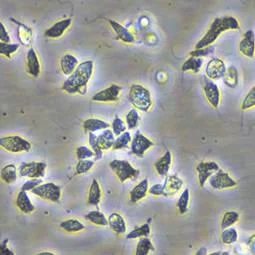
Cercomonas sp., a bacterivorous amoebae.
Soil microbes provide essential functions supporting soil fertility and plant health. Recent advances in sequencing technologies have favored a boom in studies investigating soil microbiome diversity and function. However, to date most studies have focused on bacteria and fungi, neglecting other trophic levels. This focus may be very convenient, as many functional genes are now described. It however oversees the function of predators as regulators of microbial communities.
Soil bacterial and fungal communities are typically top-down controlled. In other words, the main selective pressure is predation, not resource availability. The main predators of bacteria are protists and nematodes. These organisms, albeit unrelated, have been historically grouped as “microfauna”, reflecting that protist have been mostly investigated by zoologists and botanists, not by microbiologists. This discipline separation has contributed to neglecting protists in environmental microbiology. With these lines I aim at bridging these two research fields.
Protists can affect bacterial communities and soil fertility in several ways: By massively consuming bacteria, they release the nutrients contained in their preys, accelerating nutrient cycling. This increased nutrient availability can stimulate plant growth as well as nitrification process. Further, by reducing bacterial biomass, they alleviate competition and allow for more synergies between competing species. Protists are further very selective and will ingest only specific preys. They select preys based on their morphology, surface properties and toxicity. This selection has a strong impact on microbial functions linked to soil fertility. For instance, bacteria producing large amounts of exopolysaccharides may be better protected. These compounds play an important role in gluing soil particles together. We can thus expect that protozoa predation may improve soil structure. A range of studies have also revealed the functional overlap between antibiotics linked to disease suppression and protozoa inhibition. Several bacteria can naturally protect plants against disease by producing antibiotics and are seen as a promising alternative to pesticides. However, most attempts to use these bacteria in natural soil have failed. They either die out or evolve to lose their plant protective ability. Protists are here the guardians that “force” bacteria to produce antibiotics. They eat up bacteria lacking antibiotics, creating more space for the well-defended – and coincidentally plant protecting ones. Previous experiments in my group have shown that adding bacterivorous amoebae to soil can increase the success of plant-beneficial microbes by a factor three. In addition, bacterivorous protists are sensed by bacteria, that upregulate antibiotics production as a defense mechanism. These different protists-bacteria interactions can have a profound effects on soil fertility. We could for instance show that addition of bacterivorous protists could induce soil suppressiveness against the fungal pathogen Fusarium oxysporum. First commercial application of protozoa are already on the market and help for instance mineralize organic fertilizers and promote plant growth in sustainable agriculture.
I conclude that protozoa should be included in further microbiome studies and green biotechnology strategies aiming at reducing fertilizer and pesticide use in the agriculture.
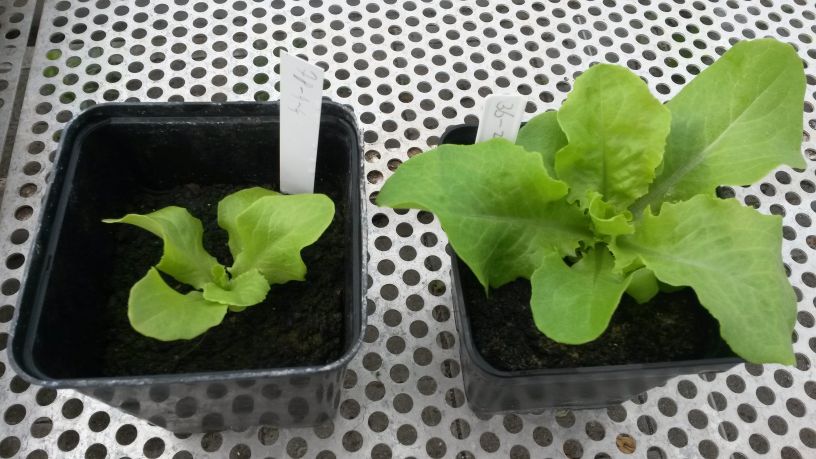
Lettuce grown on compost, left without addition of protists, right with addition of Cercomonas sp.

The Many Roles of Protists in the Soil
By Dr. Enrique Lara, University of Neuchâtel, Switzerland
This is part two in four part soil protist series! Part 1 can be read here.

Figure 1: This unidentified amoeba is one of the members of the extremely diverse protist community inhabiting the soil of a common indoor flower pot; new species can be found even in the least exotic environments! This species feeds on yeasts and bacteria.
Protists are extremely diverse in soils, often reaching thousands of species of protists and fungi per gram. If we bring these numbers to our scale of perception, this means that a little piece of soil the size of a fingernail hosts a number of species comparable to the diversity of insects in a hectare of tropical rainforest! Like in the jungle, the different organisms play various roles in the soil ecosystem. Globally, these roles can be divided in three great categories: osmotrophs, phototrophs and phagotrophs.
Osmotrophs absorb their food from the environment; they are unable to engulf preys. They play a fundamental role in the decomposition of dead organic matter produced by plants. Mostly fungi take this role, but they are not alone! Another very common group of soil osmotrophs is the oomycetes, which closely resemble fungi but are now classified within the stramenopiles- a group very distant to fungi together with many algae such as the marine kelps! Some organisms evolved from photosynthetic ancestors to live in the absence of light and became secondarily osmotrophs, like the green alga Polytomella. Osmotrophic organisms often tend to become parasites during evolution; they start the evolutionary process as mostly free-living organisms that infect occasionally any potentially weakened host. Then, they become gradually more and more specialized and virulent. Many species of fungi and oomycetes are well known plant parasites, and are responsible for huge economic losses every year. Others infect animals (including humans) and even other fungi! Other groups are entirely parasitic such as the Phytomyxea (plant parasites) and the Apicomplexans (animal parasites, including amongst others the agent of malaria Plasmodium falciparum), which can be extremely abundant and diverse in soils. However, osmotrophs can also become Mr. Niceguy and collaborate with plants: mycorrhiza are the most widespread and famous example.
Being a phototroph, obtaining energy from the sun like a plant, in soils may seem contradictory; however, phototrophic organisms are numerous and diverse as well. Logically, they are limited to the upper part of the soil that is reached by light; they are responsible (together with mosses and cyanobacteria) for the formation of so-called cryptogamic crusts, which are common in deserts and high altitude soils. Some of these groups are well known in lakes and rivers (like diatoms, green algae, xanthophytes), but most often species are specific to soils as they went through specific adaptations to be able to colonize these environments.
Many protists in soils are phagotrophic, which means that they prey on other organisms through phagocytosis (just like the macrophages of our immune system). Bacteria are a common food source for them, and it has been shown that predation by protists is the main source of mortality for soil bacteria. By eating these preys, nutrients are released and taken up by plants; it has been shown that this phenomenon, coined the soil microbial loop, is key in driving plant productivity. However, all bacteria are not equally preyed upon by protists, and food preferences vary drastically even between closely related protist species. On the other hand, bacteria are by no means defenceless and produce secondary metabolites that can kill protist predators. This make trophic interactions between protists and bacteria extremely complex. But bacteria are by no means the only prey of protists. Fungi are also consumed, and some species of ciliates possess a cytostome (=cell mouth) that prevents them from eating anything else; they are simply unable to consume bacteria! Others are top predators and will feed only on other protists. Some, like the tiny shelled amoeba Cryptodifflugia, are able to kill even nematodes, and practice a kind of pack hunting to slay their victims which weigh about hundred times more than them!

Figure 2: A testate amoeba, Centropyxis aerophila, hunting for small protists and fungi in its favourite environments, forest litter. It uses its pseudopod to move forward and capture preys by immobilizing them before engulfing.
The situation is complicated even more as some organisms may belong to two functional categories at the same time. Many soil flagellates and amoebae are capable of both actively hunting for preys and absorbing nutrients from the environment, thus combining phagotrophy and osmotrophy. Phototrophy and phagotrophy are also often combined, especially in wet soils like in peatlands (where it is largely practised by golden alga like Ochromonas, Synura and Mallomonas). Altogether, functional diversity of eukaryotes in soils is immense. Our knowledge on their diversity is now at a turning point where it starts to be evaluated, but still remains an open field for new, exciting discoveries.

Soil protistologists on the road: a snapshot on a global synthesizing effort for a reliable taxonomy of protists (UniEUK)
By Dr. Stefan Geisen, Postdoctoral Reseracher, Netherlands Institute of Ecology
Research into soil protists is developing rapidly. This is the first in a 4-part blog series highlighting the importance of soil protists and recent developments in the field.

Research on tiny organisms including bacteria, protists and nematodes is in the midst of a revolution mainly due to developing sequencing technologies. These methods have enabled more reliable characterization of the diversity of those tiny organisms in opaque soils, as complicated classical extraction and cultivation-based efforts can now be circumvented. Of these tiny organisms, protists have been least studied. Only recently it became clear that this group of organisms hosts the vast diversity of eukaryotes. The emergence and diversification of fungi, animals and plants only represent relatively small and recent evolutionary events compared to the huge “background cloud” of protists.
Protists in soils
One gram of soil is suggested to be home for an estimated number of 10,000-100,000 individual protists, including 1,000s of species, many of which are key for ecosystem functioning. They play a crucial role in food webs as main predators of bacteria and likely also fungi. Protist predation of bacteria and fungi releases nutrients, which can be used by bigger soil animals in the food web and plants, increasing growth. Recently, it has been shown that animal parasites are also abundant and diverse, possibly regulating populations of soil animals.
New possibilities to study soil protists
Recently, protists have become the focus of more research as they can more easily be detected using molecular sequencing technologies. This technique involves taking a small sample of soil, extracting DNA from all organisms present, sequencing the DNA, and identifying what is in the sample by assigning sequences to online databases (e.g. Silva or NCBI). This approach has extensively been applied to study bacteria and fungi, but only recently to target soil protists. One of the key issues to this approach is that online databases are lacking profound information and are full of errors that often lead to unreliable species annotation.
Unifying the taxonomy to enable reliable work with protist AND other soil animal sequences
The field of protistology recently obtained a research fund from the Moore foundation and is currently developing a taxonomy system to enable reliable sequence assignments of not only protists, but a wide range of eukaryotes, called UniEUK. Several soil protistologists are involved in this project that will eventually help scientists to include protists in their research portfolio. This will boost understanding of how diverse soil protists are and eventually allow targeted studies of what these likely important organisms functionally do!
Work on UniEUK just kicked-off at a very productive meeting in Paris. More to come from Beneath Our Feet on exciting developments in soil protistology!

