

Blog Archive:
Beneath Our Feet

Earthworms in the National Parks
By: Mac Callaham, USDA Forest Service Southern Research Station, Georgia, USA

Photo from George Washington Memorial Parkway.
I plop down into my seat as I board the flight. I give a brief nod of greeting to my neighbor, and notice that he is (like me) of an age which might indicate that he could expect to pass the flight time in conversation, rather than totally absorbed in a liquid crystal display.
I start with a standard question, “Are you headed out, or headed home?” And we’re off!
When it’s my turn, I tell him that I’m headed out to a conference where I’ll give a presentation on my research on earthworms. I know this is a topic that will keep the conversation rolling all the way from Atlanta to New York… fortunately, we have refreshments!
It’s generally true that people are interested in earthworms, and even more so when I tell them that I study invasive earthworms. People are also quite interested – and protective – of their National Parks, so I find that I usually have an attentive audience when I talk about my work on earthworms in the Parks.
“Invasive earthworms?!?” they exclaim. “There’s more than one kind?” they gasp. Then in rapid succession: “Where do they come from? What do they do? How do you know they’re invasive?” and more. I do my best to answer them, and eventually get around to describing the work that my colleagues and I have been doing at the Great Smoky Mountains National Park (GSMNP) in Tennessee, and the George Washington Memorial Parkway (GWMP) in Virginia and Washington, DC.
In the GSMNP it’s an introduced Asian worm that’s moving into the Park from the edges. This worm is one that’s sold as bait, and goes by the trade name of “Alabama Jumper.” It’s aptly named, because (although not technically from Alabama) they definitely jump. When molested these worms can flip and twist and throw themselves up off the ground, sometimes catching several inches of air in the process. This species is a cause for concern because where it becomes established, it can reach very high densities, and it consumes much of the fallen leaves on the forest floor. These leaves are habitat for lots of other invertebrates, as well as some larger animals like salamanders. It’s no surprise that the GSMNP is considered a hotspot of biodiversity for forest floor creatures like millipedes and salamanders considering the rugged, inaccessible terrain, the lush vegetation, and the warm and wet conditions that predominate. On the other hand, it is a bit surprising, and alarming that one introduced earthworm species can outcompete these other forest floor dwellers, and impact their numbers and diversity, but this is exactly what our team has documented in recent years.
At the George Washington Memorial Parkway (GWMP) in Washington DC, we sampled earthworms and other soil invertebrates to help catalog the existing biodiversity of the Parkway and its constituent Parks (including Great Falls NP). We were also interested in whether the past history of human uses of the land could be detected in the soil animal community. There’s evidence that major disturbances can contribute to the establishment of non-native earthworm species, and the GWMP provided a great opportunity to examine this relationship with well documented history of soil disturbances ranging from the canal-building activities at Great Falls Park in the 1780s, through the Civil War entrenchments, and on into contemporary disturbances. We’ve uncovered good news and bad news with this work. On the one hand we’ve found what we believe to be an undescribed native species of millipede at one of the GWMP network parks (Turkey Run Park), but on the other hand, we found several individuals of a European earthworm species that has never been reported in North America before our sampling.

Alabama Jumper.
Photo © Susan Day / UW Madison Arboretum
All this brings up a couple of important points. First, we still don’t seem to have a good handle on the species diversity that we have native to the soils of North America, and second, there are new species introductions happening all the time, and we don’t have a good handle on what these introductions will mean for the native species. Will this latest introduced species become invasive? Will it choke out some native species, or otherwise decrease our native biodiversity? Is there any way to control these invasive species?
Out the window, our flight from Atlanta to New York has skirted the eastern slope of the Smoky Mountains, and passed within sight of the National Mall in DC. My new friend leans over and looks down on these landscapes. He is reflective.
“Wow, there’s a lot going on down there that I never thought about before…”
I nod knowingly. I tell him that few people ever really think about what’s going on right under their feet, but I tell him that now he’s one of the lucky ones.
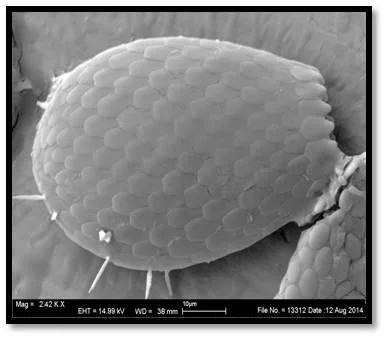
Soil protistology: a rising star?!
By: Valentyna Krashevska1, Stefan Geisen2
1Post-doc University of Goettingen, Germany
2Post-doc Netherlands Institute of Ecology, the Netherlands
Part 4 in our 4 part soil protist series

Image: Testate amoebae Euglypha
Soil protistology, despite a long history, is a rather unexplored field with many things to be studied. In the last three blogs we pointed out several of those points including unknown, yet huge diversity and abundance and the fundamental functional importance of protists in the soil food web and for plant growth promotion. They also are highly promising bioindicators to assess soil quality and allow palaeological reconstructions; for the latter, especially testate amoebae, which often have a rigid shell, play a key role.
At PROTIST 2016, around 200 protistologists are gathering, yet, less than 10 % of the participants work in soils. This is surprising taken into account that even editors of general ecological or soil journals are increasingly understanding the potential in the field of soil protistology; just in the last 12 months, three papers purely focusing on soil protists (nematode feeding protists, huge diversity of parasitic protists in soilsand parasitic protists in soil animals) were in the spotlight and received highlight articles (1, 2, 3, respectively). Many recent studies found their place in the highest (ecological) journals and this trend is likely to continue.
Now it is the time to actually jump on that train and bring this understudied field to the next level; many exciting discoveries are awaiting to be made, which might well outweigh findings on the other, better studied microbial groups of bacteria and fungi. This especially counts for integrating soil protist work with work on other soil organisms and in more general ecological studies!
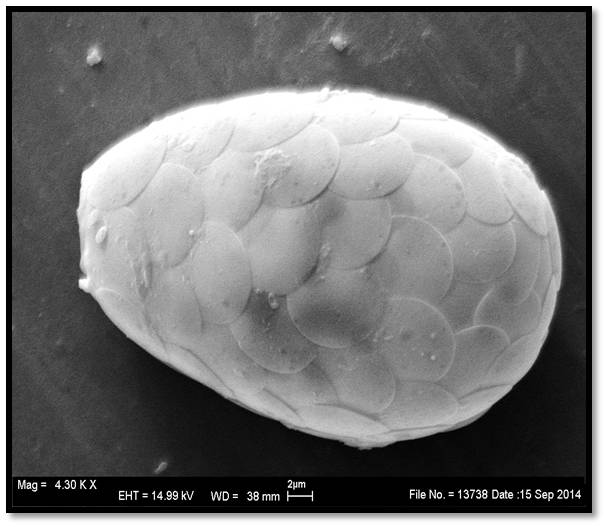
Testate amoebae Tracheleuglypha

The Many Roles of Protists in the Soil
By Dr. Enrique Lara, University of Neuchâtel, Switzerland
This is part two in four part soil protist series! Part 1 can be read here.

Figure 1: This unidentified amoeba is one of the members of the extremely diverse protist community inhabiting the soil of a common indoor flower pot; new species can be found even in the least exotic environments! This species feeds on yeasts and bacteria.
Protists are extremely diverse in soils, often reaching thousands of species of protists and fungi per gram. If we bring these numbers to our scale of perception, this means that a little piece of soil the size of a fingernail hosts a number of species comparable to the diversity of insects in a hectare of tropical rainforest! Like in the jungle, the different organisms play various roles in the soil ecosystem. Globally, these roles can be divided in three great categories: osmotrophs, phototrophs and phagotrophs.
Osmotrophs absorb their food from the environment; they are unable to engulf preys. They play a fundamental role in the decomposition of dead organic matter produced by plants. Mostly fungi take this role, but they are not alone! Another very common group of soil osmotrophs is the oomycetes, which closely resemble fungi but are now classified within the stramenopiles- a group very distant to fungi together with many algae such as the marine kelps! Some organisms evolved from photosynthetic ancestors to live in the absence of light and became secondarily osmotrophs, like the green alga Polytomella. Osmotrophic organisms often tend to become parasites during evolution; they start the evolutionary process as mostly free-living organisms that infect occasionally any potentially weakened host. Then, they become gradually more and more specialized and virulent. Many species of fungi and oomycetes are well known plant parasites, and are responsible for huge economic losses every year. Others infect animals (including humans) and even other fungi! Other groups are entirely parasitic such as the Phytomyxea (plant parasites) and the Apicomplexans (animal parasites, including amongst others the agent of malaria Plasmodium falciparum), which can be extremely abundant and diverse in soils. However, osmotrophs can also become Mr. Niceguy and collaborate with plants: mycorrhiza are the most widespread and famous example.
Being a phototroph, obtaining energy from the sun like a plant, in soils may seem contradictory; however, phototrophic organisms are numerous and diverse as well. Logically, they are limited to the upper part of the soil that is reached by light; they are responsible (together with mosses and cyanobacteria) for the formation of so-called cryptogamic crusts, which are common in deserts and high altitude soils. Some of these groups are well known in lakes and rivers (like diatoms, green algae, xanthophytes), but most often species are specific to soils as they went through specific adaptations to be able to colonize these environments.
Many protists in soils are phagotrophic, which means that they prey on other organisms through phagocytosis (just like the macrophages of our immune system). Bacteria are a common food source for them, and it has been shown that predation by protists is the main source of mortality for soil bacteria. By eating these preys, nutrients are released and taken up by plants; it has been shown that this phenomenon, coined the soil microbial loop, is key in driving plant productivity. However, all bacteria are not equally preyed upon by protists, and food preferences vary drastically even between closely related protist species. On the other hand, bacteria are by no means defenceless and produce secondary metabolites that can kill protist predators. This make trophic interactions between protists and bacteria extremely complex. But bacteria are by no means the only prey of protists. Fungi are also consumed, and some species of ciliates possess a cytostome (=cell mouth) that prevents them from eating anything else; they are simply unable to consume bacteria! Others are top predators and will feed only on other protists. Some, like the tiny shelled amoeba Cryptodifflugia, are able to kill even nematodes, and practice a kind of pack hunting to slay their victims which weigh about hundred times more than them!

Figure 2: A testate amoeba, Centropyxis aerophila, hunting for small protists and fungi in its favourite environments, forest litter. It uses its pseudopod to move forward and capture preys by immobilizing them before engulfing.
The situation is complicated even more as some organisms may belong to two functional categories at the same time. Many soil flagellates and amoebae are capable of both actively hunting for preys and absorbing nutrients from the environment, thus combining phagotrophy and osmotrophy. Phototrophy and phagotrophy are also often combined, especially in wet soils like in peatlands (where it is largely practised by golden alga like Ochromonas, Synura and Mallomonas). Altogether, functional diversity of eukaryotes in soils is immense. Our knowledge on their diversity is now at a turning point where it starts to be evaluated, but still remains an open field for new, exciting discoveries.

Marvelous soil present, another adventure in Brussels
By Gerlinde De Deyn
Wageningen University, Dept. Soil Quality

September 2015. Regular readers of this blog will not be surprised that I was in Brussels for the European Union Researchers’ night, this year was very special: the 10th anniversary of researchers’ the night! Not only in Brussels of course, lots to see and do across Europe at this major science outreach event which runs simultaneously in all main cities of the EU http://ec.europa.eu/research/researchersnight/index_en.htm.
For this occasion I was not asked to bring a living soil micro-zoo, just myself and my reflections on what makes science so wonderful for me. The setting: a predominantly French interview by the public from Brussels, with Christophe Deborsu as moderator and Stefaan Vaes (University of Leuven, Dept. of Mathemathics) and me (Flemish soil ecologist who hardly spoke French since leaving Belgium fifteen years ago) as the researchers.
How and at which age did we get inspired to become a scientist? What do we earn and how many hours a week do we work? Why did you move to another country? What impact does your science have on society? What is the current status of biodiversity? How come there are so few female professors? These were just a few of the questions that came a long during the interview. Not always easy to answer, but luckily not due to language - thanks to an eager public and multi-lingual moderator.
Was there any soil ecology involved? Sure there was in this International Year of Soils! We gave a copy of the European Soil Biodiversity Atlas (French or English version) to each person posing a question. Perhaps some of them will get the spark of wonder and turn into soil ecologists… Given the enthusiasm I also promised that a Global Atlas of Soil Biodiversity will come out later this year, something we are all looking forward to of course J.
PS: As with previous events also now great meet scientists you would otherwise never meet, a tip from Stefaan Vaes if you like math and visualizations of it check out this site: http://imaginary.org/

Taming the wilds of Central Park

Last week we successfully collected 595 samples from across Central Park in New York City. I described this huge undertaking in my previous post, so you can find out a bit more here about collaborators and sampling scheme.
Briefly, we collected soil samples, from 15 points across each of the 51 blocks running west to east in Central Park. For those of you not familiar with CP, the park is ½ mile wide and 3 miles long (51 blocks)! The park is not continuous however. There is quite a bit of rugged terrain- rock outcroppings, sports fields with 7 foot tall fences, the Met, ponds, children, fountains, dogs, cars, bikes, yoga stroller classes, Shakespeare in the park, bridges, waterfalls, music stages, merry-go-rounds… you get the idea. Check out our photos here for shots of us sampling in the wild.
We had 10 participants split between four groups, each sampling a roughly equivalent section of the park. Beginning on the steps of the Museum, we split up into groups of two and three, double checked the GPS units, measured out 5cm on our corers with sharpies and tape, and gathered cell phone numbers mostly to facilitate friendly competition throughout the day.
The first hour was slow, as each group found a sampling routine and adjusted to the rugged terrain. Then the pace started to pick up and sampling was flurried in the next 4-5 hours. By 1 p.m. the groups across the park were slowing. High humidity accompanied by 90° temperature, will do that. My group was motivated by a stop at an ice cream stand, others were not as lucky to find refreshments and were tempted instead by fountains. Still, we finished the last of the sampling by 6:30 p.m. and had all the samples safely stored in the museum by 7 p.m.! 12 hours of sweating, a few minor scrapes and bruises, a bit of heat exhaustion, but success! Really this is a huge accomplishment for one day- 600 samples... I still am in awe that we actually finished!
Wednesday after the sampling, we met again at the Museum. This time to sieve all the samples! Sieving is a monotonous process at best- take soil out of bag, sieve, separate, repeat. During the craziness of sieving we entered GPS points and a few volunteers collected water samples from all the major bodies of water in the park. Check out this sweet google map. All the samples are now ready to be processed! We will soon begin analyzing soil characteristics- pH, nutrients, moisture and microbial biomass and this fall we will sequence all soils and water samples.
This was really a fantastic sampling effort, and without the cooperation and determination of everyone involved we could not have pulled it off. Thanks again to Susan Perkins, our linchpin at the museum and Liz Johnson.
Stay tuned for more on this project and if you have questions on this project please contact me at Kelly.Ramirez@colostate.edu.

An unexplored urban jungle

Tomorrow morning a group of soil ecologists will meet on the steps of the American Museum of Natural History to begin a day-long effort to sample the soils of Central Park, New York City. Within soil lives an astounding amount of biological diversity, scaling from microbes to insects and worms that is mostly invisible to the naked eye. One question researchers are interested in is how this biodiversity compares to soils in natural systems- Yellowstone National Park, for example. Do the same controls, such as temperature, rain events, plants and soil nutrients, that determine the composition of organism in a soil community in forests or grasslands hold up in a city park in the middle of Manhattan?
Soil provides a number of ecosystem services that are necessary for human well-being (see this interesting NYTimes article for more on ecosystem services). Urban soils can provide the same ecosystem services as natural soils- food production, water cycling and purification, and carbon cycling (especially important in the context of climate change). Additionally, urban soils provide a habitat for a vast amount of soil biodiversity, though it is still unclear just which organisms thrive under urban conditions and how the services they provide may be affected by urban stresses.
The glamorous job of soil sampling involves metal soil corers, sharpies, collection bags and a love of dirt. For this project we will collect soils, about a handful sized amount for each sample, from over 600 sampling locations throughout Central Park.
(The park is ½ mile wide and we will be sampling from approximately 15 points across the width of the park, for 50 blocks, minus area covered by water = greater than 600 soil samples!)
Just for fun, we have only scheduled one sampling day, so this is going to be a crazy sampling effort!! (And it may be a bit warm.)
For this project we will use molecular sequencing techniques to see where and what types of life (both new and cosmopolitan) lie beneath the surface of Central Park. Then, we will build maps of the microbial and micro-/meso- faunal diversity across the park and compare the biodiversity with the plant cover, nutrient levels and other soil characteristics. Additionally, we will get a pretty good idea of the shear amount of soil biodiversity that lives in Central Park.
This is a collaborative research project organized by the GSBI and researchers from CSU, CU-Boulder, Yale and the AMNH (see this post for more details).
Stay tuned for the post sampling post, glamorous field shots and more information on the project.