

Blog Archive:
Beneath Our Feet
Kalahari sands and scientific curiosity

Rhizosheaths collected from Khama Rhino Sanctuary. Photo credit, Emily Wedel.

Seton Bachle holds a sample of Eragrostis lehmanniana and examines its rhizosheath. Photo credit, Adam Cobb.
Adam B. Cobb
Postdoctoral Research Fellow
Oklahoma State University, USA.
My favorite part of studying soil ecology is the complexity. Regardless of my deficiencies as a scientist, I have an abundance of curiosity. On every continent, in every ecosystem, there are countless unanswered questions about how plants and microbes interact with soils and each other.
Curiosity compelled a group of researchers from Oklahoma State University (OSU) and Kansas State University (KSU) to fly >15 hours from the USA to southern Africa. We rented a van that barely fit the nine of us and our luggage, and we spent two weeks experiencing and examining the ecology of Botswana, from rhinos to grasses to soil microbes.
In these dry sandy soils, we wanted to uncover mechanisms of drought-tolerance in grasses. Hypothesizing the formation of rhizosheaths can protect roots from desiccation, we sampled and assessed sites on both Botswana’s wetter east and drier west. Despite being a global phenomenon in dry sandy soils, the amount of peer-reviewed data on rhizosheaths is remarkably thin.
We have numerous questions, including: why do some grass species form rhizosheaths while others do not? What proportion of rhizosheath development can we attribute to plant exudates, and how much is built by microbial communities? How do edaphic and climate conditions influence rhizosheaths? Perhaps we will be able to answer some of these questions by comparing characteristics such as moisture dynamics and microbial functional groups between rhizosheath soil and bulk soil, across environmental conditions and between grass species.
When Dr. Dave Hartnett (KSU) and Dr. Gail Wilson (OSU) envisioned this trip, they drew upon extensive past experience. Dave lived in Botswana twice during sabbaticals. Gail took every opportunity to visit and facilitate student trips over the years. After gathering data in Botswana in 2009, they published an article on rhizosheath formation across a suite of warm-season grasses (Hartnett et al., 2013; DOI: 10.1111/j.1442-9993.2012.02422.x). This research served as the foundation of our current objectives.
In addition to plant and soil ecology, Dave and Gail are interested in getting the next generation of scientists excited about intercontinental research. Most of us are early career, and some of us had never traveled outside the USA. Seeing Africa’s megafauna, experiencing the Okavango Delta, and witnessing the hospitality and culture of Botswana got us hooked.

Eric Duell (left), Seton Bachle (middle), Gail Wilson (middle), and Dave Hartnett (right) sampling grasses in Western Botswana. Photo credit, Adam Cobb.
This is my other favorite part about studying soil ecology—community. Spending two weeks in a cramped van has the potential to be horrible. However, the right people can make the experience fun. In one minute, our group was excited to know the scientific name of a bird we spotted; in the next minute, we were recalling lines from Disney movies, circa 1990. There was also an informal population study on termite mounds for one day: 527 total.
When you get a group of passionate scientists together in a new place, amazing things can happen. Toward the end of the trip, a few of us started planning our next experiment. There is so much to discover about rhizosheaths. Our field collections made us ask new questions about the plant-soil-microbial mechanisms, so we planned to tease those relationships apart with a series of greenhouse experiments.
Who knows what might come of these experiments and this new community of researchers? I have spoken to senior scientists who explained that a random opportunity to team up with another researcher in their early careers turned into 20+ years of friendship along with at least a dozen coauthored publications and hundreds of thousands of dollars of collaborative grant funding across their careers. Perhaps this group will keep exploring rhizosheath questions together for years.
The answers to those questions could improve conservation of semi-arid ecosystems around the planet—ecosystems supporting substantial biodiversity. The implications also reach further into the future. I do most of my research in managed grasslands and agroecosystems; in a warmer and drier world, the capacity of productive plant species to withstand drought is critical for global nutrition security. Perhaps understanding rhizosheath development in the Kalahari sands of Botswana will help us improve the resilience and sustainability of our food systems in a changing world.
I for one also want to know for the sake of knowing. On our trip, we dug up a lot of grasses. When we set the roots of Pogonarthria squarrosa (Herringbone Grass) that form extensive rhizosheaths, next to the roots of Digitaria eriantha (Pangola Grass) that do not, I was amazed. Why would these species, growing a few feet apart, display such a difference? Finding the answer to that question is a good enough reason to come back to Botswana.
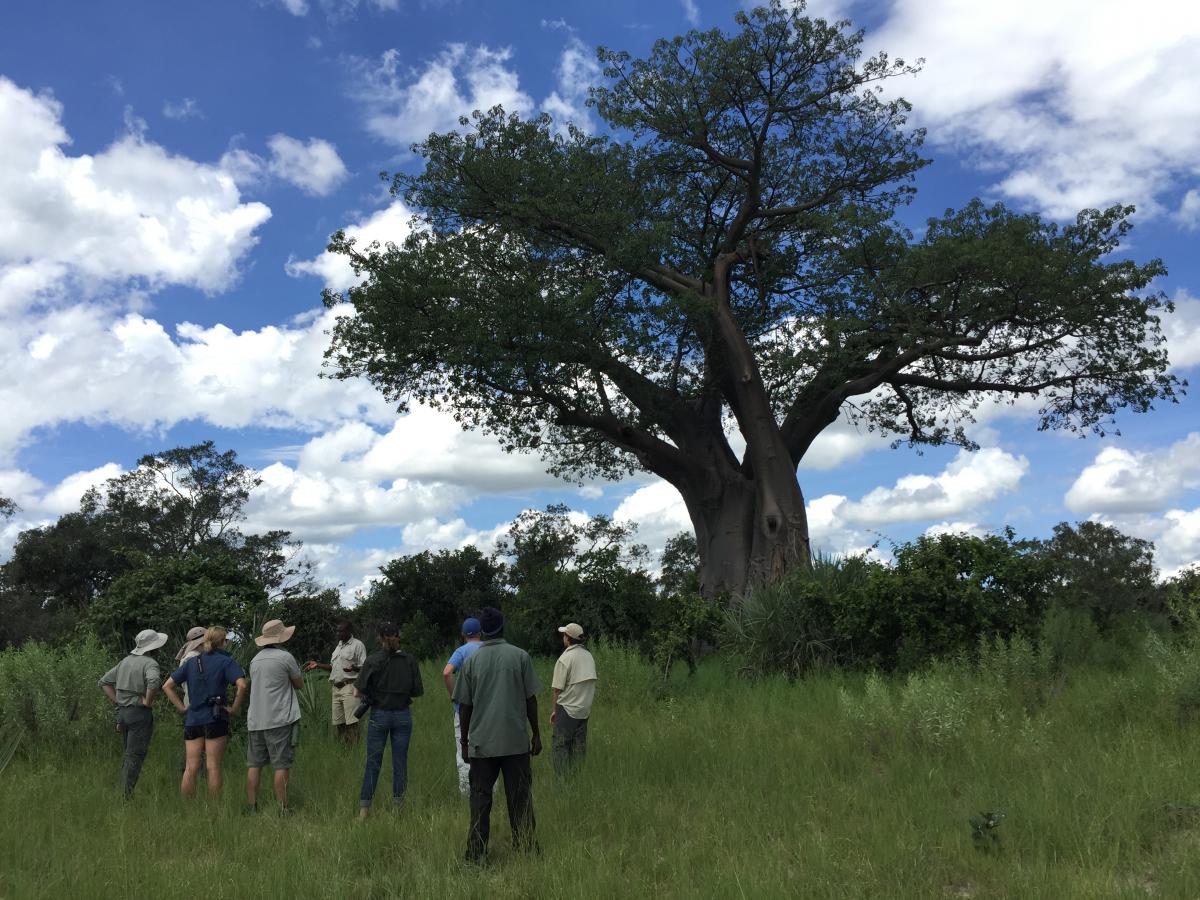
The team takes a moment to appreciate an ancient baobab tree (Adansonia spp.). Photo credit, Adam Cobb.
Are invasive fungal species always the bad guys in human affected ecosystems?
Dr. Marcelo Aloisio Sulzbacher
Researcher
Departamento de Solos, Centro de Ciências Rurais
Universidade Federal de Santa Maria, Santa Maria, Rio Grande do Sul, Brazil
and
Tine Grebenc, PhD
Senior Scientist
Slovenian Forestry Institute
Ljubljana, Slovenia

Mix of edible invasive ectomycorrhizal fungi. Photo: Marcelo Aloisio Sulzbacher.
This is Part 3 of a blog series from the South American Mycorrhizal Reserach Network. Read Part 1 and Part 2.
Invasive species by definition are not native to a specific location -species that were introduced species, and that have a tendency to spread to a degree believed to cause damage to the environment, human economy, or human health. Ectomycorrhizal fungi are no exception and some fantastic examples have spread and successfully reproduced worldwide, such as fly agarics (Amanita muscaria), and waxy laccaria (Laccaria laccata). Although none of those two examples can be considered very damaging to human economy, both fit perfectly into the category of species that can easily spread in the target areas as co-invasive partners with alien plants as detailed in Dickie et al. 2016. Furthermore, the co-invasion of pathogenic fungi is a serious threat to the environment, with obvious and long-term negative effects on native ecosystems, but that is another story.
Studies focusing on intentional or accidental introduction of ectomycorrhizal fungi with the introduced ectomycorrhizal plants are rare. The introduction and potential invasive nature of fungi can be studied at various levels, with most pronounced effects at the ecosystem level. South America, despite having millions of hectares planted for decades with ectomycorrhizal trees such as pines, eucalypts, and acacias, has only a few published studies pointing out the problem of invasive ectomycorrhizal species. Ectomycorrhizal symbiosis is generally considered as positive for ecosystems, being involved in several ecological roles such as supporting survival of young plants, improvement of soil nutrient availability, and in stabilizing soils.

Hypogeous and commonly invasive ectomycorrhizal fungi Chondrogaster packysporus. Photo: Marcelo Aloisio Sulzbacher.
But are ectomycorrhizal fungi seen in human eyes as something directly useful or beneficial? Our research team has been investigating this question specifically in South America. We recently published a paper, revealing a range of non-native ectomycorrhizal fungi recorded in South America, focusing on fungi with fruiting bodies within the soil (hypogeous sequestrate fungi; Sulzbacher et al. 2017). A second project, currently in review, examined non-native fungi in the Brazilian Pampa biome. Both species lists of invasive fungi are fairly long, and mycologists might be enthusiastic to see commonly present co-invading species as Chondrogaster packysporus, Descolea alba, Hysterangium inflatum or Laccaria lateritia, while more economy-oriented mushroom lovers may notice species such as Boletus edulis, Lactarius deliciosus, Suillus luteus, Suillus granulatus, and even just recently described, the edible and aromatic truffle Tuber sp. nov. (Grupe et al., unpublished data).
How many and how much of these edible, co-invasive, non-human economy damaging species are used for culinary purposes or traded in the market? With an exception of several organized plantations dedicated to European truffle species production in Chile, Argentina, and Brazil, there are little available data on other invasive mushrooms and truffles species gaining tradition in South America. To overcome the lack of information on species being collected and consumed, and the lack of quantitative data, we are starting an initiative to collect data sources and data themselves.


Left: edible invasive ectomycorrhizal fungi Suillus sp. Right: North American truffle Tuber sp. (ectomycorrhizal fungi) invading Brazilian Pampa. Photo: Marcelo Aloisio Sulzbacher.
Earth Surface Shaping by Biota, EarthShape Project, a German-Chilean Initiative
Part II of our collaboration with the South American Mycorrhizal Network, please read part one here.

EarthShape project team, Pan de Azúcar National Park, Atacama Desert, Chile. Credit: Leandro Paulino
The EarthShape project is currently the biggest collaboration effort between Germany and Chile. The overarching research question of this project is how microorganisms, animals, and plants influence the shape and development of the Earth’s surface over time scales from the present-day to the distant geologic past. This multidisciplinary research project is developed in the Chilean Coastal Range, in a network of long-term ecological studies sites via the German Priority Program DFG 1803, and involves up to 60 researchers from Germany and 20 from Chile, besides numerous posdoctoral fellows and graduate students from both countries. The project is led by Prof. Dr. Todd A. Ehlers, from the Department of Geosciences, University of Tübingen, Germany, and Prof. Dr. Friedhelm von Blanckenburg from the Helmholtz Research Center in Potsdam, German Research Center (‘GFZ’), Germany, and Dr. Kisrtin Übernickel, Department of Geosciences, University of Tübingen, Germany, as executive director.
The EarthShape project has established a strong collaboration with leading Chilean professors, researchers, and their funding agents and institutions. These researchers work in all of the disciplines essential to the project integration, including biogeochemistry, geochemistry, microbiology, geomorphology, tectonics, sedimentology, soil science, hydrology, and geophysics. The Chilean colleagues are interested in collaborating with participants, and assisting in fieldwork, logistics, and provide access to Chilean sites, which are protected areas.
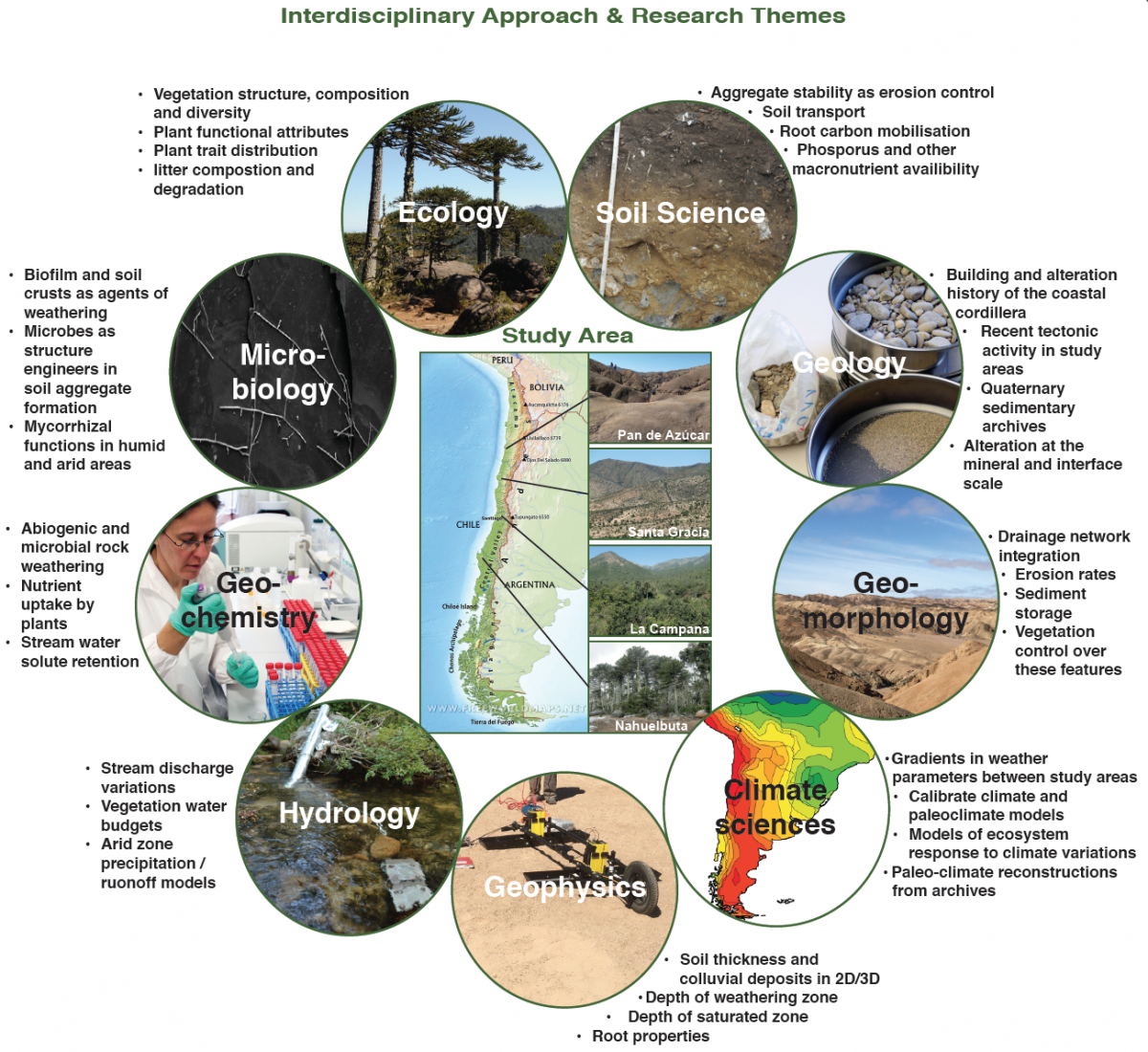
Research themes of the EarthShape Project
All the study sites are located in the Coastal Cordillera of Chile. These sites span from the Atacama Desert in the north, one of the dryest places on Earth, to the very rainy Araucaria araucana forests approximately 1300 km to the south. The site selection contains a large ecological and climate gradient ranging from very dry to humid climate conditions. The sites were selected to avoid other complicating factors such as differences in rock type, and glacial, and volcanic impacts.
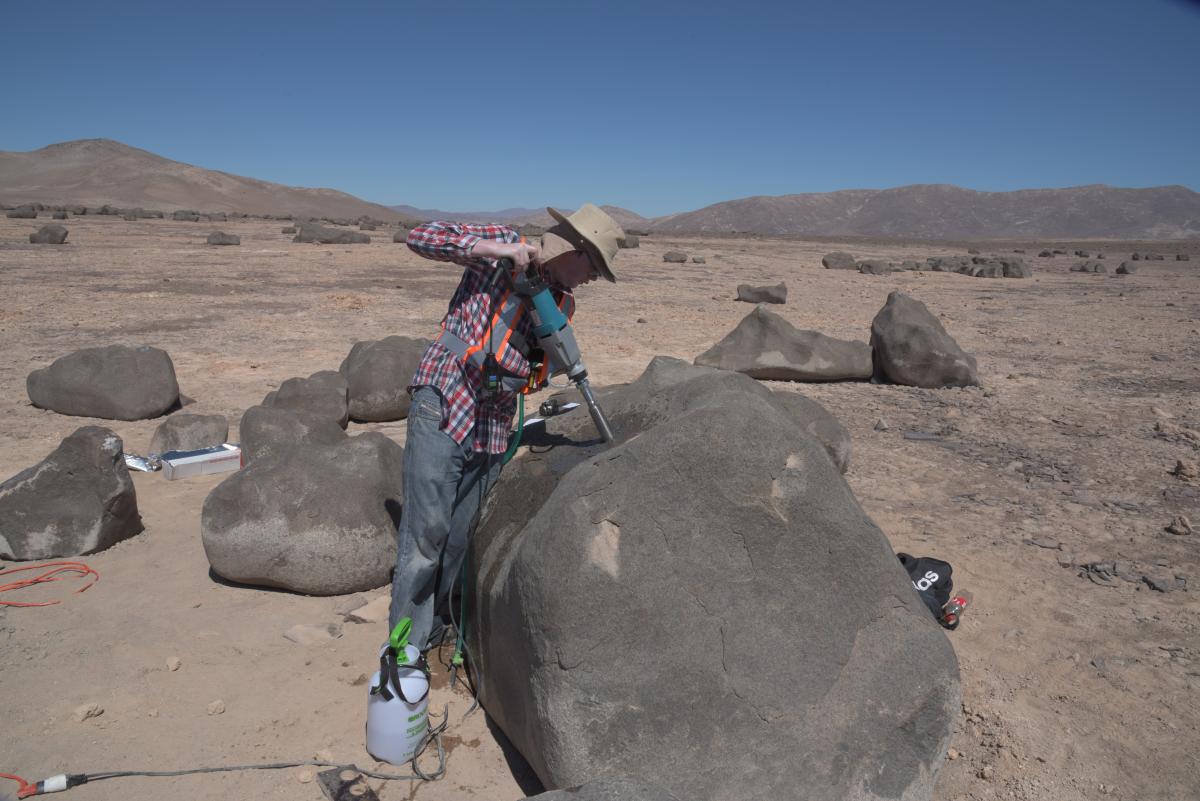

Left: exploring rocks at Pan de Azúcar National Park, Atacama Desert, Chile;
Right: Araucaria forest, Nahuelbuta National Park, Chile. Credit: Leandro Paulino and César Marín
This proposal is essential for the development of new knowledge and the formation of advanced human capital in the region. It also helps to understand, predict, and mitigate the impacts of environmental change processes (anthropogenic and natural) that are developed through several spatio-temporal scales.

Geological excavation, Pan de Azúcar National Park, Atacama Desert, Chile. Credit: Leandro Paulino
In addition, at the regional or Chilean level, the sites of this network of natural observatories can provide baselines of the state of ecosystems, and answer questions relevant to the sustainability and future potential of many productive activities in the country in the long term. These sites in National Parks of Chile, to the extent that they are implemented and used as areas of reference and experimentation by researchers, allow the realization of comparative studies and the evaluation of models and ecological theories in a framework that promotes communication between researchers and society, thus favoring the valuation and protection of the Environment. These baseline studies have already produce some results, including mycorrhizal fungi (Bueno et al. 2017) , Cercozoan protists (Fiore-Donno et al. 2018), and biological soil crusts (Lehnert et al. 2018).
The EarthShape project is coordinated in Chile by the executive director Dr. Leandro Paulino, University of Concepción (Chillán headquarters) and Dr. Roberto Godoy, Austral University of Chile.
One year Networking South American mycorrhizal research
By: César Marín
PhD candidate
Evolutionary and Environmental Science Institute
Austral University of Chile
Coordinator of the South American Mycorrhizal Research Network

Logo of the South American Mycorrhizal Research Network.
Part 1 of our collaboration with the South American Mycorrhizal Network, please read Part 2 here.
Three years ago, I was desperately looking for someone to help me out with the metagenomic/bioinformatics part of my PhD thesis. For my thesis, I wanted to understand how different geological, edaphic, and biogeochemical factors together with eco-evolutionary aspects of soil fungi, mainly mycorrhizae, affect the process of biogenic weathering. Some 20 years ago it was discovered that besides from physical and chemical forces, the soil biota is also degrading the Earth bedrock, process termed biogenic weathering. The main actors in this process are mycorrhizal fungi, rock ‘eating’ fungi. I had sampled pristine temperate rainforests here in Patagonia where I live to test this process, and the edaphic and geological support of German colleagues, but at the moment I was lost in understanding the complex patterns of soil fungal diversity. Then, the name of Maarja Öpik was suggested by a friend. Long story short, I spent the last months of 2015 in the tiny and cold Estonia, learning a lot about soil fungi community analysis, their interactions, complexity, functions, and much more. My mind was full of ideas!
One of these ideas was to bring Maarja to my city, so few months later, she was in Valdivia, Chile, giving a course titled “Molecular Community Ecology of Arbuscular Mycorrhizal Fungi (AMF)”. When organizing this with my supervisor, Roberto Godoy, I had no faith in the course. I was very skeptical about the success of such a specific course. Fortunately, I was very wrong: the course was very successful! It was so successful that among the participants the idea of organizing something else, something bigger, something that would bring together local mycorrhizal researchers, was in the air. That something else was the Mycorrhizal Symbiosis in the Southern Cone of South America workshop, which was organized from scratch (asking for funding everywhere), just between four people and in a period of six months. This meeting, in March 2017, in Valdivia, Chile, constituted the first South American meeting of mycorrhizal researchers. The meeting had 7 keynote speakers, more than 40 presentations (oral and posters), and more than 70 participants from 8 countries and 26 institutions. We even had an special issue in the Journal of Soil Science and Plant Nutrition, containing the results presented at the meeting.

Participants of the Mycorrhizal Symbiosis in the Southern Cone of South America workshop, in Valdivia, Chile, March 2017.
Our next meeting will be hosted in Bariloche, Argentina, in March 2019.
At the end of the meeting, and by public suggestion, the South American Mycorrhizal Research Network was born. A year later, our Network currently has 135 Members from 25 countries. Just in one year, by our collective effort we have proudly accomplished several things. Our Network was presented at the 9th International Conference on Mycorrhiza in August, 2017, in Prague, at the Argentinian Mycology Meeting in September 2017, in Mendoza, and we organized our own symposium at the IX Latin American Mycology Congress in Lima, also in August of 2017. A New Phytologist meeting report regarding our meeting and Network was published on last year.
The future also looks quite exciting: we will hopefully be playing some roles in the next International Mycological Meeting this year in Puerto Rico, in the next International Conference on Mycorrhiza on Mexico in 2019, and on the next Latin American Mycology Congress in Chile in 2020. But most importantly, we are already organizing the II International Symposium of the Mycorrhizal Symbiosis in South America, in Bariloche, Argentina, from March 6 to 8, 2019. We are currently writing a book on South American mycorrhizal research for Springer, with authors from all over the subcontinent and basic and applied approaches.
But besides all these accomplishments, the most satisfactory thing has been, precisely, the Networking among our Members.

Mycorrhizal research in the field: ectomycorrhizal fungi from Colombian Amazon. Reference: Vasco-Palacios et al. 2018. Fungal Ecology
Because of our Network, researchers from Chile are collaborating with colleagues from Ecuador and Peru, our researchers from Uruguay, Argentina and Chile gave courses and seminars in Brazil. Students have contacted thesis supervisors or laboratories to do research stays. Companies using mycorrhizal inoculum as agricultural supplement have contacted business partners within academy. All this has been possible because of the horizontal nature of our Network, where undergraduate students have the same access and connecting opportunities than world-renowned mycorrhizal researchers that are also part of our Network.
Like mycorrhizal hyphae, we hope to continue cooperating, networking, and collaborating to increase the understanding of the mycorrhizal symbiosis in South America. As we state as our view: “being a network, and furthermore an horizontal scientific community, means that we evade hierarchies as much as possible. Also, we highly encourage labour sharing within our network”.
Fire and herbivory in African grasslands
Joshua Thoresen
Post-doctoral research fellow
Biological Sciences, University of Cape Town
Research team: Dr Marie-Liesse Vermeire, Dr Heidi-Jayne Hawkins, Professor Michael Cramer, Professor Jennifer Adams Krumins
Institutional affiliations: University of Cape Town and Conservation South Africa

The grasslands of Drakensburg. Photo by: J. Thoresen
The Drakensberg mountains are one of those places that feel different, outside of the world somehow, a place apart. Every afternoon in summer thunderstorms sweep through, lightening splits the sky, thunder echoes off the escarpment rolling on for longer than seems possible. Alpine grasslands progress to mountains so precipitous entire cliffsides can fall away. The constant rains leach nutrients from the soil, despite the wealth of vegetation there are few herbivores. Those that do persist, do so on unpalatable grasses. Wildlife exists in hints and moments, the recent footprints of a massive eland in the mud, a jackal crossing a path stops and stares before disappearing into the long grass. Baboons roam the mountains and the campsites, uncaring of where they scavenge their food: the roots of a shrub or the pantry of an unwary tourist. The rarity of wildlife makes a sighting all the more special, it also means there is little pressure against the growth of the grasses. Fire then takes its place. Naturally (and anthropogenically) burning every three years or so, it is a dominant force shaping the ecology of these grasslands.

A curious black-backed jackal stops and stares before disappearing again. Photo by: J. Thoresen
This wilderness is where one of our field sites is hidden away, atop a plateau 1,800 meters (5,900 feet) above sea level. A large fence excludes the rare herbivores from an experimental plot where patches of grassland have been burnt at different intervals for 30 years. The difference between these plots can be stark; regular or less frequent burns create a patchwork quilt of the grassland visible even on google earth. We spent a week here in January taking soil samples from burn plots within the exclosure to compare with the less controlled wilderness outside, where the ephemeral influence of herbivores may show up in our data. We are actively processing these samples and are excited to share results in the near future.
Humans have altered natural fire regimes over the last 60 thousand years and Drakensburg is no exception. Fire is used as a management tool here and elsewhere in Africa (and the world for that matter). Fire was used by hunter-gatherers to flush out prey from dense thickets and as we progressed to more agrarian lifestyles, fire was used to clear land for farming. The history of humanity is a history aflame which continues to this day. In some areas (like Drakensberg) this burning is perhaps necessary, in others it may not be. Farmlands all around the world are currently succumbing to a problem known as bush encroachment, where forest is trying to reclaim the land. Periodic burning is one way of preventing this, but it may not be the only way.
Our research will provide insights into these issues. Our overall objective is to evaluate and compare how fire and herbivory influence soil carbon stocks, nutrient cycling, plant successional trajectories and soil food webs (microbes and invertebrates) in the savannas and grasslands of South Africa.

The differences between burning treatments can be stark. The grassland on the left is burnt annually while on the right it only burns in a natural cycle, every three years or so. Photo by: J. Thoresen
Are there predators in Antarctic soils?
Ashley Shaw
PHD Student
Colorado State University
Ashley is a PhD student in the Graduate Degree Program in Ecology at Colorado State University. For her dissertation research, Ashley works with the NSF-funded McMurdo Dry Valleys Long Term Ecological Research program.

Map of Antarctica showing McMurdo Dry Valleys' location, created in Google Earth with imagery from US Geological Survey and Landsat
On first look, the McMurdo Dry Valleys of Antarctica are desolate. This cold desert is among the world’s most extreme environments and forms the largest ice-free area in Antarctica. It is frigid, dry, and windy. It’s dark there for half of the year. During the austral summer, the one long day when the sun shines, the soils thaw and refreeze as the sun warms dark soils despite temperatures remaining below freezing. The UV levels are high (thanks, ozone hole!) and a constant threat due to 24 hours of daylight. Despite these challenges, there is life in the dry valleys.
In the dry valleys, the largest terrestrial animals are soil invertebrates: tardigrades, nematodes, and rotifers, along with a few springtails and mites. The soils they inhabit have their own suite of harsh factors and often have high pH, salt, and nitrogen due to deposition and build up that is not flushed out by precipitation. Not only is there infrequent snow, there is little liquid water available at all. No vascular plants survive here, and there are only trace amounts of organic carbon in the soils. Until now, environmental factors such as temperature, pH, salinity, and water availability were considered to be the only drivers of soil invertebrate communities.
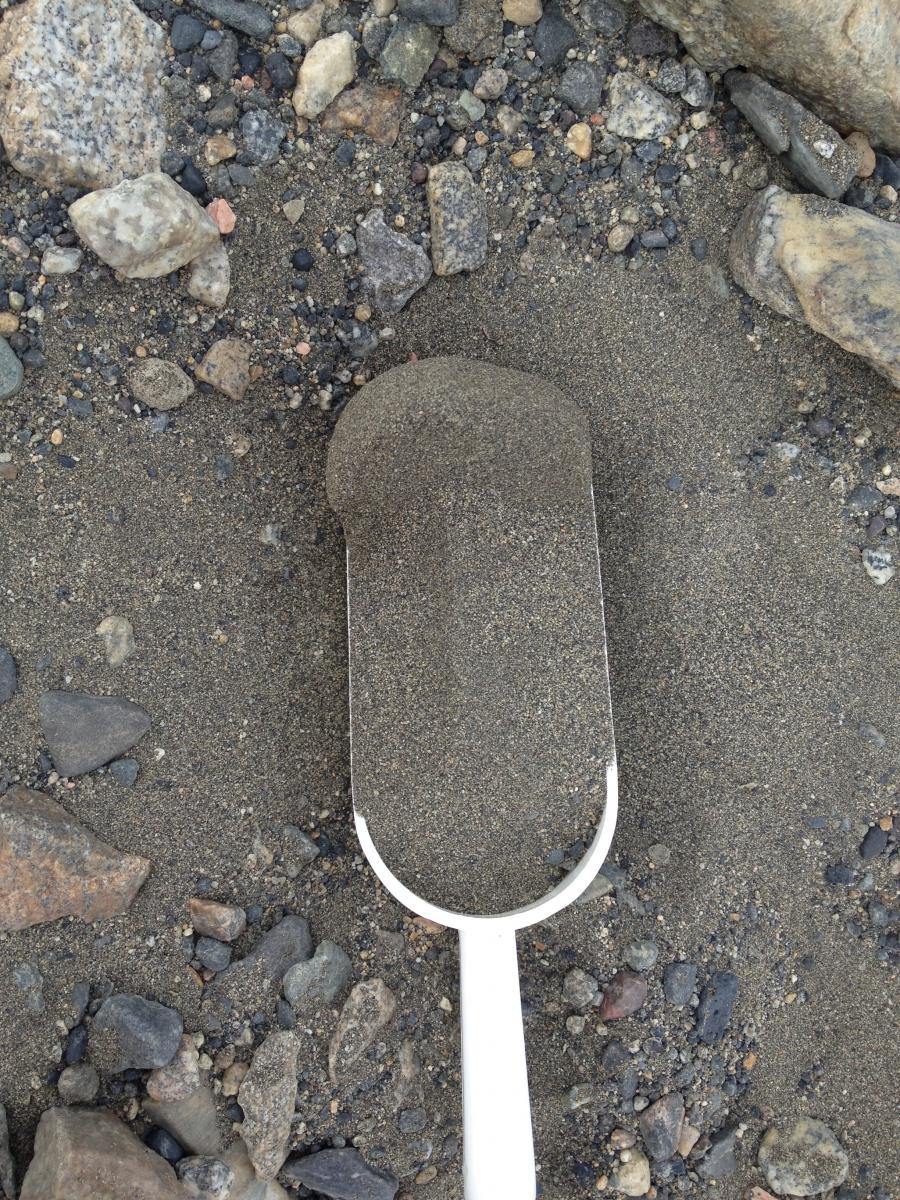
Soil sample collected in Taylor Valley, Antarctica. Photo by A. Shaw
While one tough nematode, Scottnema lindsayae, dominates and thrives in the dry soil that makes up >95% of the landscape, most of the soil invertebrate biodiversity prefers the scarce wetted margins of streams and lakes. These areas often have cyanobacterial mats – orange, black, and green - that sustain the soil food webs. In and around these mats, nematodes, rotifers, and tardigrades prosper. These animals share a habitat and are regularly extracted from the same soils. Could their interactions – such as predator-prey or competition – shape the communities in these soils?
The nematode Eudorylaimus antarcticus prefers wet soils, but is sometimes also found in dry soils with S. lindsayae. E. antarcticus is member of the order Dorylaimida, which contains many omnivore-predator nematode species. Given its close relationship to other predators, E. antarcticus could be a potential predator in the dry valleys. However, previous studies have only found evidence that it eats algae. We set out to test whether E. antarcticus could be a predator in the dry valley soils.

Eudorylaimus antarcticus extracted from Taylor Valley soil as seen under the microscope. Photo by A. Shaw
Stable isotopes are a great approach for understanding food webs. They are similar to radioisotopes (but have the benefit of not being radioactive!) and are also traceable. We can understand what an organism’s diet is like, because it picks up a detectable signature from its food sources. We used stable isotopes to test each invertebrate group’s position in the soil food web. To do this, we collected soil from both wet and dry habitats in the dry valleys. We extracted invertebrates from the soil, identified them to species under a microscope, and then collected (by hand, using an eyelash tool) hundreds of individuals by taxa. These invertebrates were analyzed for their 13C and 15N isotopes.
The isotope results showed that rotifers, tardigrades, and several nematode species were grazers – eating bacteria and algae. But E. antarcticus was different: its isotopes put it the top of the food web. This new evidence, combined with previous evidence that it eats algae, showed that E. antarcticus is an omnivore-predator.
This is big news for cold desert ecology. Not only is this the first solid evidence of a nematode predator present, it also opens the door to testing how biotic interactions such as predator-prey relationships might shape communities in these soils. This is especially important because the landscape is predicted to become wetter and more connected in the future. Thus, species ranges may shift, altering interactions or creating new contacts between species. Understanding species’ relationships to one another is the first step in predicting how their interactions might shape soil communities.
Antarctic soils are far from desolate. Life abounds in these soils, where there are still many questions to be explored!

Lake Bonney, Taylor Valley, Photo by A. Shaw

View from helicopter en route to our field site. Photo by A. Shaw
This work was published recently in the journal, Polar Biology, and can be found here: http://rdcu.be/FmrL
Lifestyles of arbuscular mycorrhizal fungi
Elizabeth Bach
Executive Director, Global Soil Biodiversity Initiative
School of Global Environmental Sustainability
Colorado State University

Examples of AM fungi hyphae (a, c) and vesicles (b, d) in corn (a, b) and prairie roots (c, d). Image from Bach et al. 2018, Ecology
One of my first experiences with soil ecology was a summer Research Experience for Undergraduates, during which I got to spend a lot of time looking at arbuscular mycorrhizal fungi within roots. I had never really observed these microscopic relationships before, and seeing the ways the fungal bodies lived within the roots amazed me. Hyphae extended out like fingers from the root, searching the soil for nutrients and water. Vesicles appeared as small spheres, full of lipids that the fungus could consume for energy when the host plant quit delivering carbohydrates.
Fast-forward six years. I still loved working with soil microorganism and was a few years into a PhD program. I had the opportunity to introduce this exciting microscopic world of mycorrhizal fungi to a couple of undergraduate assistants. Over the course of several weeks of counting arbuscular mycorrhizal fungi on roots from corn (maize) and tallgrass prairie plants, these students, Giselle and Kira, noticed that the corn roots had more hyphae than the prairie roots and the prairie roots had more vesicles. They asked why, and I didn’t know the answer, so we went looking in the scientific literature. Interestingly, we didn’t find many previous studies that could explain the pattern.
Giselle and Kira went back and specifically counted the rate of hyphae and vesicle presence on the roots, and it turned out corn roots had 6 times greater hyphal presence rate and prairie roots had 3 times greater rate of vesicle presence! It also turned out that the rate of presence of these structures varied across the growing season, with hyphae colonization peaking in August for all roots, and vesicle presence peaking in July, for the prairie roots, and September, for corn roots. Giselle and Kira shared their findings with poster presentations at our university (Iowa State University) and at national scientific meetings (American Geophysical Union and Ecological Society of America).
This data story remained interesting, but didn’t seem like enough to pursue a classic scientific publication. In 2017, the journal Ecology rolled out a new article type: The Scientific Naturalist. The section is dedicated to short essays, sharing an observation of the natural world that captured the wonder of ecological discovery and could lead to new hypotheses and deeper research. Immediately, Giselle and Kira’s work came to mind and I reached out to them to ask if they might be interested in working with me to write up their observations. Over the next few months we, along with our lab group’s PI Kirsten Hofmockel and fellow AM fungi researcher Jonathan Bauer, worked to write-up our story to share. The dynamic life of arbuscular mycorrhizal fungal symbionts was published January 24, 2018. It has been a delight to work with and learn from scientists from across the spectrum of experience on this project, and we are excited to see what future work may grow from this work!
Original Article:
Bach, E.M.; Narvaez-Rivera, G.; Murray, K.; Bauer, J.T.; Hofmockel, K.S. 2018. The dynamic life of arbuscular mycorrhizal fungal symbionts. Ecology doi:10.1002/ecy.2096
Elizabeth Bach is Executive Director of the Global Soil Biodiversity Initiative housed in the School of Global Environmental Sustainability at Colorado State University.
Giselle Narvaze-Rivera is a Master’s of Science student in Physical and Biological Anthropology at Iowa State University.
Kira Murray is a consulting geologist at Freestone Environmental, Richland, WA.
Jonathan Bauer is a postdoctoral researcher at Michigan State University
Kirsten Hofmockel is Lead Scientist for Integrative Research at the Environmental Molecular Science Laboratory at Pacific Northwest National Laboratory.
Bridging the gap in freshwater global warming research
Dr Kate Randall
Research Associate and Molecular Microbial Ecologist
University of Essex, UK
Dr Kate Randall is part of a multidisciplinary research team investigating the impacts of temperature on freshwater ecosystems as part of a ‘Ring of Fire’ NERC-funded research project led by Professor Guy Woodward from Imperial College London, UK.

An example of sediment sampling from streams used to characterise and quantify microbial taxonomic and functional diversity Image: H. Prentice
Like soil, marine and freshwater sediment are places where organic and inorganic material is deposited, stored, or used as nutrients and energy to support the main hub of biodiversity within these environments. Due to the isolated locality, influx of water and contents, freshwater ecosystems are particularly vulnerable to changes in land use, biotic and abiotic conditions. The effects of which are manifesting in biodiversity loss at faster rates compared to terrestrial ecosystems (Dudgeon et al. 2006).
The majority of us are aware of the unprecedented rates of warming our planet is experiencing, but the effects on freshwater systems, in particular sediment biodiversity and functioning are not clear. Most research to date focuses on the responses of a small range of larger-bodied organisms to warming. In reality an understanding of foodwebs, combined with measurements of multiple process rates (i.e. denitrification, methanogenesis) is required. In addition, the microbiota are largely underrepresented in the multitrophic climate change studies that do exist (Sarmento et al. 2010), especially within freshwater environments. Given their ubiquity and diversity is considered to be the greatest on the planet, with key roles in biogeochemical nutrient cycles (Krumins et al. 2013), this needed to be addressed.
Through the collection of field samples, mesocosm and microcosm experiments the ‘Ring of Fire’ project has embarked upon bridging the gaps in global warming-freshwater research. It aims to do this by adopting a multidisciplinary, genes to ecosystems approach and spans spatial scales (see below).
Large spatial scale field based sampling of freshwater streams along natural geothermal gradients

Two Icelandic streams – one is 5 ºC and the other is 20 °C and are only meters apart. Image: M. Jackson
Geothermal activity provides an opportunity to study long-term warming effects on natural freshwater streams as the activity generates a temperature gradient along which streams are located. Our large scale field research targets geothermal activity in multiple high latitude regions, within which, temperature does not correlate with other physicochemical stream variables. This component of the project will provide knowledge of how freshwater streams in an area experiencing some of the fastest rates of warming are responding, and importantly, act as indicators for freshwaters elsewhere in the future (O’Gorman et al. 2014). A core team of us were tasked with venturing to 5 sites during summer 2016 and 2017 (Iceland, Alaska, Greenland, Svalbard and Russia), where stream temperatures ranged from 2-35 oC. Divided into molecular microbial ecologists, freshwater ecologists and biogeochemists we successfully collected samples from stream sediment, the water column and biofilm. Careful planning developed a sampling protocol that was consistent across all streams, protected the integrity of samples for each research group, and will allow complementary downstream data collation.
Global mesocosm warming experiments (Mediterranean to the Arctic)
A number of large mesocosm ponds have/are being established across the globe such as the UK (http://www.imperial.ac.uk/silwood-park/research/silwood-lte/mesocosm/), Iberia (http://www.maraujolab.com/iberianponds/) and Denmark to investigate warming effects within different climatic zones. Here ponds can be heated at different temperatures and combined with additional stressors associated with climate change, such as spiked warming events, drought regimes and variations in nutrient availabilities. This will allow regulation of treatments and detection of causal relationships between these variables that would not be possible in the field.

Initial 96 mesocosm pond set-up at Imperial College London – Silwood campus
Image: imperial.ac.uk/silwood-park/research/silwood-lte/mesocosm/
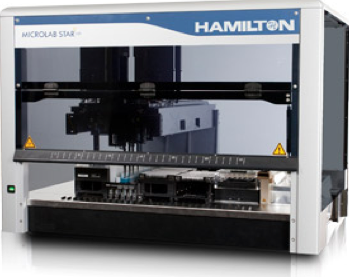
Hamilton StarLet - Automated robotic liquid handling to prepare mock microbial communities and to assist sample preparation for molecular microbial work. Image: hamiltoncompany.com
Lab based microbial microcosm experiments – Ecological and evolutionary responses to warming
Environmental samples collected from the geothermal streams and global mesocosm sampling will be used to isolate and seed into various combinations. These mock communities will then be subjected to changes in temperature and nutrient availability to disentangle the effects on complex networks of interacting microbial groups for which mechanistic drivers could not be determined within the natural environment.
Collectively, these components of the ‘Ring of Fire’ project will generate high resolution ecological data across spatial and temporal scales at a level previously unexplored. Computational approaches such as machine-learning and species-distribution models can then be applied to characterise and refine predictions of species and community responses to warming within these vulnerable and highly valuable ecosystems.
Further Reading
Dudgeon, D., Arthington, A.H., Gessber, M.O., Kawabata, Z., Knowler, D.J., Leveque, C., Naiman, R.J., Prieur-Richard, A., Soto, D., Stiassny, M.L.J., Sullivan, C.A., 2006. Freshwater biodiversity: importance, threats, status and conservation challenges. Biol. Rev. 81, 163-182. doi:10.1017/S1464793105006950
Krumins, J.A., van Oevelen, D., Bezemer, T.M., De Deyn, G.B., Gera Hol, W.H., van Donk, E., De Boer, W., De Ruiter, P.C., Middelburg, J.J., Monroy, F., Soetaert, K., Thebault, E., van de Koppel, J.A, Viketoft, M., van der Putten, W.H., 2013. Soil and Freshwater and Marine Sediment Food Webs: Their Structure and Function. 63, 35-42. doi:10.1525/bio.2013.63.1.8
O’Gorman, E.J., Benstead, J., Cross, W.F., Friberg, N., Hood, J.M., Johnson, P.W., Sigurdsson, B., Woodward, G., Climate change and geothermal ecosystems: natural laboratories, sentinel systems, and future refugia. Glob Change Biol. 20, 3291-3299. doi:10.1111/gcb.12602
Major threats to soil ecosystems from a combination of invasive species and climate change
Charlene Janion-Scheepers
Monash University, Australia
A study examining heat tolerance in alien and indigenous springtails, key soil arthropods that effect many aspects of ecosystem functioning, finds that tolerance of warming, such as that associated with climate change, is on average much more pronounced in the alien species than their indigenous counterparts, with little scope for adjustment by evolutionary change or phenotypic plasticity, suggesting that the impacts of biological invasions on soil systems will be exacerbated by climate change.

An Isotomurus springtail species. Alien species like these have, on average, greater resistance to high temperatures than their indigenous counterparts. Image: ChownLab, Monash University.
Soil ecosystems are critical for agriculture, biodiversity and human well-being. Poor soil health means a poor planetary outlook. A study published in Proceedings of the National Academy of Sciences of the USA by a Monash University team shows that a new threat faces soil sustainability everywhere. The team found that, from the polar regions to the tropics, invasive soil-dwelling species are typically better able to cope with warming than their indigenous counterparts. Climate change will benefit invasive species, suggesting major changes to the functioning of ecosystems, and potentially bad news for the United Nation’s Sustainable Development Goals of conserving and restoring terrestrial ecosystems (SDG 15: Life on Land), and ending hunger and malnutrition (SDG 2: Zero Hunger).
The work was conducted on springtails – small soil invertebrates that are globally ubiquitous, and influence both soils and the aboveground ecosystems which rely on them. Together with other invertebrates, such as earthworms, these animals make soil ecosystems work. As with earthworms, humans have moved springtail species unintentionally around the world from their natural homes to new environments. What the study shows is that these alien species are much more tolerant of high temperatures than their indigenous relatives.
"The impacts of soil invasives are becoming increasingly well known” said Dr Charlene Janion-Scheepers, lead author, “What we have found is that alien invasive species will thrive under climate change, much more so on average than local species, irrespective of where one looks”.
Co-author, Associate Professor Carla Sgrò, further added “We also tested to see if indigenous local species might evolve greater tolerance. They simply cannot. So, for the foreseeable future, we will be in a world where on average, invasive species are going to be the winners.”

Springtails, such as this neanurid species, play a key role in terrestrial ecosystems.
Image: ChownLab, Monash University.
Mounting concerns about the impacts of biological invasions for agriculture and terrestrial ecosystems have recently made world headlines. What this study does is demonstrate that impacts will be exacerbated by changing climates.
“The Paris Agreement on reducing emissions to combat climate change becomes all the more important when we see results like this” emphasized team leader Professor Steven Chown. “What’s at stake is nothing less than the health of our ecosystems.”
Primary publication: Janion-Scheepers et al. 2018. Basal resistance enhances warming tolerance of alien over indigenous species across latitude. Proceedings of the National Academy of Sciences of the USA 115, 145-150, www.pnas.org/cgi/doi/10.1073/pnas.1715598115.
Websites:
How much soil is lost every year?
Panos Panagos and Cristiano Ballabio
European Commission’s Joint Research Centre, Directorate D – Sustainable Resources, Land Resources Unit, Ispra, Italy

Amount of soil lost by water erosion in 2012 at 250 × 250 m resolution for 202 countries (approx. 125 million km2). Image from Borrelli et al. 2017
Soil is home of thousands of organisms, targeted by hundreds of soil biology and ecology studies. Soil is not an infinite resource, therefore, as soil biologists/ecologists, the raw material behind all of your findings is eroding away. The link between soil erosion and biology/ecology is stronger than what you may expect. As soil erosion modelers, our work improves estimates of soil loss in order to clearly assess its effects on soil life and, eventually, to develop actions to control it.
The question is simple: how much soil is lost every year on Earth due to erosion? Human activity and changes in land use lead to increased soil loss, which in turn degrades nature's nutrient cycling system, diminishes land productivity and affects the capability of soil to act as a habitat. Furthermore, erosion is becoming more and more an issue due to intensive meteorological events associated to climate change. According to the Status of the World's Soil Resources, recently published by the Food and Agriculture Organization, soil erosion is the main threat to soil (and soil dwelling organisms) worldwide. Still, the precise amount of soil lost annually remains unclear.
So far, a reliable assessment of soil erosion at global scale was missing. In December 2017, this gap has been partially filled by our new study. The analysis, produced by a group of researchers led by the European Commission's Joint Research Centre, the University of Basel and the Centre for Ecology & Hydrology, was published in Nature Communications: An assessment of the global impact of 21st century land use change on soil erosion.
We have developed an unprecedentedly high resolution (250 × 250 m) global potential soil erosion model, using a combination of remote sensing, GIS modeling and census data. The model result, an estimated 36 billion tons of soil eroded per year, is at least two times lower than previous annual soil erosion reference values.
As for biodiversity, we identified hotspots where erosion is more intense. The greatest amount of soil loss is estimated in Sub-Saharan Africa, South America and Southeast Asia. This means that some of the countries with less developed economies were estimated to experience the highest soil erosion rates. In particular, some of the largest and most intensively eroded regions are in African equatorial area (0.26 million km2, 3.2% of the region). Moreover, we calculated the spatial and temporal effects of land use change between 2001 and 2012. Our findings indicate a potential overall increase in global soil erosion mainly driven by cropland expansion (+0.22 million km2) and forest decline (−1.65 million km2).
Finally, we also evaluated the potential offset of the global application of conservation practices in agriculture. Our study estimated that, if applied correctly, conservation practices could save over a billion tons of soil per year. The highest reductions in soil loss due to conservation agriculture were estimated to occur in South America (16%), Oceania (15.4%) and North America (12.5%). The message is clear: soil erosion can be reduced if soil conservation practices are adopted in agriculture.
Overall, our research shows how soil erosion is a hot issue that requires actions to curb it, especially as it greatly affects developing countries. We hope that our work will promote the inclusion of soil erosion as one of the priorities in the environmental political agenda. This work will also help soil biologist and ecologists more aware of soil erosion and the impact it can have on their subject of study. Thus, we look forward to future studies integrating soil erosion modeling and soil biology and ecology. Indeed, another question arises: how do soil organisms affect the amount of soil eroded annually? It is up to soil biodiversity scientists to give an answer to that.
Digging for data gold in soil

I’ll frequently hear my field and lab colleagues disparaging their data sets: “Oh this core is constantly giving high values for no reason!” or “We just couldn’t get any methane out of this core, and then we found a rock.” As a researcher, you know all the warts of your own data set and it’s sometimes hard to see the gold underneath.
And your data set is gold. The time, money, and general effort invested in both designing the experiment/survey and then collecting the data to capture a single point in time that will never be exactly replicated again, all makes data incredibly valuable. In a very real sense, scientific data are the Truth that we are trying to understand as scientists. Especially when viewed in aggregation with other data to exact general scientific insight.
Data deserves respect, both yours and our colleagues. This is already common practice with field and lab notebooks. Who hasn’t opened a senior mentors old field notebook with a certain amount of awe and reverence to look at sketches of soil profiles or coffee stains over detailed protocol notes. But all too often researchers see publication as the end of the road for their data. While many data don’t even make it this far (publication bias is another post), this shortchanges the enormous potential for re-use and additional insights that could be gained from most data sets.
It goes without saying that soils are incredibly heterogeneous. Move over 10 centimeters, resample, and you get huge variations in your soil measurements. This makes large data sets critical for extrapolating generalizable insights. But most soil measurements are laborious, limiting most sample sizes to such small numbers that statisticians typically throw up their hands in despair. Individual studies will try to get around this by restricting the scope of their conclusions, homogenizing soil samples, or other methods. But another way around this is to pool data sets after the original study is concluded.
The more data you have, the more valuable it is. But there is a lot of work to get to a multi-data set harmonized data base. There are several hurdles to data re-use but they loosely fall into availability, discoverability and harmonization.
Is the data available? Data locked in basement filing cabinets is literally inaccessible unless you happen to have that key. Increasingly ‘contact the PI’ is an inadequate data policy for many funding agencies and academic journals. And for good reason. Individual researchers move around, leave the field entirely, or simply lose data. Making your data available through a university library, society archive, or some other long term institute is critical for preservation. But it is only the first step.
Once that data set is archived it needs to be discoverable. In the age of Google it still surprises many people how hard it is to find data once it is archived. Since data sets typically come in many different formats, data sets are not indexed directly on the data itself but on meta-data provided with the archived submission. This meta-data description is thus critical and frequently impossible to standardize. If you are investigating a new phenomenon there may be no standard way to describe this in the meta-data at the time of submission. In my opinion, the associated manuscripts makes the best advertisement for an archived data set. So it is important to link that manuscript to the archived data at publication. But there is active research in semantics and around dynamically developing control vocabularies to try to solve this problem.
Finally, if you manage to get the data out of basement storage and adequately described, there remains the third hurdle: harmonization. Is there enough information about the measurements and methods to be able to intelligently compare the data to other data sets? As mentioned previously, data sets are frequently in unique formats and may have new or otherwise distinct measurement protocols that makes automatic data ingestion intractable. Harmonizing the data set to make it comparable to a broader data collection requires expert understanding of the context of the data.
This final harmonization effort can be particularly tricky because you need to maintain a direct link to the original data set. Much like a field notebook or set of lab protocols, a script or computer program robustly preserves data provenance. Manual entry, transcribing data from one templet to another, is generally error prone and can be difficult to reproduce when reviewing the resulting meta-analysis. Sometimes manual transcription can’t be avoided but hand crafting unique scripts to process individual datasets provides the best way to harmonize data sets. Scripting data translation instead of manual entry is both explicit and reproducible, providing a clear line of data provenance from the original data file to the final data product.
All three stages -archiving, discovery, and harmonization- are laborious. Finding a repository to take the data, adequately describing what is there in the meta-data, and writing harmonization scripts is not glamourous work. No one will win a Nobel for their beautifully complete meta-data, but it is necessary.
Global soil maps, for example, can only be constructed by combining the results from soil surveys of different nations and regions. These maps are critical to benchmarking the land-carbon cycle of Earth system models used to inform anthropogenic emissions targets. The land-carbon models themselves rely on other data collections for parameterization and validation during model development. If you want your data to be of broader use to the community and live on beyond an individual project, it has to be preserved intelligently.
Data is scientific gold whose value increases as more data is collected. This is particularly true for a highly heterogeneous system like soils. Contributing data to the broader scientific collection requires that data be available, discoverable, and harmonize-able. While meeting these requirements can be laborious, the long-term rewards to the broader community are significant.
Kathe Todd-Brown is a computational biogeochemist at the Pacific Northwest National Laboratory in Richland, Washington. She initially trained as a mathematician but it was a bit too clean. She transitioned to soil carbon cycling and couldn’t be happier to work in one of the most interesting systems on the planet.
Soil biodiversity at continental scale, a call for support and collaboration
By Alberto Orgiazzi, European Commission’s Joint Research Centre, Directorate D – Sustainable Resources, Land Resources Unit, Ispra, Italy
Over the past 10 years, the European Commission’s Joint Research Centre (JRC), base in Ispra, Italy (nearby Lake Maggiore… a great place to work at) has been responsible for the organisation of the largest soil survey ever to be carried out across Europe. Named the LUCAS (Land Use/Land Cover Area Frame Survey) Soil, this campaign kicked off in 2009, with 19,000 samples being collected from across Europe. A second round of sampling was carried out in 2015 from about 23,000 points all over the continent, the soil samples of which are now being physically and chemically analysed. The results of these initial surveys are summarized in a new review paper: LUCAS Soil, the largest expandable soil dataset for Europe.

1,000 locations (and their land cover type) across Europe where soil samples will be collected, as part of LUCAS Soil survey, for soil biodiversity assessment in 2018. Image from Orgiazzi et al. 2017
So far, the focus of LUCAS was exclusively on measuring soil properties such as texture, cation exchange capacity, pH, organic carbon, nitrogen and many others. One element was missing from this picture: the ‘alive’ component of soil, the soil biodiversity. The good news is that this element will be included in the third round of LUCAS, making it the first ever pan-European assessment of soil biodiversity.
Thanks partly to the success of the first ever Global Soil Biodiversity Atlas, which is demonstrating the increasing interest in soil life not only among scientists but also among policy makers, the JRC plans to analyse the biodiversity of soil organisms about 1000 of the total 26,000 points by means of DNA-fingerprinting techniques. The second piece of good news, at least to me, is that I am the postdoctoral researcher responsible for all that. I am very excited at this opportunity, and when they offered it to me I immediately said: I’m in. However, I admit that I am also pretty scared. Of course, I am not alone in this effort, and my colleagues are already helping me, but still I have been the one who drafted the protocols for sampling, storing and shipping the soil samples, and selected the organisms to be considered. This is likely one of the most challenging and, at the same time, fascinating tasks of my life, at least from a professional point of view.
Would you like to put yourself in my shoes? I have had a year and a half to organise everything, from the selection of sampling points to the choice of protocols for DNA extraction and amplification. So, I spent the last few months thinking about possible ways to plan the future work. Then I got a brainwave. Why not turn this responsibility into an opportunity? Now I have in my hands the possibility to contribute the European part of this global map/assessment of soil biodiversity. And I do not want to do this alone.
I am already in touch with people in Australia and Africa that are studying the distribution of soil life through DNA tools (Bissett et al., 2016; African Soil Microbiology Project). However, I am sure there are several other research groups worldwide that are planning to do something similar in the near future, for example in the frame of the recently proposed National Microbiome Project in the US and the China Soil Microbiome Initiative in China. And, perhaps, you are also planning some sampling of soil biodiversity. Those are the people I am addressing; let’s bring our ideas and efforts together in order to develop a common strategy. That is the purpose of the call that we have recently launched in our review (Orgiazzi et al., 2017). I am issuing this public call in order to reach the broadest possible audience.
You can contribute in many ways. You can propose possible strategies for large-scale DNA fingerprinting of soil organisms (see our review for details). And you can also actively contribute to both LUCAS Soil and global soil biodiversity assessment. In 2018, you may consider the possibility to collect some soil samples (not just across Europe) and analyse them through our protocols (by the way, we decided to use those proposed by the Earth Microbiome Project – get in touch for details). In this way, you will have your own LUCAS Soil points. That will make you able to compare your data to ours (1,000 samples… not bad) and address ecological/biological questions of your interest. At the same time, you will help out with the development of the first global soil biodiversity maps. Last but not least, you may also consider the possibility to visit one or more LUCAS points, collect your own samples and make whatever additional analysis (e.g. mesofauna and earthworm sampling). Then, we can combine our data. What more could anyone wish for?
See ways you can contribute and sign-up here.
I really look forward to receiving your inputs. My email is alberto.orgiazzi@ec.europa.eu

Some of the material (1,000 polystyrene boxes and 4,000 ice blocks) that will be used to collect fresh soil samples for soil biodiversity analysis.
Image by A. Orgiazzi
References
Bissett A, et al. (2016) Introducing BASE — the biomes of Australian soil environments soil microbial diversity database. Giga Sci, 5: 21.
Orgiazzi A, et al. (2017) LUCAS Soil, the largest expandable soil dataset for Europe: a review. Eur J Soil Sci, DOI: 10.1111/ejss.12499