

Blog Archive:
Beneath Our Feet
African Green Revolution and the functional capacity of soil microbial communities
by Steve Wood, Columbia University

It is almost trivial to state the importance of fertilizers to the incredible increase in global food production over the last half century. Despite this agronomic revolution, environmental scientists have shown severe environmental damages associated with high nutrient input when excess nutrients drastically modify biogeochemical processes and species composition. Scientists are now trying to figure out how to keep up agricultural growth while minimizing environmental damages.
But fertilizers may also pose a threat to agriculture itself. Agriculture depends on short-term nutrient input but also on soil properties that change over longer time scales, such as soil organic matter, which plays a key role in soil structure, water holding capacity, and nutrient availability to plants. Yet the microorganisms that control the build up and break down of organic matter are highly sensitive to fertilization. If agronomic nutrient inputs drastically modify the functional capacity of soil microbial communities, there may be long-term effects on agronomic capacity that aren’t foreseeable under present trajectories of agronomic growth.

These potential effects are particularly potent on smallholder farms in sub-Saharan Africa that are traditionally low in external nutrient inputs. A surge in global interest in food security has led huge investment in agricultural development projects aimed to increase crop productivity on smallholder African farms. This effort is often called the African Green Revolution and one of its key components of this strategy is the increased use of mineral nutrient inputs.

Our work aims to quantify how agriculture development-driven changes in nutrient budgets on smallholder African farms are impacting the functional capacity of soil microbial communities. In a first set of studies, we collected soil from both experimental fertilizer addition plots and actively managed farms in western Kenya. We classified actively managed farms as low fertilizer, high fertilizer, or high fertilizer plus the incorporation of seasonal fallows that build up soil organic matter. We measured the taxonomic composition of microbial communities, the abundance of key functional genes, and the ability of the microbial community to use a range of carbon substrates.
We found that the taxonomic composition of microbial communities is highly sensitive to mineral fertilizer addition, as has been shown elsewhere. But these changes in taxonomic composition are not associated with losses in the functional capacity of microbial communities. Instead, microbial functional capacity was significantly greater when mineral fertilizers were combined with organic inputs. The abundances of a range of functional genes involved in C and N cycling were significantly elevated as was the ability of microbes to synthesize carbon substrates.
This pairing of mineral fertilizers and organic matter is also responsible for the greatest increase in crop growth, suggesting that there might be important synergies between increasing crop yields and maintaining the functional capacity of soil microbial communities.
Two recent papers from this project:
More information about Steve Wood’s research can be found here: www.stephenwoodecology.com
Talking Dirt with the Soil Ecology Society
Will Beaton
Global Soil Biodiversity Initiative

The 2015 meeting of the Soil Ecology Society was my first soil conference, and though I got to spend a week tromping through the Rockies of Colorado Springs, it were the experiences I had inside chatting with soil researchers and absorbing presentations that I’ll never forget.
Mathodi Motsamayi was the only African at the conference, and as far as I can tell, he is the bravest man I’ve met in science. He came from South Africa alone for his first visit to the United States to give a presentation to his colleagues in a non-native language. And he nailed it.
Where Mathodi is from, the paint from cheap cooking pots can poison families’ meals, and so he explained his efforts to revitalize his community’s use of soil in ancestral pottery making.
On the top of Pikes Peak, he said he was glad to have come — that traveling to tell others of his work, even if they’re 10,000 miles away from it, is the best he can do to fulfill his responsibility as a scientist to communicate the value of soil.

Deborah Neher and Brian Darby know what it means to have a thoughtful advisor, and though they are in different stages of their research careers, they equally hold soil education — from the university level to kindergarten — as the key to the successful future of their field.

Deb advised Brian in graduate school, and he has since inspired innumerable undergrads (myself included) to become what we’ve lovingly called “dirt enthusiasts.” Like many of their peers, they seek actively to be the scientists they one day want their students to become, and with a sensitivity for cultivating the passions of others, their influence reaches far beyond themselves.
If we thought the maze of conducting science was complex enough, communicating it is like navigating Theseus’ labyrinth — and there are more minotaurs than one in our fairytale dream to tell the world what must be known of soil.
Jayne Belnap and Josh Schimel are just two folks at the SES meeting who have spent their careers going far out of their way to advance the field by studying not only their science but the science (and art) of explaining it.

Journalists, legislators, advocacy groups, and voters are only the first few to come to mind that would benefit from understanding what the field of soil ecology does (and doesn’t). Writing about science writing and speaking with professional speakers in politics are only two ways to start the conversation.
Communicating soil science will require hard work in the lab but also on the phone with politicians, writing emails to reporters, blogging for fellow scientists, and always making time to chat with any student who wanders through an open office door.
The Soil Ecology Society conference showed we have a commitment to communication. Do for others what turned you into a soil supporter, and we may find, in time, that the end of the maze seems less far off than before.
You, the EMP, and the GSBI: aligning stars of the soil biodiversity universe
Written by Dr. Dorota Porazinska
It has been one month since the First Global Soil Biodiversity Conference and I still catch myself going back to the many inspiring talks and posters diligently recording the progress of soil ecology, to a place where soil biodiversity was on everybody’s top list. It was impressive to see not only the huge leaps in understanding how soil biodiversity affects ecosystem services, but also how this knowledge can influence the value that people place on soils or how it can help shape new policies relevant to land and climate. While most of us work on a tiny piece of the soil biodiversity puzzle, the First Global Soil Biodiversity Conference provided a forum and a framework to successfully bring the pieces into place. In a pre-conference workshop on data synthesis, the Soil Biodiversity Curation Working Group was formed with the goal of linking all existing soil biodiversity resources and databases. This would be a milestone step towards building a larger context to our individual research projects.

The Earth Microbiome Project (EMP) offers to the GSBI community three core components: a resource, a database, and a framework. The EMP was initiated in 2010 to understand patterns in microbial communities across different spatial, temporal and evolutionary scales, to understand the functional basis for these patterns, and to provide a portal for the analysis and visualization of the data. The EMP has primarily generated data from amplicon sequencing of Bacteria and Archaea to date, although expansion to other taxa including eukaryotes and viruses, and other forms of data generation including metagenomics, metatranscriptomics, and metabolomics, is anticipated in the future. By participating in the EMP, the GSBI members would be providing much needed expansion of the biodiversity data necessary for guiding scientists in the development of new research initiatives. This would ultimately assist managers, farmers, and politicians to more accurately predict the effects of land management and to inform policy.
The EMP is a massively collaborative project. Individual projects are stand-alone, hypotheses-driven studies contributed by PIs from around the world. The EMP has generated 16S rRNA profiles for >30,000 samples representing >40 ecological biomes, including oceans, sediments, rivers, lakes, human, plant- and animal-associated ecosystems. Soils constitute <10% of these samples, and although many project contributions to date have been from agricultural sites from the North American meridian, the EMP results to date confirm our expectations of these ecosystems: high diversity, many novel taxa, and limited community overlap among biomes and geographic locations. By joining the EMP project, the GSBI members can further improve our understanding of the soil ecosystems in the global biodiversity context.
The success of the EMP depends on your participation.
If you join the EMP, we will:
Extract DNA and sequence 16S rRNA amplicons free of charge using standardized protocols (http://www.earthmicrobiome.org/emp-standard-protocols/)
Archive the data and make it publicly available
Perform initial analysis of the sequencing data (quality-filtering, OTU-clustering, taxonomy assignment, and beta diversity analyses integrated with a vast database of other studies)
To join the EMP, we ask that you submit:
A one-paragraph proposal that describes your study, focusing on what the samples are and what spatial, temporal or evolutionary questions your sample set addresses in the microbial world
Information about each sample (“sample metadata”) that must be provided in standardized format (the EMP will assist with this) prior to sample receipt
For detailed information about goals and protocols, please visit the EMP website: http://www.earthmicrobiome.org. Note the EMP data release policy, which is that all data are made freely available to the community upon sequencing.
For specific questions about submission of the proposal and the mandatory metadata, please email: dorota.porazinska@colorado.edu
Significant progress at the Global Soil Partnership meeting Rome, Italy
Written by Dr. Ciro Gardi, Scientific Programme Coordinator, Global Soil Biodiversity Initiative
On July 22-24, 2014, I attended the Second Assembly of the Global Soil Partnership (GSP) that was held in the headquarters of the Food and Agriculture Organization in Rome, Italy.
Significant progress was made by the Intergovernmental Technical Panel on Soils (IPTS) and the GSP Working Groups (WG) in preparing the Plans of Actions for the five Pillars of Action http://www.fao.org/globalsoilpartnership/the-5-pillars-of-action/en/.
The main objective of the Plenary was to reach a consensus and approve the Plans of Action, enabling the following implementation phase.
The activity of IPTS was concentrated on the following aspects:

Preparation and review of Plans of Action for the GSP Pillars
Preparation of a working document allowing the soil community to contribute to the Sustainable Development Goals (SDGs) and Post-2015 agenda
Preparation of the Status of the World Soil Resources Report (SWSR), which should be released on the 5th of December 2015
Revision of the World Soil Charter (the document has been discussed and amended during the meeting, before the request of adoption by FAO)
Four out of five Working Groups (Pillars 1, 2, 4, 5), dealing with the preparation of the Plans of Actions, presented final versions of their documents, that were discussed, amended and approved during the Plenary. The WG on Pillar 3 dealt with the promotion of “targeted soil research and development focusing on identified gaps, priorities and synergies with related productive, environmental and social development actions.” This is an extremely challenging task, so they are still working on the definition of the Plan of Action that will be discussed during the next plenary.
The discussion during the three days of the Assembly was very intense and useful, with some of the national and organization representatives particularly active.
On behalf of GSBI, I raised the attention on the importance of Soil Biodiversity for each of the five pillars. In particular, I offered the availability of GSBI for the scientific support for the implementation of the Plans of Actions already approved, the preparation for the Plan of Action of Pillar 3 and for the World Soil Resources Report.
During the discussion of the documents to be approved, several other members of GSP attending the plenary, such as the representatives of Switzerland, France, the International Institute of Tropical Agriculture and others, highlighted the importance of including aspects related to soil biodiversity. The amendment of World Soil Charter was of particular importance. Here the key role of soil biodiversity for the sustainable management of soil was further stressed.
Cost Action Meeting on Biochar
Ciro Gardi
Professor at the University of Parma, Italy
There is a growing worldwide interest on biochar and its possible application for improving soil fertility and climate change mitigation. There is a need, however, to fully investigate the interaction with the environment and the possible impact on human health.
The scientific community is challenged to provide the necessary answers to decision makers, stakeholders and citizens. Also, soil biodiversity scientists should play an essential role. In fact, the proposed application of biochar in agriculture, as amendments incorporated into the soil, will determine a strong interaction with soil biota that is still poorly investigated and understood.
On the 3rd and 4th of June in Aveiro, Portugal there was a meeting of two working groups (WG2 and WG4) of the Cost action TD1107 “Biochar in soils: on the path of the required level of scientific understanding for sustainable policy development”. I attended the meeting as an invited expert, participating in the activities of the Thematic Group on Biodiversity and Ecotoxicology.
The two days of intense and productive activities have been devoted to the assessment of the current and the required level of scientific understanding (LOSU), using the Ecosystem Services framework as operational tools. In other words it was requested to the groups of experts participating to the meeting, to score the current LOSU and the required LOSU for sustainable policy development, for each of the Ecosystem Services (sensu Millennnium Ecosystem Assessment) potentially affected by biochar application.
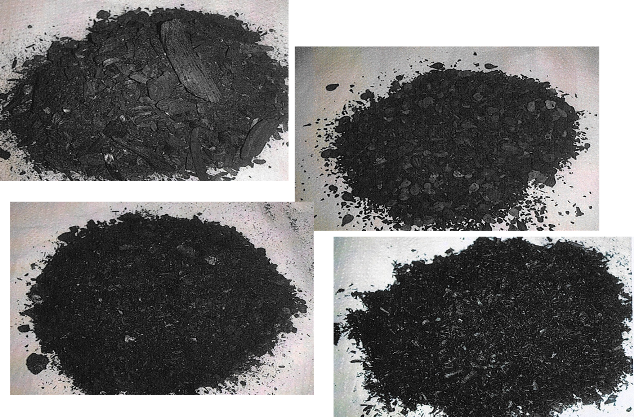
Figure 1 – Different types of biochar:
In the following phases, the potential properties, processes and indicators relevant for investigating the interaction of biochar within a specific thematic area (one of them was biodiversity and ecotoxicology), were discussed and selected.
The number of pending issues and aspects to be investigated on biochar is still relevant, but progress towards a more sustainable use of this material has been made. For instance, the total removal of crop residues to be used in pyrolysis plants and the reintegration of the produced biochar will have a heavy impact on the soil food web. Recent approaches, however, are based on the removal of 70% of crop residues for pyrolysis and the remaining 30% will contribute to the soil food web.
In agriculture, the biochar addition to soil has been suggested as a promising strategy to increase soil carbon storage with important side-effects on soil fertility and crop productivity. However, in order to correctly evaluate the potential contribution of biochar in increasing the storage of carbon in soils, it is necessary to acquire a deeper knowledge on its decomposition and transformation processes. Recent estimates on the decomposition rates of biochar indicate a 0.3% per year, but of course this will vary as a function of biochar characteristics (feedstock, temperature, processes, etc.) and soil and climate conditions.

Figure 2 – People attending the Aveiro Meeting:
Soil Biodiversity in the European Commission Headquarters
Gerlinde B. De Deyn
Associate Professor at Wageningen University

As a European and Belgian citizen, I have seen the Berlaymont building in Brussels many times before in person and on TV or in newspapers when European issues were being addressed. I have always associated the building with politics and a beehive of translators to enable multi-language meetings.
Last week, however, my association to the Berlaymount building drastically changed. I visited the building for the first time and not alone… with me I brought thousands of springtails, millions of nematodes and at least as many bacteria along with a microscope to reveal their existence! I had not brought them along to show the security people, who attempted to ensure the little critters are not harmful and found just the contrary. Instead, I brought my little associates to show the 15,000 people that came to visit the EU open doors day in Brussels, 17th of May 214. On this day EU institutions open their doors to the public, so they can join in celebrations and learn more about European Union events and activities.

I participated in the EU open day as a Marie Skłodowska-Curie fellow, taking part in the stand of Research and Innovation by the European Commission. On show: roots with/without nodules, nematodes, springtails and mycorrhizal fungi.

My previous EU outreach activity, the EU Researchers’ Night in 2013 (you may remember my blog http://blog.globalsoilbiodiversity.org/article/2013/10/08/researchers-night-teaching-children-exchanging-research-andeating-bugs) proved to be a good preparation for this event. Of course, I could not do without the European Atlas of Soil Biodiversity AND the French version, L'Atlas Européen de la Biodiversité des Sols. Thank you, JRC Ispra for sending multiple copies of both straight to EC Brussels, which we distributed to very interested people. For all those who do not yet have a copy in English or French and would like one check out these links: http://eusoils.jrc.ec.europa.eu/library/maps/biodiversity_atlas/
http://eusoils.jrc.ec.europa.eu/library/maps/biodiversity_atlas/french.html
For all those who are currently writing their contribution to the Global Soil Biodiversity Atlas: keep going. It is well worth it and already quite a few people are looking forward to its appearance. I could of course not mention the Global Soil Biodiversity Atlas when talking about on-going projects!

The European Atlas of Soil Biodiversity, my buddy at the outreach activities! Thank you to all who contributed.
I had little time to explore the other stands given the overwhelming number of visitors to the research stands, but I was able to get a sense of what the other fellows are working on as we were setting up our stands. Some of the other work featured that day included: the collection of wave and wind energy, e-nose (detection and quantification of air pollution), and 3D-printing of food, … No insect tasting this time as far as I could see. When thinking about cross linkages between disciplines I can see potential applications of the 3D-printing and e-nose technology also in our field of soil ecology.
Consequences of deforestation on aboveground biodiversity
Thomas Crowther
Yale Climate and Energy Institute
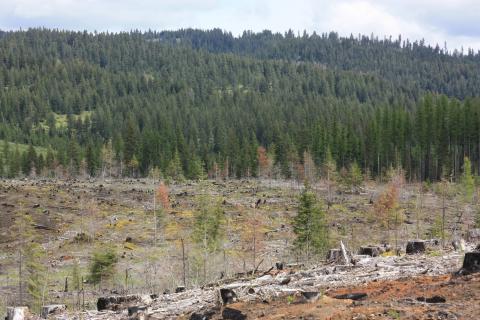
The consequences of deforestation for aboveground biodiversity have been a major scientific and political concern for decades. In contrast, despite being a dominant component of biodiversity that is essential to the functioning of natural ecosystems, the responses of belowground biodiversity to land-use change have only recently begun to receive attention. The advent of next generation sequencing has recently enabled us to comprehend, for the first time, the full extent of microbial biodiversity responses to land-use change.
Two studies conducted in the Amazonian rainforest suggest that, in contrast to plants and animals, bacterial diversity increases following forest removal. This increase is coupled with reduced bacterial biomass, effects which are driven by reductions in soil organic matter concentrations. However, on a continent-scale, effects of deforestation on organic matter concentrations are highly idiosyncratic, with negligible effects in some regions. No study has explored the consequences of this idiosyncrasy by investigating the effects of deforestation across multiple sites/biomes. Thus, we are limited in our capacity to identify global trends or unifying mechanisms governing microbial susceptibility to land-use change. Furthermore, although fungi are the dominant decomposing agents in forest ecosystems, they have been completely ignored in continent-scale studies.
We take advantage of a unique set of 11 well-maintained, long-term experimental research sites to explore the effects of deforestation on fungi, bacteria/archaea and their functional potential, across the Northern United States. Using Illumina sequencing we explore community-scale microbial responses across tropical, temperate and boreal biomes and identify the unifying principles governing the vulnerability of soil biodiversity to forest removal.
We reveal consistent effects of deforestation at the continent-scale, but the magnitude of the community response is highly variable, with strong effects of forest removal in some sites and negligible effects in others.
The magnitude of the effect was highly predictable, and governed almost exclusively by soil texture, effects of which are mediated by the increased capacity of fine-textured soil to retain soil organic matter following forest conversion. Mean annual temperature also explained the susceptibility of one metric of fungal community vulnerability, an effect driven by the specialized nature of mycorrhizal associations with forest trees at higher latitudes.
The strength of these relationships enabled us to predict (map) the vulnerability of microbial (fungal and bacterial) biodiversity to change in vegetation cover at the continent scale. Our model was validated using previously published data from single-site studies in Brazil. The microbial community changes were associated with distinct changes in heterotrophic soil respiration, providing a direct consequence of deforestation for terrestrial carbon exchange.
The highly predictable nature of microbial susceptibility, at the continent-scale, can serve as a guideline for future intensive forest management, and opens the door for a new generation of ecosystem models that incorporate entire microbial communities to anticipate the consequences of land-use conversion on biodiversity and carbon storage of forest ecosystems worldwide.
The study: Predicting the responsiveness of soil biodiversity to deforestation: a cross-biome study

Succession of glacial soils

The world of soils is incredibly diverse and heterogeneous and we are just starting to understand the scope of its complexity. Not only do soils harbor much of the earth’s genetic diversity, but soil environmental conditions can change vastly over distances of only millimeters. The distribution and diversity of soil animals and microorganisms, along with their influence on ecosystem processes, also changes across these micro-distances.
When faced with such complexity, scientists can focus their efforts on relatively simple soil systems to begin to link patterns to processes.
From the tropical Andes of Peru to the icefields of Alaska, glaciers are rapidly melting. As ice melts, we are left with an annually resolved gradient in soil development. Substrates closest to the glacial terminus are the youngest while substrates furthest from the terminus are older. Deglaciated landscapes, with their barren rock and lack of vascular plant cover, often appear to be devoid of life. On the contrary, a growing number of observational studies show that glacial soils, albeit low diversity, are teeming with microscopic organisms that take up residence immediately following the retreat of ice. Looking at how soil biota and the soil environment develop with time in these relatively simple landscapes may help us to unravel the relationships between community structure and ecosystem function that may be otherwise obscured in more complex soil systems.

But before we can link patterns and processes, we must first establish whether or not soil microbial communities undergo succession – the orderly and predictable change in community composition and function with time. In my own work, I am examining microbial communities at glacial sites in both North and South American continents. It appears that young glacial soils host bacterial communities that are very different in terms of structure and function when compared to communities originating from older parts of the landscape. In other words, bacterial communities from distant locations (Peru, Washington, and Alaska) undergo successional change that results in a predictable community composition regardless of site. The graph of points depicts this pattern. Each point indicates a unique soil bacterial community and early communities are much more different than older soil communities. The next step for this work is to understand the drivers of successional change.

We are becoming increasingly aware of the links between the aboveground and belowground biota in ecosystems. Plants have repeatedly been shown to drive microbial activity in soils. Recent work from Shawn Brown and Ari Jumpponensuggests that during early ecosystem succession, the presence of plants can shape soil bacterial communities. As well, studies have demonstrated that soil biota wield a strong influence on the diversity and productivity of plant communities. One relatively unknown question is how the succession of belowground communities is related to the succession of aboveground communities. This is an exciting frontier of research that myself and others are currently working on.
Following a major ecosystem disturbance, soil fauna and microorganisms play a particularly important functional role in soil fertility re-development by driving rock mineral weathering, nutrient recycling, and steadily building up organic matter. The work of Christian Schurig and colleagues from the Damma Glacier in Switzerland highlights this last point and their findings show that in developing systems organic matter largely comes from the cells of dead bacteria and fungi.
Though glacial retreat is one specialized type of ecosystem disturbance, there are many other natural and human caused disturbances that influence microbial communities and their functions. The study of natural gradients may offer us some insight into how to maintain and restore degraded systems.
More information about Sarah Castle’s research can be found here: www.cfc.umt.edu/biogeochemistry

A lifetime ambition: Barcoding UK Collembola

Introduction
This blog post is not a write-up of work done so much as it is a wish list of work to do! Here we describe the background to, and early stages of a long-term project to answer an apparently simple question: “What species of Collembola occur in Britain?” by using molecular barcodes.
At the moment, we have three separate programmes collecting these springtail barcodes. One focuses specifically on just two genera (Entomobrya and Lepidocyrtus) overseen by Brent Emerson of UEA + la Laguna Tenerife. A second forms part of PhD work by Stephanie Bird – co-funded by the Royal Horticultural Society. The third programme is more ad-hoc, overseen by Carly Benefer (Plymouth) and it is this third programme that forms the basis of this blog. We should also add mention of some work by Jonathan Ellis of Manchester Metropolitan University, who (with MSc students) has been barcoding inter-tidal Anuridas.
The barcodes in question are based on sequence comparisons between mitochondrial cytochrome oxidase I (COI), a gene that is rapidly becoming the international standard for determination of animal species. It has several convenient features: being mitochondrial there is only one haplotype per body (two for most nuclear alleles), and it is unaffected by sexual recombination. For the same reason there are many multiple copies of each sequence per cell, making extraction easier. It just happens to evolve at a rate that corresponds – roughly – with species separation (though not in plants, curiously – we still lack a universal botanical barcode). There is a dedicated online database for this gene; the Barcode Of Life Database.
Personal Experience – A Story of Optimism
When marking student write-ups, one normally scrawls red pen around anything written in the first person. One of my commonest comments on essays is “Avoid ‘I and We’”. Please therefore forgive my extensive use of the first person into the next few paragraphs: since this is a blog I would like to convey a personal perspective on my increasing awareness of my own ignorance!
I inherited the role of UK recorder for the Collembola from Steve Hopkin in 2006, and now maintain a database of all publications naming UK Collembola, field collections of the group and (latterly) gather some records from online photographs. All that I want to do is to know what to call them!
My journey into the Collembola has been characterised by progressive reductions in confidence, each time that the scale of the task became clearer! When I started my PhD on the springtails and fungi of lodgepole pine plantations (under Michael Usher and John Dighton) back in 1982, I expected to know most of the UK’s Collembola by my writing-up stage in about 1985. By 1985 I realised that this was way too optimistic, but I thought that I could at least name the common species of pine forests reliably using Arne Fjellberg’s 1982 Norwegian key, with a little dusting off of Gisin’s 1960’s German work.
This happy delusion lasted until I started meeting Steve Hopkin while he was preparing the FSC key, when I realised that I was still too optimistic, and that the UK Collembolan fauna was far richer than Norway’s. Happily, Steve finished his draft manuscript before being killed in a car crash, and I was able to help a little by proofreading the final manuscripts for the FSC. Then I felt confident that I could name UK Collembola – until I realised I was again being too optimistic when the photomicrographic community started turning up multiple unrecognisable symphypleona, quite widely in the southern UK.
So now to name Collembola in the UK we had a dedicated key, plus photos of some aliens. Oh, and a native groundwater community that was previously unknown and has probably little changed certainly since the ice age – that happens to include at least one springtail new to the UK: Hymenaphorura nova.
I could, at last, feel confident about naming UK springtails.
You can perhaps guess what I’m going to say next? Yes, of course: I was being way too optimistic. Recent work by people (including Antonio Carapelli, David Porco, Francesco Cicconardi, Brent Emerson, Felipe Soto-Adames, Aron Katz, Mark Stevens – forgive me for many omissions here) has shown that many well-known “species” of springtail are in fact multiple clades that seem as genetically isolated as are true species. This is the problem of ‘cryptic’ species, and it raises a whole new set of taxonomic questions.
Cryptic Species

(Right: “Parisotoma notabilis” 1mm, Collected Spadeadam forest 20iv2012. Its clade is not yet known.)
To take one example from many: the most widely recorded springtail in the UK, the one that turns up in virtually every inland collection (urban, grassland, woodland, even some montane) is Parisotoma notabilis, formerly Isotoma notabilis.
Recent work by David Porco and others shows that this “species” conceals (at least) four clades whose mitochondrial (COI) and nuclear DNA (28S rRNA) differ between clades and are co-inherited, in other words (at least) four cryptic species.
This example shows how far we are from being able to give definitive names to collections yet: Parisotoma notabilis was first described by Schäffer in 1896, so the taxon defined by his type specimen must be the taxon to bear the name “notabilis”. It is not obvious how we can ever be sure about the true identity of Schäffer’s type specimen since the DNA will have degraded hopelessly – in this case the same location (type locality) was re-sampled, hoping that the population is unchanged since 1896. The other 3 clades should then be given new names. (In this case it seems that the type specimen is from the main clade that also occurs in Britain, which would be a relief if confirmed).
From the viewpoint of a biogeographic recorder this is catastrophic, since not only are all the existing (150 years of) records invalidated, but so also are the great majority of new records when no DNA sequencing is done.
Aside: This sort of problem is not confined to Collembola – see for example Project Waxtongue for a project posing a similar set of questions about the waxcap fungi.
So, the only way to actually know with any confidence what genetic “species” of Collembola we have in the UK is to obtain fresh samples of as many taxa as is feasible, and to then barcode them. The majority will probably prove to be clades found widely elsewhere in the world, but we should have a few endemic lines too.
A Collaborative Effort
This is the background to a collaboration between Universities of Roehampton (Peter Shaw) and Plymouth (Carly Benefer). Peter has collected, photographed and identified Collembola from various ad-hoc collections, and sent them to Plymouth for extraction/PCR/sequencing. So far we have been able to use a small ‘seedcorn’ internal fund to generate barcodes for 44 species [maybe more soon?], mainly collected from the London area, but also northern England, and from one area of Caledonian forest north of Loch Ness.
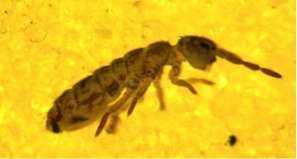
(Above: Isotomurus maculatus from Digby Stuart College, Roehampton, London, which turns out to have close relations on Marion Island in the sub-Antarctic.)
In some cases the results are so simple that the molecular approach seems overkill. Neanura muscorum is one of the commonest and most widespread Collembola in Europe, so finding that collection from Northumberland showed a >98% match to a mainland European Neanura muscorum was reassuring but unsurprising. Likewise collections of Allacma fusca, Dicyrtomina ornata and Isotomurus maculatus matched international collections almost perfectly. These are all relatively large and visually distinctive species.
Most collections of the Tomocerids also matched their nominate species quite well, especially Pogonognathellus longicornis, the biggest species in the UK.
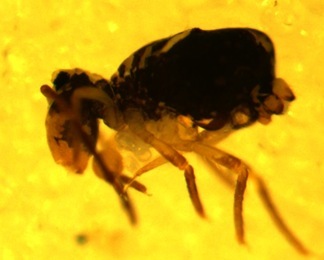
Above: Dicyrtomina ornata
One sequence has corrected a taxonomic mis-apprehension: Peter collected Xenylla from the strandline on Lindisfarne, and (seeing a dividing line between the mucro and dens) called it Xenylla maritima, whose mucro is separate from the dens. The sequence came back as a close match to Xenylla humicola from Manitoba (whose key features include the mucro being fused to the dens). Re-checking the Lindisfarne collection showed that the mucro was indeed partially fused to the dens but with a dividing line visible for half its width, which turns out to be correct for X. humicola but is not quite what the diagram in the FSC key shows.

Above: Xenylla humicola mucro-dens junction
The early results show some clades to be international, with suggestions of European lineages causing unseen invasions. There was a perfect match between a water-loving springtail Isotomurus maculatus in Shaw’s college gardens (London) and collections from Marion Island in the sub-Antarctic! This was presumably a recent and accidental introduction.
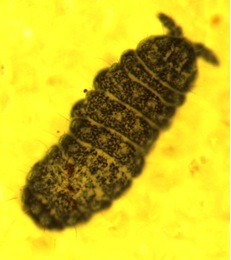
Above: Neanura muscorum
Similarly a clade of Tomocerus minor from woods in Surrey matched 100% to a collection from Victoria in Australia, while a Hypogastrura purpurescens from the college gardens was a 99% match to a collection from central Chile. Orchesella cincta and O. villosa are both large, mobile surface-active and common Collembola, and UK collections proved to be a 100% match to barcodes of these species from Canada, France and Poland.
The work by Jonathan Ellis and Michelle Davies on Anurida maritima around the UK (admittedly using a different sequence, 28S rRNA) found no evidence for cryptic speciation, despite long-standing claims that two distinct forms of this common inter-tidal springtail co-exist around the UK.
Such simplification is always welcome!
Some of the results suggested errors on the databases, notably a repeated observation that springtails in the genus Tomocerus match very closely to a couple of sequences from nemertean worms. Although usually thought of as marine flatworms (to be pedantic maybe closer to molluscs and annelids, but definitely nowhere near anything in the arthropoda), some nemerteans live in damp soil on land where they predate leaf litter invertebrates. The occurrence of nemertean sequences in springtail barcodes may therefore represent contamination from gut contents (suggesting that the nemerteans in question had been eating Tomocerids recently), although more collections will be needed to verify this.

Above: Allacma fusca
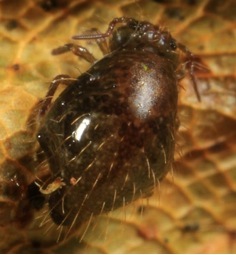
Above: Pogonognathellus longicornis
A final observation is that several common springtails did not match closely to uploaded sequences, notably collections of Pseudisotoma sensibilis. This “species” is common and widespread throughout the UK, though with a preference for tree bark and acidic soils. Its diagnostic features include clavate hairs by its feet for attachment, and it comes in several colour morphs (white/pale yellow or dark blue are commonest, also sometime grey). During my PhD work the two colour morphs (Shown below: Pseudosotoma sensibilis, two “colour morphs”) were so consistently found in different microhabitats that I analysed them as different species (European Journal of Soil biology 32, 89-97). We have barcoded three colour morphs now – indeed they differed slightly, but didn’t match closely to anything on BOLD or genbank, despite this species having been sequenced in Canada and France.
So much more to be done!


Plant-Soil-Ecosystems Group Launches Journal Club

The BES Plant-Soil-Ecosystems group has launched an online journal club. As explained on the site, they plan to post on a new paper approximately every two weeks, and hope there will be plenty of discussion via the comments and on twitter. Visit the About page for more details.
The first post, by GSBI member Dr. Franciska de Vries, is now up: Mycorrhiza-mediated competition between plants and decomposers drives soil carbon storage. Check it out and contribute to the discussion!

A wave of alien invaders marches unseen, northwards across Britain!
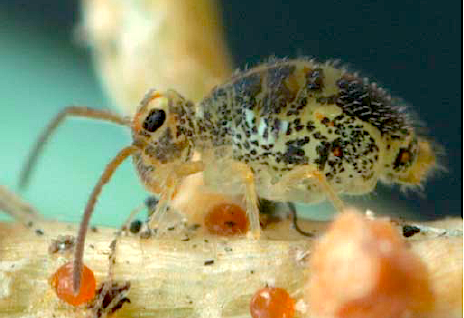
(Left: Unknown katiannidae, Sheffield botanic gardens)
The invaders in question are springtails (Collembola) and they’re only alien from a European perspective, but genuinely there is still a fair chance of collecting a prettily coloured little springer — which turns out to be scientifically undescribed — from your back garden.
The UK has a longer history of springtail collection than almost anywhere (John Lubbock was publishing records of springtail collections in the 1860s), and we have been generating distribution data almost continually since, so one would expect the UK springtail fauna to be well studied by now. It is true that collections of springtails from many British habitats (eg upland bogs, strandline, tree bark and caves) reveal lists of names that seem to have changed little for at least a century. (The possible effects of climate change on this are a blog in themselves). Before his untimely death Steve Hopkin wrote the FSC key to this group, which will usually give sensible names for springtails collected in these “pristine” habitats (though early instars remain a challenge).
However, when one collects in urban gardens or peri-urban settings it is routine to turn up springtails that simply won’t key down properly in the FSC key, or indeed any of the standard European texts. The majority of these oddities are in the Symphypleona, the jumpy surface-active forms with fused body segments and a distinctive body shape that gives them – in my subjective eyes – a slightly extra-terrestrial look. The most commonly photographed one is Dicyrtomina saundersi.
Entomologists have found non-native springtails in the UK many times before, but almost invariably in warm artificial habitats. The great Richard Bagnall found a pretty little sminthurid Sphyrotheca multifasciata in hot houses in two botanic gardens in the 1920s, and the closure of one worm bed at Rothamsted removed the Philippine springtail Yuukianura aphoruroides from the British Fauna.
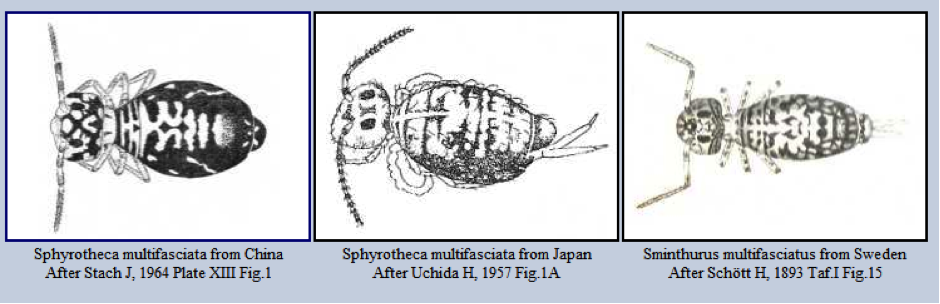
(Photo from Collembola.org)
In about 2007, photographs started to turn up on internet macro-photography pages of attractively patterned symphypleona that simply didn’t fit anything in the FSC key. A lovely example is here if you can log into flickr.
This creature was thought to be Sphyrotheca multifasciata for a short while, but the chaetotaxy isn’t right and the color pattern is unlike what has been published. Having consulted Dr. Penny Greenslade (CSIRO) – a world expert on the group - it is not clear even what genus this belongs in. Apparently the same species has been found in several places in the UK including Manchester, and was one of the commonest Collembola collected by myself from the woods near Bodmin in 2011.
Paul Ardron found multiple non-native springtails in Sheffield Botanic gardens and The Lost Gardens of Heligan, publishing photographs of 12 taxa, five of which could not (and still cannot) be named, in a paper called Aliens in Inner Space, which can be found on page 10 of this document.
The identifiable species included at least three from the southern hemisphere, verified by Greenslade and not previously known in the UK: Katianna australis, K. schoetti, and (from a different family) Calvatomina superba.
During vacuum collection from the RHS Wisley experiment “Plants for Bugs”, one of the commoner leaf-surface springtails was again this Australian katiannid Katianna schoetti.
Stephanie Bird’s PhD involved monitoring the Collembola in these Plants for Bugs plots, and (by luck) she seems to have observed a wave of colonisation in action. The second year (2013) of monitoring all her plots (including local heathland) acquired good numbers of Sminthurinus reticulatus, which had not been seen there before. This colour-pattern species can easily be seen under a dissecting microscope to have a ladder like pattern up its back, and was first found in the UK by Keith Brocklehurst in 2007.
It went from unknown to the commonest springtail in my college leaf litter in 2012, and also appeared in ancient woodland on Bookham common about the same time, and seems to have displaced the two native colour forms of Sminthurinus aureus.
Just last week (Feb 2014) Ed Phillips emailed photos of this same springtail – it was the dominant symphypleonan in his Warwickshire churchyard. It will be fascinating to follow its colonisation, which I presume to be northwards associated with our increasingly mild (if wet!) climate.
I have sent several of these unfamiliar springtails for DNA barcoding – results are eagerly awaited.
Finally, a story that probably fits here but remains a puzzle. One of the commonest and biggest springtails in the UK is Tomocerus vulgaris:
It has a mucro (tooth on jumping organ) with about five small teeth along its middle. Except that a few places in the SE are turning up a Tomocerus that otherwise fits but has “red lipstick” (red pigment on its labrum) and only has one medial tooth. This should be either the Catalan species (but isn’t like it in any other way) or T. minutus of Scottish mountains (but certainly isn’t), or a new species. Its DNA was sequenced and gave a 95% match to T. vulgaris – close enough to write it off as a mutant, or far enough away to call it a new species? More work (and research funding) is needed.
Everything Eats Everyone

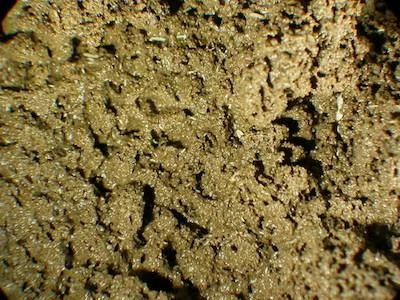
Left: Figure 1. Changes in soil structure are clearly visible afterFolsomia spp. (Collembola) where kept within a mesocosm of defaunated sieved soil for three months.
One of the most important components of the soil is the biology within it; this abundant and diverse group is the driver of nutrient cycling, decomposition, bioturbation and pedogenesis (Figure 1) within soil ecosystems. However due to the opacity of the soil, small size of the organisms involved and the diversity of species, understanding the interactions that are occurring is very difficult. It is because of these difficulties that the soil food web has often been referred to as a “black box” (Bonkowski et al., 2009), a “poor man’s tropical rainforest” (Giller, 1996) and an “enigma” (Anderson, 1975).
The large diversity of soil fauna has proved to be a headache for taxonomists, with no one able to be an expert in all soil fauna (Figure 2). This has led to a great deal of specialisation, with labs focusing on one particular taxon e.g. nematodes, or oribatid mites, or Collembola; therefore only a few investigate the soil food web as a whole.

Right: Figure 2. Small sample of fauna diversity from a Tullgren funnel extraction of one kilogram of soil.
Concentrating on the pathway of consumption through the soil food web is one method that can be utilised to investigate the whole ecosystem. There are a number of methods that can be used to understand feeding preferences, these are either observational (i.e. direct observation, culturing or gut content analysis), inference (mouthpart morphology, presence of certain digestive enzymes), or biochemical reactions (PLFAs or stable isotope analysis).
Stable isotopes can be utilised in two ways, firstly to ascertain the individual feeding interactions occurring. This can be accomplished by tracing an enriched isotope through different organisms to prove consumption (e.g. Crotty et al., 2011 and Crotty et al., 2012). This work showed that the Entomobryomorpha (Collembola) consumed traceable quantities of stable isotopically enriched bacteria and protozoa. This enrichment was also visible in the next trophic level, with Mesostigmatid mites also obtaining above background levels of enrichment. However, how these predators obtain enrichment, is ambiguous as they could be consuming the isotopically enriched source (bacteria or protozoa), or they could be consuming members of the mesofauna that previously consumed the enriched food source.
Secondly, stable isotopes can be used to try to understand the “bigger picture” of what is occurring within the soil food web. This can be achieved by comparing the differences between habitats and the naturally occurring stable isotope signatures of the organisms inhabiting them (Figure 3). The stable isotope signature of an organism is representative of the habitat it’s occupying (δ13C) whilst also representing the trophic level it’s feeding at (δ15N).

Left: Figure 3. Isotopic composition (δ13C and δ15N) of soil fauna within a grassland (black circles; blue labels) and a woodland (open circles; red labels) habitat of the same soil type, with the soil stable isotope signature for each habitat set to zero and all the other results calibrated accordingly (for abbreviations see Table 2 of Crotty et al., 2014).
In a recent paper by Crotty et al., (2014), isotope results indicate a divergence of feeding channels dependent on ecosystem type, even though previously the two ecosystems had been the same, prior to a change in management which converted a grassland to a woodland, over twenty-five years ago. In Figure 3, there is a visible separation between the grassland and woodland invertebrates for their δ15N values, suggesting that similar organisms are acting in different ways depending on the ecosystem they’re populating.
Further investigation concentrated on the differences in energy pathway within the soil food web between these two ecosystems. The grassland habitat promoted three defined feeding pathways (Figure 4a), whereas these pathways where more ambiguous in the woodland (Figure 4b), see Crotty et al., (2014) for a more detailed review. The isotope signatures of the taxa acting as “top predator” in the two ecosystems were very different. The micropredators appeared to exist at a higher trophic level than the macropredators in the grassland, likely to be because the prey organisms of the macropredators, where operating at a lower trophic level, than the micropredators prey.
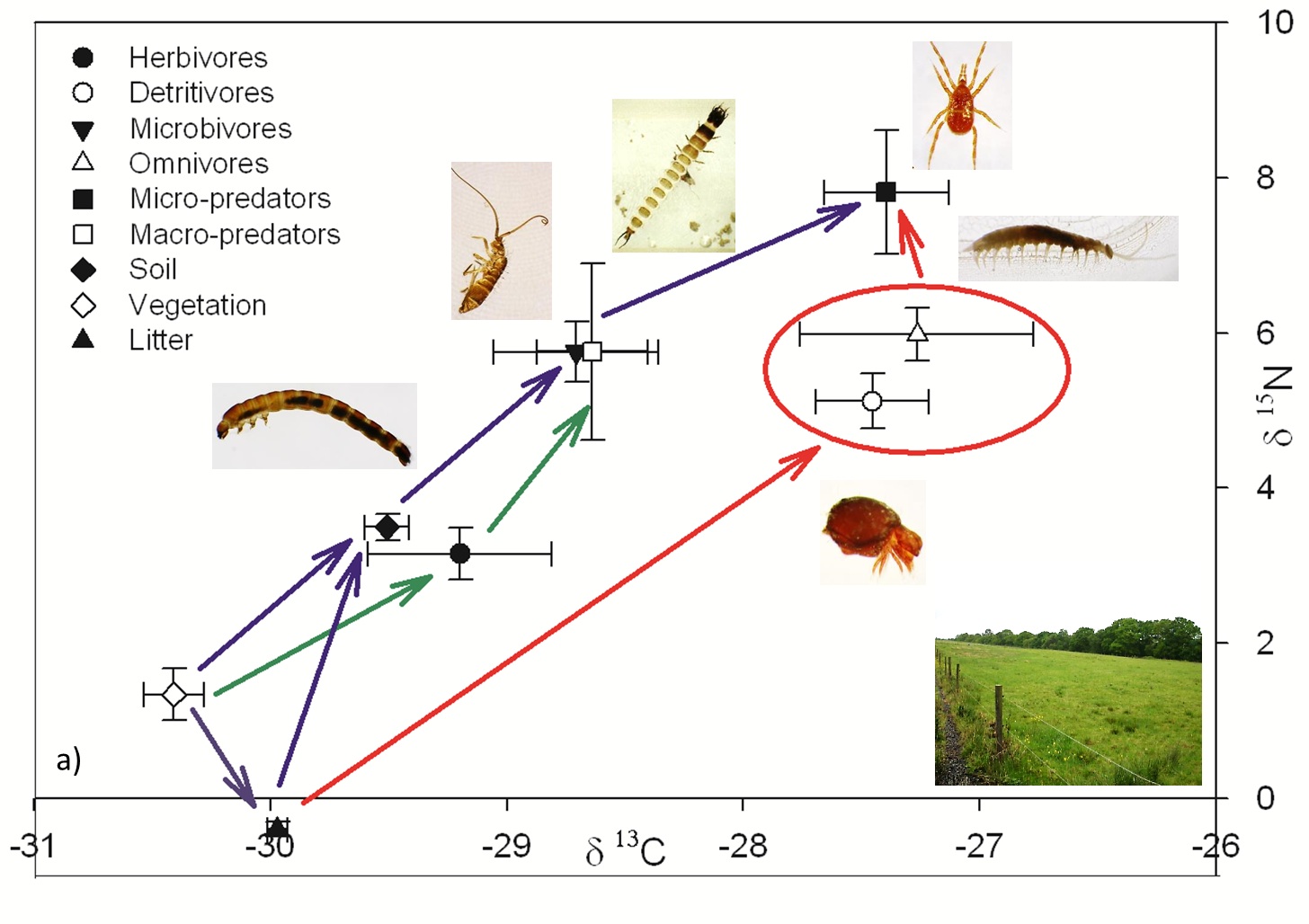
Figure 4a.

Figure 4b.
Above: Figure 4a and 4b. Isotopic composition (δ13C and δ15N) of grouped “feeding guilds” for the (A) grassland habitat and (B) woodland habitat (Crotty et al., 2014). Arrows represent different feeding pathways – blue microbial, green herbivory, and red detritivore.
Our difficulty understanding the soil food web increases, largely because there are no direct predator-prey relationships occurring, with the majority of organisms eating a range of other organisms. This is probably due to the environment they reside in, where prey species that are in close proximity may be invisible as they are located in an adjacent soil pore that is not easily accessible. Unlike in aquatic environments (where food web studies originated), the soil food web is one where the mixing of food and waste is commonplace. All “waste” within the soil is utilized by other organisms; microbes directly break it down, or mesofauna consuming the microbiota and waste, recycling the nutrients. Intraguild predation and carrion consumption increase the potential mixing of isotopic signatures. Together, this leads to a dilution of the distinctiveness of trophic levels within the soil system. Further work is still needed to assess the contribution of these different feeding channels within nutrient cycling, to gain a better understanding of how to promote a healthy soil.
References:
Anderson J.M. (1975). The Enigma of Soil Animal Species. In: Progress in Soil Zoology: Proceedings of the Fifth International Colloquium on Progress in Soil Zoology (ed. Vanek J). Prague Academia: The Hague, pp. 51-58.
Bonkowski M., Villenave C. & Griffiths B. (2009). Rhizosphere fauna: the functional and structural diversity of intimate interactions of soil fauna with plant roots. Plant Soil, 321, 213-233.
Crotty F.V., Blackshaw R.P., Adl S.M., Inger R. & Murray P.J. (2014). Divergence of feeding channels within the soil food web determined by ecosystem type. Ecology and Evolution, 4, 1-13.
Crotty F.V., Adl S.M., Blackshaw R.P. & Murray P.J. (2012). Protozoan pulses unveil their pivotal position within the soil food web. Microb. Ecol., 63, 905-918.
Crotty F.V., Blackshaw R.P. & Murray P.J. (2011). Tracking the flow of bacterially derived 13C and 15N through soil faunal feeding channels. Rapid Commun. Mass Spectrom., 25, 1503-1513.
Giller P.S. (1996). The diversity of soil communities, the 'poor man's tropical rainforest'. Biodivers. Conserv., 5, 135-168.