

Blog Archive:
Beneath Our Feet
How do we develop indicators of healthy soil? Science-based policy development from a policymaker’s perspective
Elena Havlicek
Policymaker, Federal Office for the Environment FOEN, Soil and Biotechnology Division, Switzerland
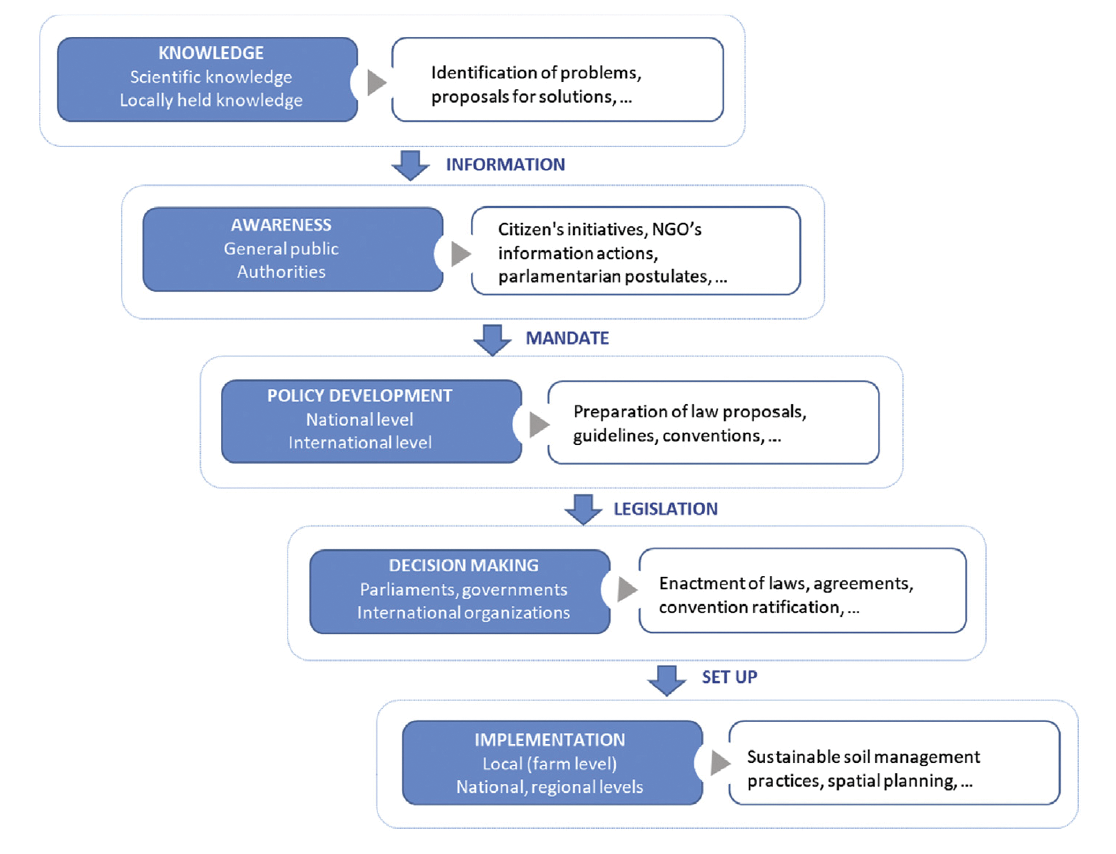
Fig 1. Adoption of Sustainable Soil Management (SSM): a multilevel process from problem to implementation. (From Erdogan et al., 2021).
Recently, Global Soil Biodiversity Initiative (GSBI) has launched an important call to the Executive Secretary of the UN Convention of Biological Diversity on the need to protect soil biodiversity, urging governments to develop policies and legal mechanisms, and stated that education and awareness are decisive to take necessary actions for protect and restore soil resources. Indeed, the transfer of appropriate and comprehensible information between different stakeholders constitutes a major challenge for awareness raising, but also for policies development. Each stakeholder, whether scientist, citizen, farmer or policymaker, has their own language and understanding of the problems and priorities. That is why messages addressed to each of them require a different approach, focus, and emphasis.
Even though some countries have put in place national soil policies (see e.g. Peake and Robb 2022), so far, few countries have regulations or legal mechanisms that specifically protect soil biodiversity or include soil organisms in biodiversity targets. How can we reverse this situation and develop effective governance of soil (biodiversity) resources? How can we establish effective policies and regulations for soil biodiversity protection? Policymakers, members of governmental departments and/or national agencies, are typically responsible for designing new policies and laws, or involved in developing plans of action that will ensure soil governance mechanisms and enable the implementation of sustainable soil management practices (Fig. 1, Erdogan et al. 2021). To do this, they need for accurate data to be translated into indicators or thresholds that will be used to define desirable objectives or critical levels. In addition, they also need to know about the (human and financial) resources that will be required for implementation. Therefore, scientists with ability and willingness to translate often-complex science-based data to commonly understandable advice, messages and indicators are an essential link in the transfer of information and, ultimately, the soil (biodiversity) protection.
An example from Switzerland may provide some guidance. For more than 20 years, a working group specifically dedicated to soil biodiversity has brought together representatives of federal and cantonal administrations and research institutions. This allows for a direct exchange of information between scientists and policymakers regarding the needs of policymakers and the results that scientists can provide. Thus, over the years, several applied research projects have been co-designed and carried out, and the results have met the concrete needs of policymakers. Recently, this working group has been involved in the ongoing process of revising the Swiss law on soil protection with the objective of including the protection of soil organisms and, ultimately, to set soil biodiversity reference values for different land uses.
New molecular biological methods now offer opportunities to capture the “big picture” of the soil biodiversity and its functions even as most of the organisms are invisible to the naked eye. More than ever, the ability to transfer this new and complex knowledge into a common language and easy-to-understand indicators of soil quality will help develop global policies and national legal mechanisms, and support local implementation of sustainable practices that foster and protect soil biodiversity.
References:
Erdogan et al. (2021). Soil conservation and sustainable development goals (SDGs) achievement in Europe and central Asia: Which role for the European soil partnership? International Soil and Water Conservation Research, 9(3), 360-369. https://doi.org/10.1016/j.iswcr.2021.02.003
Peake, L. R., & Robb, C. (2022). The global standard bearers of soil governance. Soil Security, 6, 100055. https://doi.org/10.1016/j.soisec.2022.100055
Does large-scale turnover in soil biodiversity mirror what we see aboveground?
John Davison
Associate Professor, Institute of Ecology and Earth Sciences, University of Tartu, Estonia
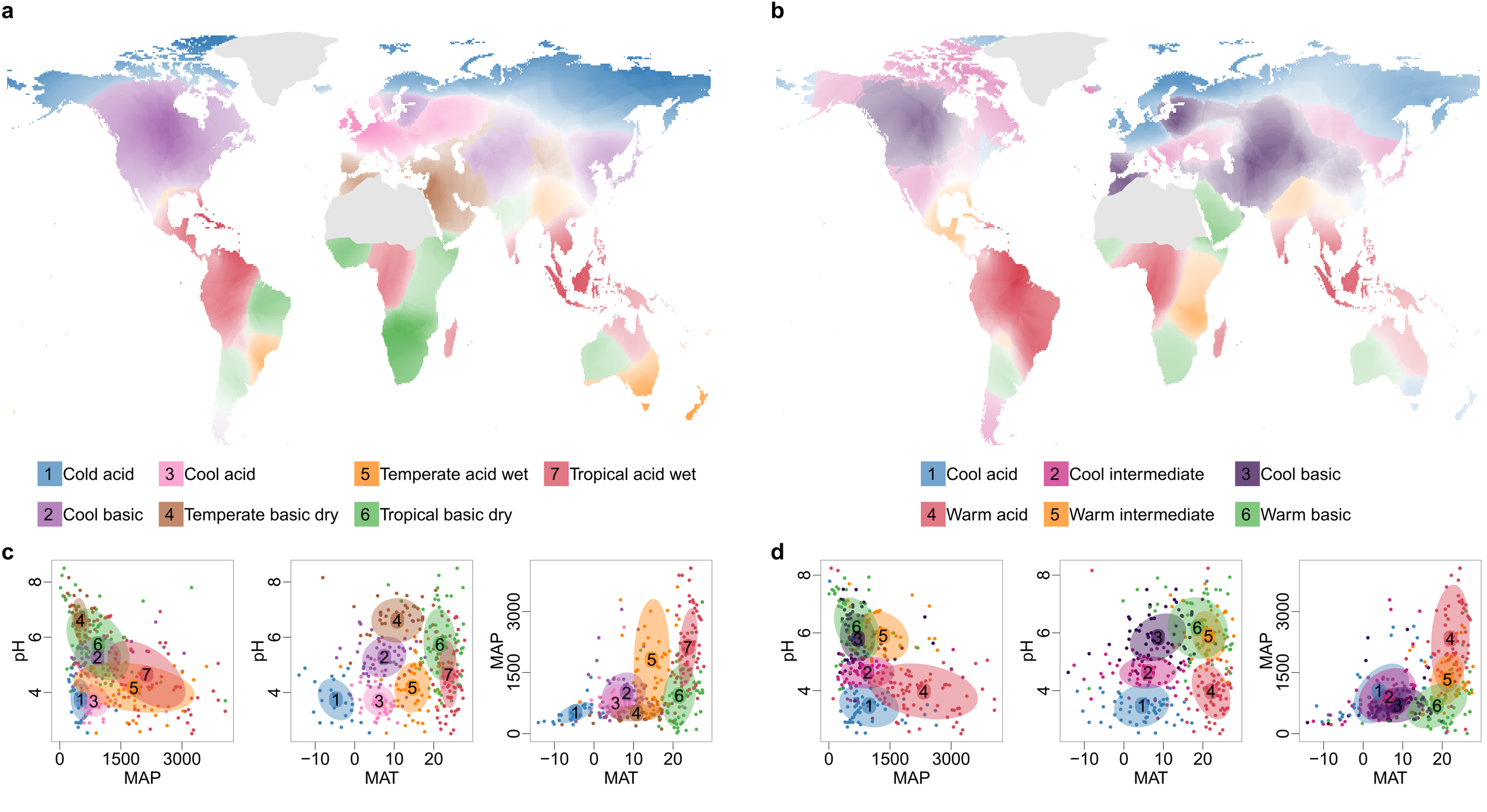
Figure 1. Microbial eukaryotic (a) and prokaryotic (b) microbiomes and the temperature (MAT), precipitation (MAP) and pH conditions recorded in each (c - microbial eukaryotic microbiomes; d – prokaryotic microbiomes). Figure reproduced from Vasar et al. (2022).
Plants are foundational primary producers and form the great majority of biomass in terrestrial ecosystems. So, it is not unreasonable that we use vegetation characteristics, along with macro-climatic correlates and a dose of expert opinion, to classify large-scale variation in biodiversity (i.e. biomes). Yet, we know surprisingly little about how well these classifications represent structure in the diversity of different organismal groups. Studying large-scale patterns of biodiversity is always a challenge, but sequencing and identifying environmental DNA (metabarcoding) offers a feasible way to study small, relatively sessile organisms, such as microbes, over large areas.
In our recently study (Vasar et al 2022), we used 345 soil samples and a metabarcoding approach to identify large-scale variation in eukaryotic and prokaryotic soil microbial communities worldwide. We also recorded a number of soil chemical variables in situ in order to understand what drives variation in belowground microbial diversity. Several interesting findings emerged. We found that variation in most organism groups – including bacteria, archaea and different fungal guilds – was best explained by the combination of air temperature and soil pH; with eukaryotic groups responding more to temperature and prokaryotic groups more to pH. Different groups formed patterns of clustering across the globe (microbiomes) that were distinguished to varying degrees by different temperature and pH conditions (Fig 1). The microbiomes, especially the prokaryotic microbiomes, did not closely match the biomes of existing global classifications. For example, in both eukaryotic and prokaryotic classifications, the microbiome occurring in cool, low pH conditions largely coincides with two biome types - tundra and boreal forest; similarly, the biome types tundra and boreal forest each overlap with multiple microbiomes occurring in different soil conditions. A notable characteristic of many microbiomes is that they cut across biome types with fundamentally different vegetation structure. This means that microbiomes can span adjacent grassland, scrub and forest biomes as long as they experience relatively similar temperature and pH conditions.
The results of our study tell us that turnover in the unseen diversity beneath our feet cannot be directly extrapolated from what we see aboveground. Given the tremendous diversity of soil microbes, this suggests that we need to go beyond current global biome classifications to summarise diversity in the biosphere as a whole. Our results also provide information that can be harnessed for applied purposes. For example, at present, studies investigating different ecosystem functions routinely target different biomes; while global ecosystem models rely heavily on plant-based habitat characteristics. Microbiome-level data can inform empirical study design and improve our ability to predict how microbially-mediated ecosystem processes respond to environmental change.
Publication: Vasar, M., Davison, J., Sepp, S.-K., Mucina, L., Oja, J., Al-Quraishy, S., Anslan, S., Bahram, M., Bueno, C. G., Cantero, J. J., Decocq, G., Fraser, L., Hiiesalu, I., Hozzein, W. N., Koorem, K., Meng, Y., Moora, M., Onipchenko, V., Öpik, M., Pärtel, M., Vahter, Y., Zobel, M. (2022). Global soil microbiomes: A new frontline of biome-ecology research. Global Ecology and Biogeography, DOI: https://doi.org/10.1111/geb.13487
Are legumes more than the sum of their nodules?
marie schaedel
PhD Candidate, University of Minnesota
Production-oriented research has reduced the diversity of legumes on agricultural landscapes and narrowed our criteria for evaluating ‘successful’ legume-microbe interactions. Metrics like total nodule number, nodule dry weight, and biomass nitrogen (N) have become prolific and are often focused on just one service: the provision of fixed atmospheric N. Legumes perform biological nitrogen fixation (BNF) with symbiotic rhizobia bacteria, which is inarguably a defining feature of legume-microbe interactions. However, the end goal of most legume research has been to increase biomass production and total fixed N in pounds per acre. This narrow focus has limited the number of cultivated legume species and varieties, the diversity of nodule endosymbionts, and the ecosystem benefits we can derive from legumes beyond BNF.
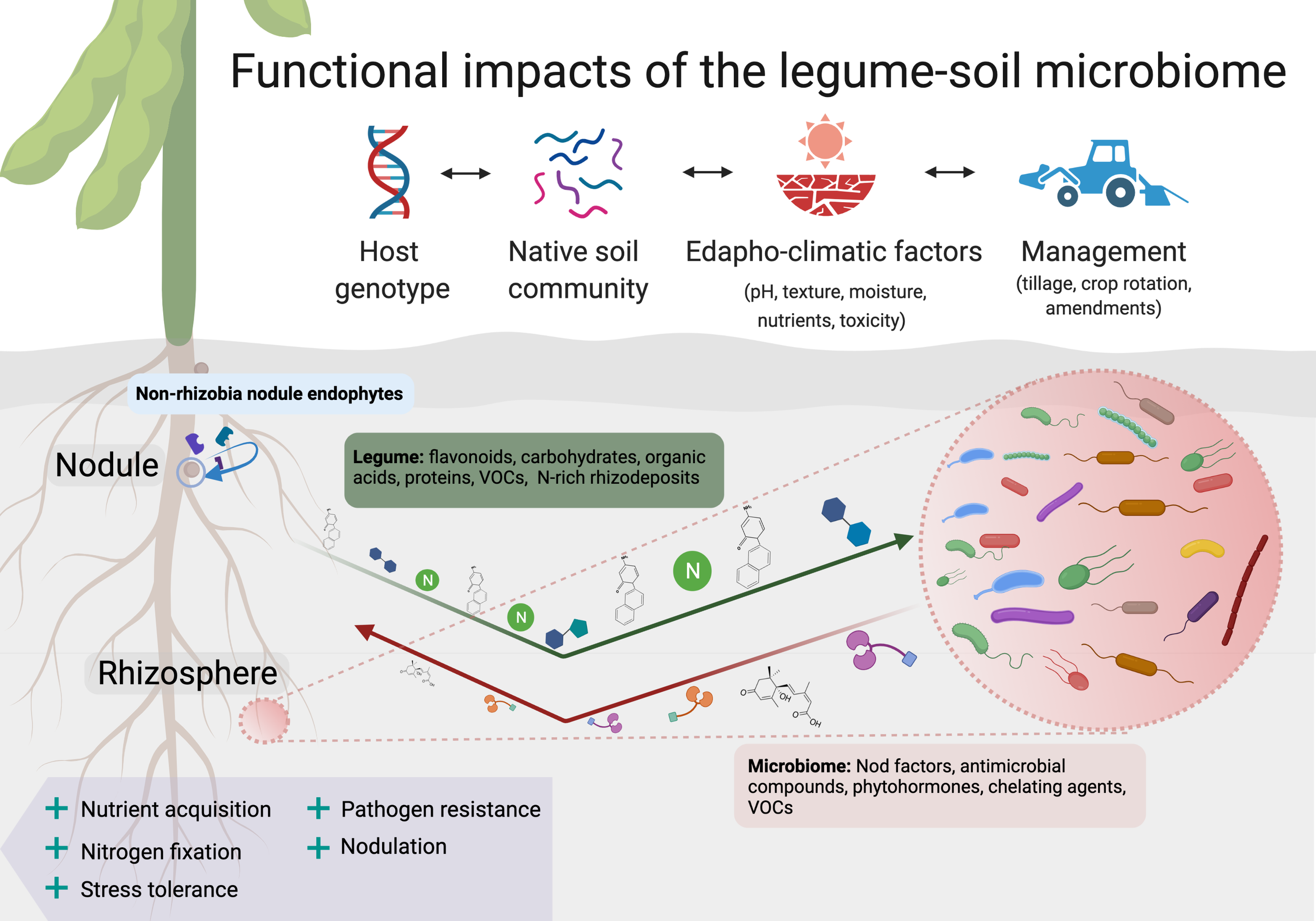
The study of legume microbiomes is a small but rapidly growing field. We reviewed articles published within the past fifteen years that investigated legume-microbe interactions, with a specific focus on associations with non-rhizobia bacteria. We found strong evidence suggesting that legume root zones enhance microbial abundance and diversity compared to non-legume plants such as grasses. Many of these interactions are associated with other benefits such as disease suppression and abiotic stress adaptation. There are several possibilities to explain why legumes are so efficient at recruiting microorganisms, including unique flavonoid profiles, N rhizodeposition, and organic acid exudates. Legumes differ from non-legumes in nearly all these features, yet scientists have not yet determined their role in recruiting beneficial rhizobacteria.
Recent research has also rejected the long-held belief that BNF involves only two symbiotic partners: the legume host and a compatible rhizobia strain. We now know that other bacteria, known as non-rhizobia endophytes, co-inhabit legume root nodules alongside rhizobia. Studies have found that unmanaged, wild legumes have a higher diversity of non-rhizobia endophytes than domesticated legumes. Because nodulation is an energetically costly symbiosis for the host plant, the prevalence of non-rhizobia in root nodules suggests that they provide another important service to ‘earn their keep’. Many, but not all, of these non-rhizobia have a genetic capacity to fix nitrogen. Other non-rhizobia endophytes such as Proteus have putative roles in fighting bacterial and fungal pathogens. Still others can solubilize phosphate, a crucial nutrient required for BNF, on solid media. Although scientists now recognize the diversity and prevalence of non-rhizobia nodule inhabitants, understanding their functional role in planta remains a major research priority.
Research advances in legumes have lagged far behind cereal and grain crops for the past fifty years. At a time when there is mounting pressure to stall anthropogenic climate change through more sustainable land use, legumes have a central role to play in efforts to conserve soil and reduce agricultural inputs. The legume microbiome is a largely untapped research frontier that will allow us to take full advantage of all the potential agronomic and ecosystem services that legumes have to offer.
Publication: Schaedel, M., Hidrobo, G., Grossman, J. (2021). From microns to meters: exploring advances in legume microbiome diversity for agroecosystem benefits. Front. Sustain. Food Syst. 5:668195. DOI: https://doi.org/10.3389/fsufs.2021.668195
What, where and how do soil animals eat? And why do we need to know?
Dr. Anton M. Potapov1,2 and Dr. Olaf Schmidt3
1Postdoctoral Researcher, University of Göttingen, Germany 2Researcher, Russian Academy of Sciences, Moscow, Russia; 3Professor, University College Dublin, Ireland
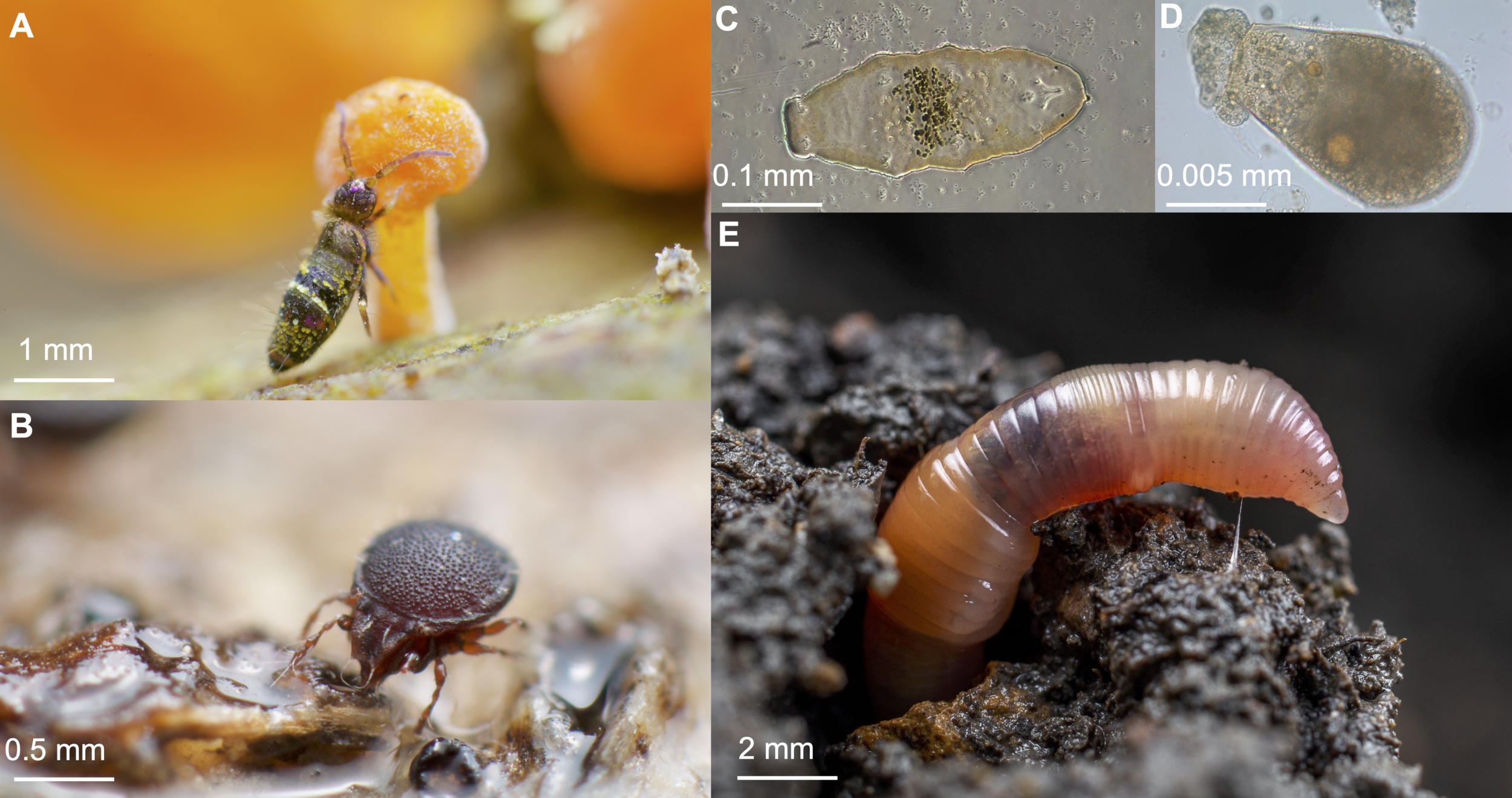
Shots of soil animals feeding on different resources, from micro-to macro-scales. Microarthropods like springtails (A) and mites (B) feed mainly on fungi and leaf litter. Tardigrades (‘water bears’) don't mind having single-celled soil algae in their diet (C). Microscopic protists, extremely diverse in forms and feeding habits, also feed on each other – in this case a testate amoeba catches a ciliate (D). In comparison to these organisms, earthworms are so large that they swallow many small animals and microbes together with soil organic matter (E). Photograph credits: A, B – Andy Murray (https://www.chaosofdelight.org); C – Adam Trautwig; D – Vincent Jassey; E – Frank Ashwood (https://www.frankashwood.com). Size scale bars are approximate.
We all know the early bird catches the worm, but what does the worm catch? What animals that live in soil eat down there is hard to observe but important to know. Over the past two decades or so, ecologists interested in this underground world have done lots of research to find out what exactly different soil animals feed on, how they are connected by these feeding (trophic) interactions, and how these interactions in turn support the many functions that we expect soils to deliver. These widely scattered studies have now been compiled and summarized by an international team of experts in a comprehensive review published in the journal Biological Reviews.
Soil is an incredibly densely populated habitat, literally teeming with various organisms that interact with each other, with plants and the soil environment in many complex ways. From microscopic single-celled protists to arthropods and earthworms, the so-called soil animal ‘decomposers’ consume soil bacteria, fungi, decaying plant roots and dead organic matter (Figure 1). Diverse and dangerous predators are waiting for you in the dark soil labyrinths, whether you are of microscopic size or a predator yourself, and even ‘giants’ like earthworms can fall prey to vertebrate animals (Figure 2).
Predation in soil. It is estimated that more than a half of all vertebrate predators on land may feed on soil invertebrates. Here is an early song thrush catching an earthworm (A). A mite that feeds on an ant – this photo illustrates ‘scavenging’ a poorly explored but likely common strategy in soil invertebrates (B). A money spider that has caught a springtail represents one of the most common predator-prey interactions in soil food webs (C). Many soil-associated mites are parasitic, like this one, clinging on its bigger relative – a harvestman (D). Photograph credits: A – Vladimir Avdeev; B – Tim Jonas (https://www.jonasweb.co.uk); C – Andy Murray (https://www.chaosofdelight.org); D – Frank Ashwood (https://www.frankashwood.com). Size scale bars are approximate.
In most cases, what a particular soil animal feeds on is difficult to study by direct observation. In spite of this, soil zoologists have made great progress in this field by applying various methods and analytical techniques. For example, stable isotope ratios in the animal body can tell us if this animal feeds on plants, microbes or other animals. The analysis of ‘biomarkers’ in fat tissues can tell us if bacteria or fungi were on the menu. And molecular gut content analysis can identify down to the species level what prey a predatory animal, as small as a mite, has ingested. The published review has summarized this new knowledge for the first time for the full spectrum of animals that are associated with soils, including unicellular protists, nematodes, segmented worms, arthropods, molluscs, and vertebrates – from moles and burrowing rodents to ground-foraging birds. The literature review also revealed that our understanding of soil food webs should be revised and suggested a new generalizable classification for all groups of soil animals.
Figure 3. Feeding of soil animals supports vital soil functions. Feeding on dead organic matter (detritivory, brown) regulates decomposition, carbon sequestration and supports soil structure. Feeding on bacteria and fungi (microbivory, dark yellow) indirectly regulates nutrient cycling in soil and plant growth. Feeding on living plants and algae (herbivory, green) directly affects plant biomass and contributes to dispersal of lower plants (mosses, algae). Feeding on other animals and protists (predation, red) regulates prey populations and thus supports biodiversity and stability of soil communities. All these functions are jointly supported by a plethora of litter- and soil-dwelling organisms, from micrometres to centimetres in body size. The illustration was prepared by Svenja Meyer.
Why do we need to know? Understanding what the many animals in the soil do is fundamental to describing, modelling and managing soil biological processes and related functions (Figure 3). For instance, if we understand soil food webs better, we can predict how they will respond to changes in land use, soil management and climate. In the wider picture, this will help us maintain soil functions and health, including fertility, the physical structure of soil and the amount of carbon it locks up, or emits to the atmosphere. And not to forget, soil biodiversity itself, it deserves to be protected for its own value just like the other biodiversity above-ground that is much more familiar to most people. If there are no worms, the bird can be as early as it wants, it will go hungry.
The review article was produced as a collaboration of 26 experts from Germany, Russia, the Czech Republic, Ireland, Spain, Canada, USA, and the Netherlands.
Publication (open access):
Potapov, A. M., Beaulieu, F., Birkhofer, K., Bluhm, S.L., Bryndova, M., Degtyarev, M.I., Devetter, M., Goncharov, A.A., Gongalsky, K.B., Klarner, B., Korobushkin, D.I., Liebke, D., Maraun, M., McDonnell, R.J., Pollierer, M.M., Schaefer, I., Schrubovich, J., Semenyuk, I.I., Sendra, A., Tuma, J., Vassilieva, A., Chen, T.-W., Geisen, S., Schmidt, O., Tiunov, A.V., Scheu, S., 2022. Feeding habits and multifunctional classification of soil-associated consumers from protists to vertebrates. Biological Reviews. https://doi.org/10.1111/brv.12832
Global soil organic carbon stocks in natural and urban ecosystems
Shih-Chieh Chien
PhD Student, Montclair State University, USA
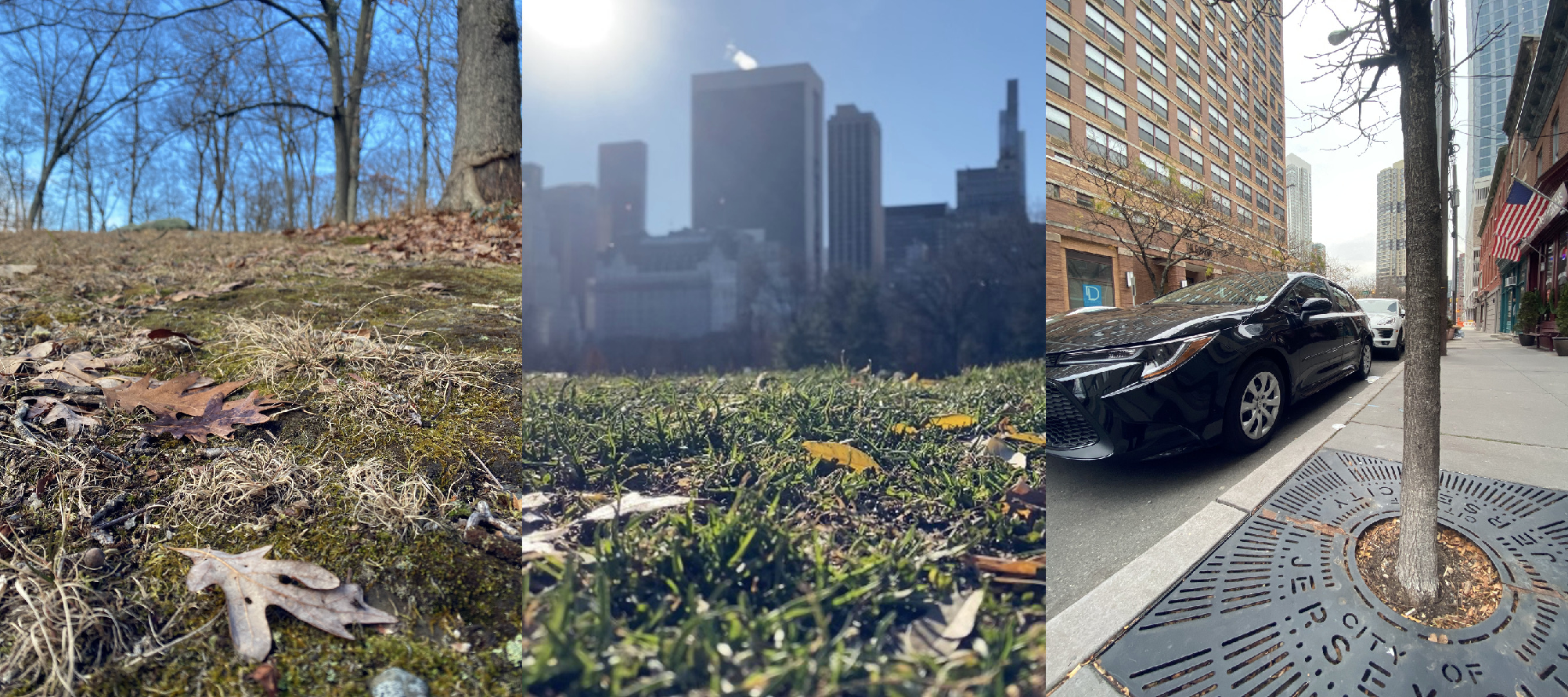
Figure 1 Soils in natural (left), urban green space (middle) and urban intensive (right) habitats. From left to right, pictures are taken in Harriman State Park, NY, USA; Central Park, NY, USA; Jersey City, NJ, USA (Photo credit: Shih-Chieh Chien).
Despite efforts to mitigate climate change, it still remains challenging for humans to reduce carbon emissions and meet carbon neutrality under the pressure of increasing global population and urbanization.
In terrestrial environments, soil is the largest organic carbon sink and offers the greatest opportunity to mitigate the global carbon imbalance. Soil organic carbon (SOC) stocks originate from detritus and root exudates. When stable, these compounds can store the carbon that plants absorb from the atmosphere. However, the capacity for soil to store carbon is determined by a variety of parameters associated with different climatic zones and vegetation biomes. The interactions of these parameters can be difficult to predict, especially in urban environments where limited data on carbon storage have been synthesized.
In this study, we conducted a meta-analysis by collecting SOC data from published literature. We defined each study location as a natural, urban green space, or urban intensive habitat (Fig. 1) and compared those carbon stocks within defined climatic zones, vegetation types, and the Human Footprint (a unitless metric reflecting the extent of human disturbance) in each study location. Our analysis revealed that SOC stocks are higher in natural than in urban habitats, and we found a negative relationship between SOC and the human footprint only in natural habitats. The highest SOC and greatest variation in natural habitats reflect the varied environmental conditions and vegetation types which characterize the way natural soils store carbon. Critically, these factors are less influential in urban environments where anthropogenic influences dominate. Urban ecosystems tend to be uniform as they are defined by human living constraints, decreasing SOC variability over increasing Human Footprint values.
Our work helps present a globally comprehensive picture of SOC stocks between natural and urban ecosystems, provides a useful reference for future natural resource management and urban design and highlights the importance of urban SOC storage to managing global soil carbon budgets.
Publication: Chien, S. C., Krumins, J. A. (2022). Natural versus urban global soil organic carbon stocks: A meta-analysis. Science of The Total Environment, 807, 150999. DOI: https://doi.org/10.1016/j.scitotenv.2021.150999
Have we overlooked the importance of soil micronutrients for global grassland biomass production?
Dr. Dajana Radujković & dr. Sara Vicca
University of Antwerp, Belgium
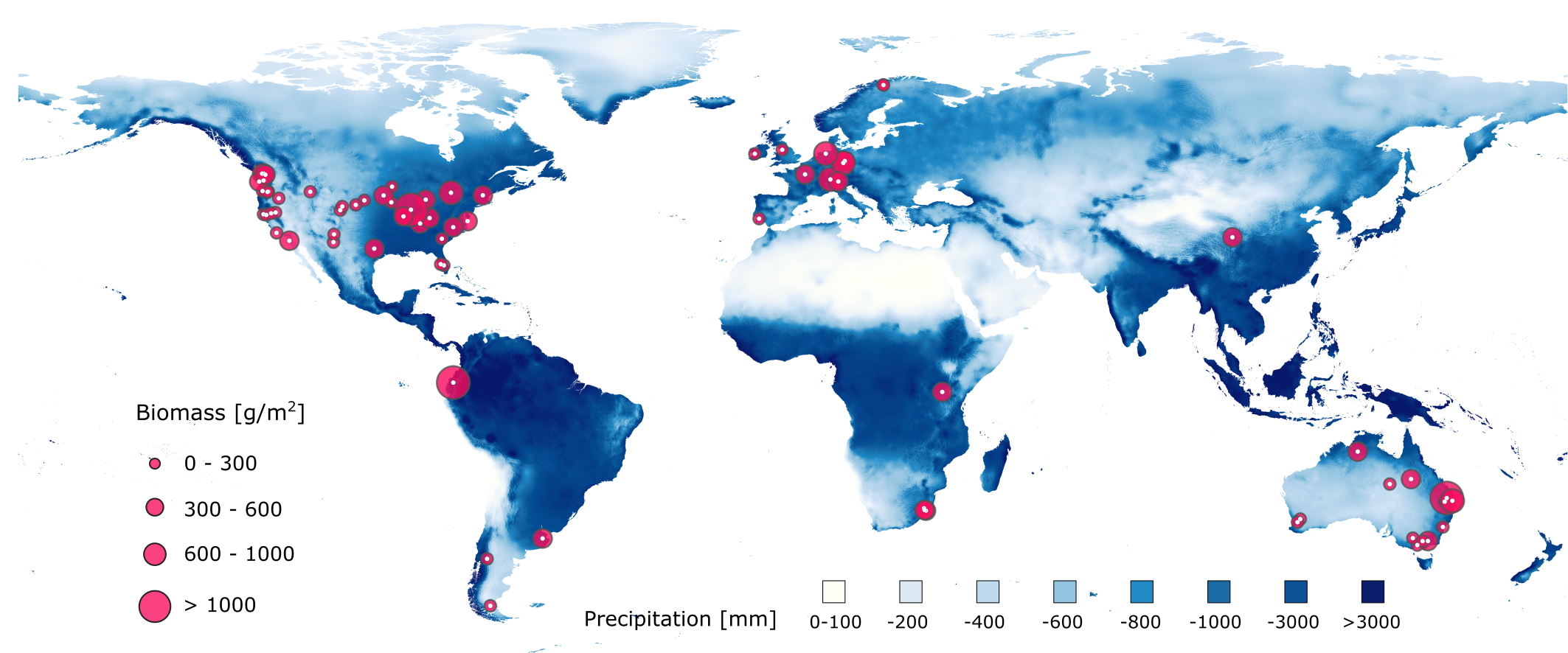
Figure 1 The distribution of 72 NutNet grassland sites along the precipitation gradient. White points indicate the location of different sites and different sizes of pink circles correspond to the amount of aboveground biomass per site (Radujković et al., 2021).
Grasslands are one of the largest terrestrial systems, occupying about 40% of the global land surface. Given that they account for up to one-third of the net primary productivity on land, they play an important role in global carbon sequestration as well as in the provision of multiple other ecosystem services to human society, including biodiversity, fodder production and nutrient cycling. Biomass production is a key property of grasslands that determines their capacity to take up and store carbon, controls which plant species can co-exist and influences the diversity of numerous animals that depend on plants for food and habitat.
We have long known that, besides water and temperature, grassland biomass production is limited by the availability of the macronutrients nitrogen and phosphorus. This has been confirmed by numerous experiments which often observed an increase in biomass production with the addition of N and P. More recently, it has been indicated that other, less-studied nutrients (potassium, calcium, magnesium, sulphur) and elements found in trace amounts in plants – micronutrients (iron, boron, copper, manganese, zinc) limit plant growth in some grasslands. Even though micronutrients are needed in much smaller quantities by plants than N and P are, they are part of important enzyme complexes and they indirectly influence biomass production by regulating aspects of plant defence and reproduction. While agronomists have long understood the potentially subtle but significant role of nutrients other than N and P for crops, their importance for plant production in non-agricultural grasslands has been mostly an unexplored frontier.

Figure 2 Path analysis depicting the direct (blue lines - positive and red lines - negative) and indirect (grey lines) influence of different predictors of biomass production. Micronutrients (represented by Zn and Fe) have the highest direct influence on biomass after climate (precipitation), followed by soil physicochemical properties (soil pcp), N deposition and soil carbon to nitrogen ratio (C:N; Radujković et al., 2021).
Our study used a global dataset comprising 72 sites that are part of the Nutrient Network (Figure 1) to investigate which of 16 soil factors that shape nutrient availability (including the concentrations of various macro- and micronutrients) associate most strongly with variation in grassland aboveground biomass. Climate and atmospheric N deposition were also considered. We found that soil micronutrients (particularly Zn and Fe) were important predictors of biomass (Figure 2) and, together with soil physicochemical properties and carbon to nitrogen ratio, they explained more unique variation (32%) than climate and N deposition (24%). We also found that the relationship between micronutrient availability and biomass was present only in grasslands with no signs of limitations by N and P suggesting that when soils contain a sufficient amount of N and P, there might be an increased demand for micronutrients which become limiting for plant growth. These results provide support for serial co-limitation, in which the response of plants to additional micronutrient resources occurs only after N and P are added.
The findings of this study highlight the potentially undervalued role of micronutrients in global grassland biomass production while motivating future experiments. Such manipulation experiments should focus on micronutrient (especially Zn) additions, alone and in combination with NP, particularly in the grasslands that are likely to be prone to micronutrient deficiencies. According to our results, the grasslands located in the regions with higher temperatures, with predominantly sandy soils poor in organic matter might be particularly prone to Zn and Fe deficiencies. Our dataset included only a few grasslands in arid regions with alkaline (calcareous) soils but, based on the studies in arable fields, micronutrients deficiency in such grasslands might be even more pronounced. We thus recommend measuring different soil properties, including micronutrients (both in plants and soil) in studies investigating grassland productivity to gain a better understanding of the extent and importance of nutrient deficiencies in grasslands.
Publication: Radujković, D., Verbruggen, E., Seabloom, E. W., Bahn, M., Biederman, L. A., Borer, E. T., Boughton, E. H., Catford, J. A., Campioli, M., Donohue, I., Ebeling, A., Eskelinen, A., Fay, P. A., Hansart, A., Knops, J. M. H., MacDougall, A. S., Ohlert, T., Olde Venterink, H., Raynaud, X., Risch A.C., Roscher, C., Martin Schütz, M., Silveira M.L., Stevens C.J., Van Sundert, K., Virtanen R., Wardle G.M., Wragg P.D, Vicca, S. (2021). Soil properties as key predictors of global grassland production: Have we overlooked micronutrients? Ecology Letters 24(12), 2713-2725. DOI: https://doi.org/10.1111/ele.13894
Changes in the relative abundance of fungal functional groups and dominant taxa due to soil warming are associated with losses in total soil carbon
Dr. Gregory J. Pec
Assistant Professor, University of Nebraska Kearney, USA
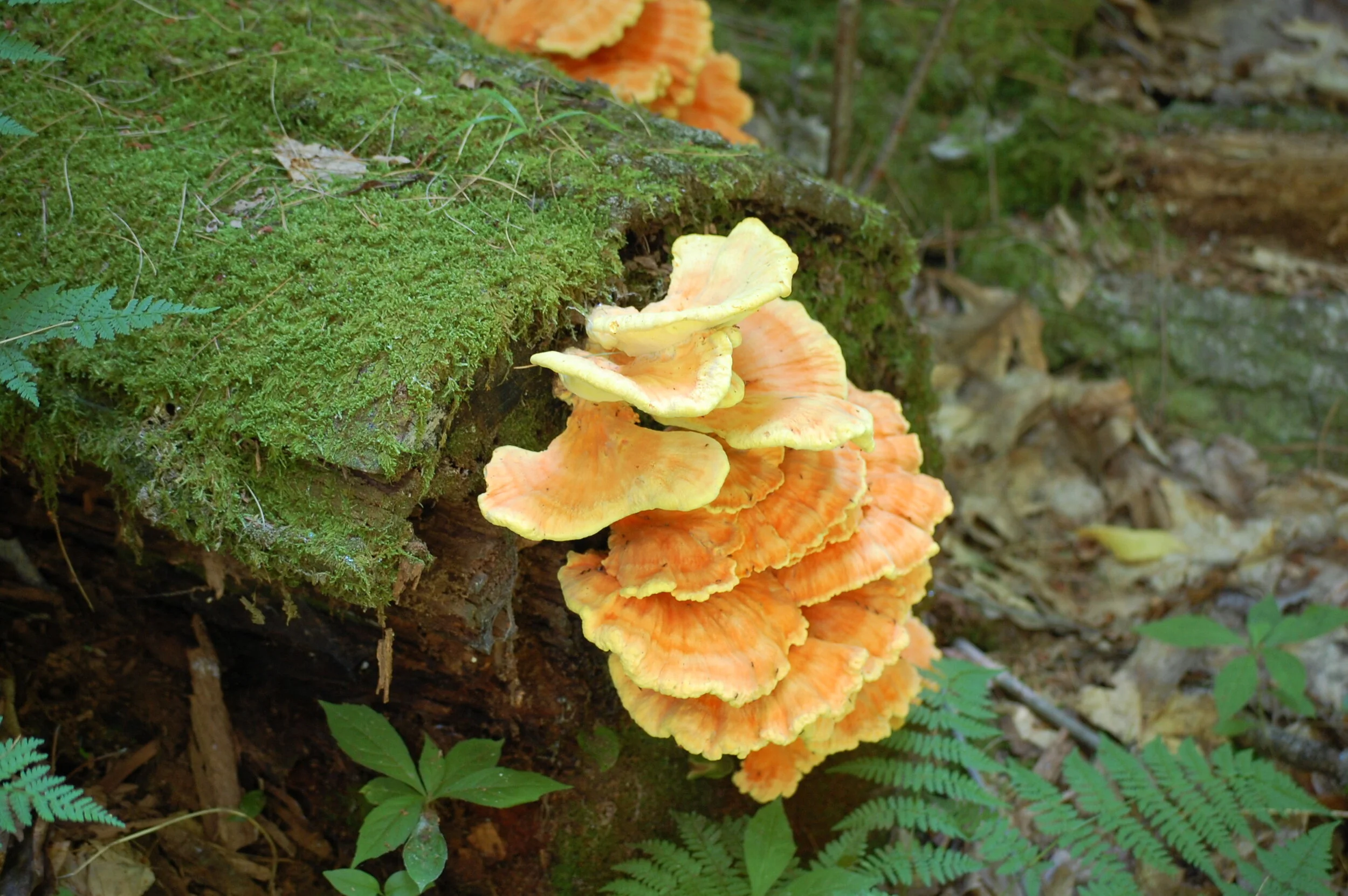
Figure 1. Laetiporus sulphureus (chicken of the woods or sulphur shelf) found on decomposing logs in two soil warming experiments at Harvard Forest, Petersham, Massachusetts.
Global warming poses major challenges to the health and functioning of forests, with the direction and strength of such effects on forest ecosystem processes such as carbon cycling remaining uncertain. Several mechanisms have been proposed to explain changes in soil carbon cycling dynamics. Of these, that the loss of soil carbon from warming is driven by changes in microbial community structure is important, since warming may impact certain microbial taxa with specific functional capacities that ultimately influence rates of soil carbon cycling. In particular, soil fungi are vital in mediating several of these ecosystem processes including carbon and nutrient cycling. They form diverse and spatially variable communities as plant symbionts, decomposers, and plant pathogens. Although a general finding is that soil fungal abundance often declines in response to warming, it is less clear how certain functional groups (i.e., symbionts vs decomposers) are differentially sensitive to shifts in temperature. Toward this goal, we built upon previous research in temperate deciduous forests and assessed changes in the diversity and composition of soil fungi following soil warming. Since fungal responses to warming have been previously shown to be associated with changes in soil chemistry, a secondary objective was to assess key soil chemical properties and examine any relationships between soil fungi and soil properties.
Figure 2. Soil warming experiments established at Harvard Forest, Petersham, Massachusetts, to identify climate warming effects on forest ecosystem processes.
We characterized soil fungal communities in two replicated soil warming experiments at the Harvard Forest (Petersham, Massachusetts, USA) which have experienced above ambient soil temperatures for 5 and 20 years, and assessed their diversity and composition by metagenomic sequencing, along with soil chemistry. Several findings emerged: (1) the effect of warming on fungal community structure was dynamic through time with pronounced differences in the responses among symbiotic, saprotrophic, and pathogenic fungi. Overall, there was an initial decline in the richness and abundance of symbiotic and saprotrophic fungi with warming as compared to control plots, while pathogenic fungi remained invariant. The abundance of symbiotic fungi declined with chronic warming, whereas organic soils exposed to 20 years of warming had an increase in the abundance of yeasts and wood decomposers compared to control plots, although under similar warming conditions, there was a decline in the richness and overall abundance of plant pathogenic fungi. (2) Soil carbon concentrations in organic soils significantly declined in response to short- and long-term warming, and (3) following long-term warming, shifts in fungal relative abundance was associated with substantial changes in soil carbon storage and soil organic matter chemistry, particularly the relative abundance of lignin. Taken together, we propose that shifts in key fungal groups and fungal taxa are related to losses in soil carbon concentrations and total carbon stored in organic soils.
Publication: Pec, G. J., van Diepen, L. T. A., Knorr, M., Grandy, A. S., Melillo, J. M., DeAngelis, K. M., Blanchard, J. L., and Frey, S. D.. 2021. Fungal community response to long-term soil warming with potential implications for soil carbon dynamics. Ecosphere 12( 5):e03460. 10.1002/ecs2.3460
Amazon deforestation boosts the presence of bacteria with antibiotic resistance genes in soil
Dr. Lucas William Mendes
Center for Nuclear Energy in Agriculture, University of Sao Paulo, Brazil
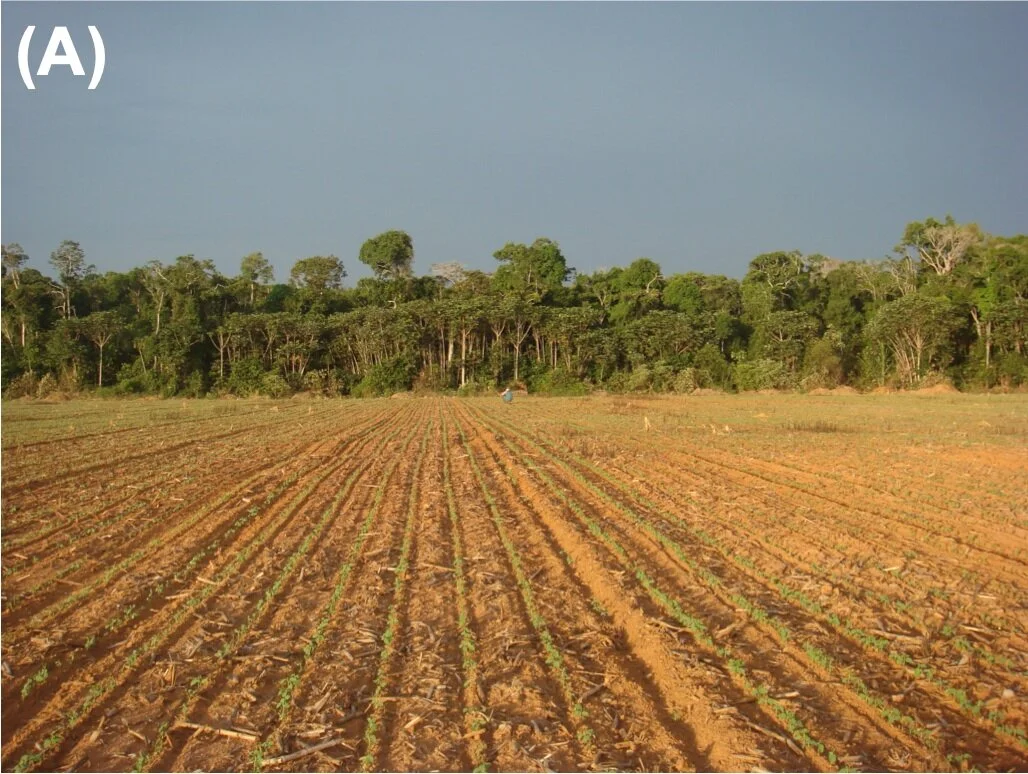
Figure 1. (A) Soybean crop field in the deforested area of the Amazon where soil samples were collected. (B) DNA extraction from soil samples for metagenomic sequencing.
The Amazon rainforest is the largest reservoir of macro and micro biodiversity on Earth. However, in the last years, it has been disappearing due to deforestation for agriculture and cattle pastures. Many researchers sought to understand the effects of deforestation on the climate, animal and plants species, as well as on the microbiome. The microbiome is the collection of all microorganisms in a given environment, including bacteria, archaea, fungi, viruses, and protists. The soil microbiome plays important ecosystem services, such as organic matter decomposition, nutrient cycling, and fertilization, among others. In previous studies, we showed that the conversion of native forest to areas of agriculture and pasture affects the structure, composition, and diversity of the microbial communities, with negative impacts on ecosystem functions. Thus, to give a step forward to disentangle the effects of deforestation on the soil microbial communities, we focused our analysis on the soil resistome. The resistome is the group of all antibiotic resistance genes (ARGs) present in communities of both pathogenic and non-pathogenic bacteria. These genes occur naturally and are important for bacteria to thrive in a very competitive environment. Considering that the increase of ARGs is a threat to global health and food security, we evaluated how the land-use change in the Amazon region impacts the soil resistome. For this, we collect soil samples from areas of native forest, agriculture, and pastures and assessed the genes through metagenome sequencing (Figure 1).
In general, we found that several antibiotic resistance mechanisms and genes are common to both native forests and altered areas. However, deforestation and subsequent conversion to other land-use systems increased the diversity and the abundance of these genes. This enrichment is correlated with the increased microbial diversity in response to deforestation, together with changes in soil chemical properties, such as pH and aluminum. The process of Amazon occupation consists of, first, overthrowing the most valuable trees to exploit the wood through slash-and-burn, to then give space to agricultural crops or grass for cattle. In addition to the ash of the vegetation that lived there, the soil receives limestone to reduce acidity and other agricultural inputs. This plenty of nutrients generates a proliferation of bacteria and fierce competition for resources. We suggest that replacing native vegetation by pasture or plantations increases the competition between microorganisms, favoring those that have resistant genes. Thus, considering that Amazon land use aims to produce food, there is a possibility of transfer these genes to humans. However, we stressed that further investigation is still needed to understand if these ARGs can be transferred via food chain (e.g. agricultural soils) to humans, jeopardizing antibiotic treatments effectiveness and compromising public health.
Publication: Lemos LN, Pedrinho A, Vasconcelos ATR, Tsai SM, Mendes LW (2021) Amazon deforestation enriches antibiotic resistance genes. Soil Biology and Biochemistry 153:108110. https://doi.org/10.1016/j.soilbio.2020.108110
The blind spots of soil macroecology
Dr. Carlos Guerra
Co-Lead, SoilBON, Germany

Soils are often seen as being locally driven, with many researchers focusing on looking at them through microscope lenses, but nowadays we are discovering new global patterns of soil biodiversity and ecosystem functions and starting to talk about soil biogeography. This global perspective was the main motivation for us to understand where are the limitations of current soil macroecological analysis, and to try to create a roadmap to overcome them.
To do that, we started by uncovering the available literature on soil macroecology. This required a definition of this term, and for us this describes any study that investigated soil biodiversity or soil ecosystem functions at continental scales. The result led to more than 60 different studies with more than 17,000 sampling locations. With these results our initial enthusiasm was high, but it was quickly moderated by the fact that only a very small proportion of these sites actually considers more than one group of soil biodiversity or function. What this means is that we have uncovered thousands of sampling sites with information of soil ecology that cannot be put together in a systematic way. Moreover, we found that most macroecological studies actually only cover less than 50% of all environmental conditions on the planet, which means that many areas of the globe, particularly the ones with more unique ecosystems, fall outside of many of these analyses. One wonders how much diversity is still there waiting to be unearthed.
With this information there are two options: put your head in the sand, or take a stand for what you stand on. We decided to propose a road map that allows scientists, practitioners and policy-makers to act in a constructive way to establish global nature conservation priorities for soils. This roadmap includes four different challenges: i) Legal issues regarding the transport and sharing of soil samples and biological data; ii) Scattered literature and lack of mobilization/ systematization of local studies; iii) Lack of temporally explicit information on soil biodiversity and functions; and iv) Lack of globally distributed expertise, research funding and infrastructure. For each of these challenges we identified potential solutions that can be taken by researchers, institutions or policy-makers. These include the establishment of global multilateral solutions and International Treaties focused on soil biodiversity and ecosystem function research (policy-makers), to address current legal challenges, but also the adoption of available data and methods standards (institutions) to address the lack of data mobilization.
It is also clear that we need to address some of these issues in a global way, particularly how we monitor soil biodiversity and ecosystem functions. This has become the center piece for the constitution of SoilBON (the Global Soil Biodiversity Observation Network), that aims to monitor soil biodiversity across the world in a standardized way, offering a backbone monitoring system that other countries, researchers and practitioners to develop their own monitoring systems and compare results across the world. More detailed information can be found in our paper (open-access) here.

Publication: Guerra, C. A., A. Heintz-Buschart, J. Sikorski, A. Chatzinotas, N. Guerrero-Ramírez, S. Cesarz, L. Beaumelle, M. C. Rillig, F. T. Maestre, M. Delgado-Baquerizo, F. Buscot, J. Overmann, G. Patoine, H. R. P. Phillips, M. Winter, T. Wubet, K. Küsel, R. D. Bardgett, E. K. Cameron, D. Cowan, T. Grebenc, C. Marín, A. Orgiazzi, B. K. Singh, D. H. Wall, & N. Eisenhauer. 2020. Blind spots in global soil biodiversity and ecosystem function research. Nature Communications 11: 3870. https://doi.org/10.1038/s41467-020-17688-2
A Look at International Gender Equity in Soil Science
Dr. eric c. Brevik1, dra. Laura Bertha Reyes-Sánchez2, & Dr. Lorna Dawson3
1Professor, Southern Illinois University, USA; 2Professor, National Autonomous University of Mexico, Mexico; 3Professor, The James Hutton Institute, UK
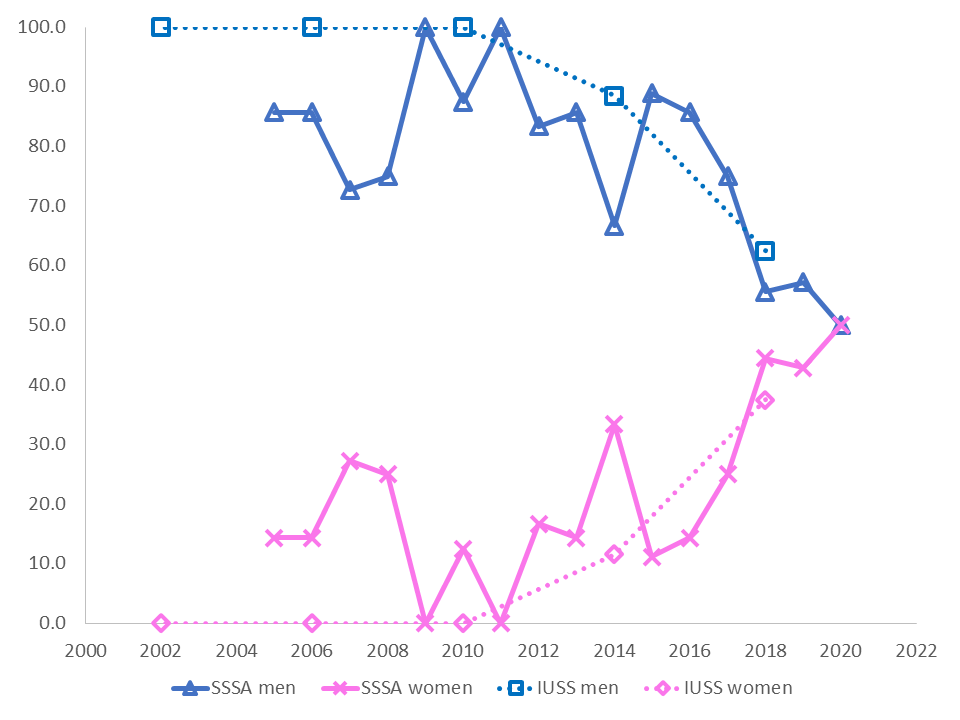
Figure 1. Percentage of female and male keynote speakers at the Soil Science Society of America (SSSA) and World Congress of Soil Science (IUSS) meetings over the last few years (Source: Dawson et al., 2021 Figure 2).
Diversity, equity, and inclusion (DEI) is important to provide a wide range of perspectives in all fields, including soil science. This is because maximizing our investigations into the opportunities and challenges in our discipline requires us to include people from a wide range of backgrounds and perspectives. However, soil science has traditionally been a male-dominated field, and data on gender equity issues for soil science are rare. Therefore, we decided to investigate the international gender equity situation. We used gender data for membership in national soil science societies, women as keynote speakers at major soil science conferences, and female membership on soil science journal editorial boards.
We found that only 32% of the overall membership of the 44 national soil science societies who responded to our request for data were women, and men outnumbered women in 37 of the 44 societies. Female membership in individual national societies was as high as 69% but was also as low as 0%. There were indications that younger scientist membership was often more strongly female than the older membership within a given national society, which provides some cautious optimism for the future. Only 20% of the soil science society presidents were female, indicating an under representation of women in leadership positions. Data for our study was collected in 2020. In 2021 27% of the soil science societies we have data on have female presidents, so this is another point that provides some optimism for gender equity in the future.
Figure 2. The percentage of female editors at nine soil science journals investigated by this study. EJSS, European Journal of Soil Science; SBB, Soil Biology and Biochemistry; BFS, Biology and Fertility of Soils; ASE, Applied Soil Ecology; EJSB, European Journal of Soil Biology; SSSAJ, Soil Science Society of America Journal (Source: Dawson et al., 2021 Figure 2).
Women have traditionally been underrepresented as keynote speakers at major conferences, often making up less than 20% of the keynotes for the Soil Science Society of America’s annual meetings and for the World Congresses of Soil Science over the last 15-20 years (Figure 1). There have been promising signs of progress in recent years as the number of female keynote speakers at these conferences have moved much closer to equality. There are even more female keynote speakers than males planned for the 2021 Eurosoil Conference, to be held in August. Opportunities such as keynote presentations are critical to provide exposure and validation to the work being carried out by our female scientists.
Only 30% of the editorial board members for the nine soil science journals we investigated were female (Figure 2), and the percentage of female editors decreased to 19% at the Editor-in-Chief level. While the 30% is quite similar to the percentage of women membership in the national soil science societies, the 19% at the editor-in-chief level again indicated that women are underrepresented in soil science leadership positions. We also found some indications that the number of women on soil science journal editorial boards has increased some in recent years.
Increasing gender equity in soil science is crucial in providing more diverse perspectives on the wide range of issues that soil scientists address. This study is a first attempt to quantify the current international gender equity situation globally. Now more detailed national-level studies should be conducted, and we need to investigate ways to attract and retain more women in the soil science profession. There is also an urgent need to look at other aspects of DEI within the soil science profession.
This blog is based on the paper Dawson et al., 2021:
Dawson, L., E. C. Brevik, and L. B. Reyes-Sánchez. 2021. International gender equity in soil science. European Journal of Soil Science. DOI: 10.1111/ejss.13118
Why does soil inoculation work if soil microbes are such great dispersers?
Dr. Jasper Wubs
Postdoctoral Fellow, ETH Zürich, Switzerland
This has been something I have been wondering for a while. I hope you are not disappointed, but I don’t have the answer. I have not yet found time to do active research on it. Still it is one of the things in soil ecology that mystify me – or maybe I am just missing something obvious?
Let me explain.
In 2016, we published the results of a field experiment where we inoculated large plots with soil from donor areas that lay a few kilometres away (1). The idea was that the introduced (late-successional) soil microbiomes would induce positive soil feedbacks in the co-introduced plants, and indeed they did. Buy why? Why did we need to introduce them?
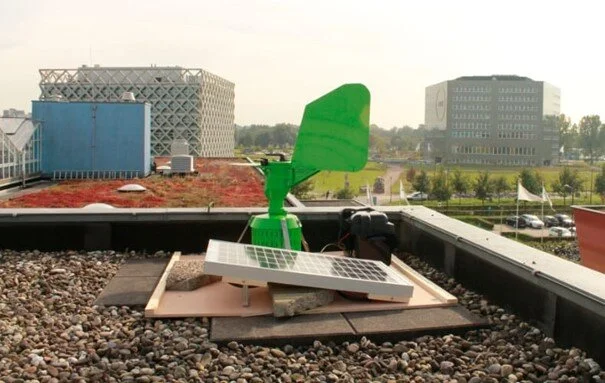
Fig. 1. Aerobiome sampler on top of a campus building (Credit Arjen de Groot).
Every microbiologist knows the statement ‘everything is everywhere, but, the environment selects’ introduced by Baas Becking (1934; 2), where the first part refers to the (near) universal dispersal ability of microbes. In fact, Baas Becking thought of microbes as aerial plankton (‘lucht plancton’). Many microbes have adaptations that facilitate transport through the air. Many form spores (many fungi and protists) and many have thick cell walls to protect from high UV radiation (e.g. Firmicutes).
Indeed, many bacteria, fungi and protists surf the airwaves. Recently, I was lucky enough to participate in a study with two of my science friends, Arjen de Groot and Stefan Geisen, where they installed a contraption (Fig. 1) that sucks microbes from the air and sequenced them (3). It turns out that even if you do this only for 21 days on top of a rather plain university building you can find a lot of microbes! In terms of species (or actually OTUs) we found 1230 bacteria, 1384 fungi, and 68 protists. The latter included several important plant and animal (invertebrate) pathogens. Like the soil, the aerobiome is highly diverse! (and potentially dangerous.)
With the recent revolution in sequencing technology, we can now identify microbes at much finer resolution, and this provides part of the answer to my question. Baas Becking was right that many microbes travel the airwaves, but few are pan-global. From detailed sequencing studies it is now clear that spatial patterns do exist in microbes (4,5), where some are found here and not there (biogeography in jargon). If we look deep enough, we see that each microbe is far from everywhere. But that is not the whole story.
While there are regional differences in microbial species composition, microbes do travel far. They have what is called a fat-tailed distribution (or dispersal kernel). While most don’t venture too far from their origin, a rather large and significant fraction do travel to the far end of their distribution curve (hence the fat tail). This curve is governed by Reynolds numbers and the viscosity of air and it turns out that spores or cells smaller than 40 μm diameter have the critical size for nearly unlimited dispersal through air (6). (For a beautiful and accessible explanation read Steven Vogel’s (1983, Princeton) Life in Moving Fluids: The Physical Biology of Flow.) Below this size, microbes float in air. This starts to sound like lucht plancton.

Fig. 2. Snow profile sampled at Jungfraujoch (Switzerland) showing Sahara dust as brown bands in the snow. In the bands, 100s of bacterial species were discovered that originated in Algeria (Credit Meola et al., 2015).
Indeed, empirical observations corroborate the physics. I don’t know of an equivalent study in microbes, but for peatmosses (Sphagnum; spores 20-45 μm) Sebastian Sundberg collected spore samples along a string of increasingly remote islands in Scandinavia and still found 1000 spores/m2/yr on an island (Svalbard) 1000 km from the nearest source and calculated that 1% of spores are expected to travel intercontinentally! (7). In another study it was shown that the Sahara dust raining down in European winters carries many bacteria (Fig. 2; 8). In the snowpacks of the Swiss Alps they discovered 100s of bacterial OTUs in dust that came from south-central Algeria: a net distance of some 1800km! (the computed air trajectory was at least twice as long.)
However, spore size is not everything. In a trap-culture study with ectomycorrhizal fungi (spore diameter ~10 μm) on a single host plant (Pinus muricata) in California they found spatial patterning within a kilometer (9)! Trap plants placed more than one kilometre from potential sources were frequently not colonized, including by Suillus species that in other studies were described as major long-distance dispersers. Maybe the discrepancy between studies arises from the effect of time? The trap-cultures were out trapping for six months and ectomycorrhizal spores can be dormant for some time. Maybe it was due to priority effects of other species colonizing the plants first? I don’t know.
In any case, it seems that many of the microbes introduced via soil inoculation should have no trouble, given sufficient time, to cover the few kilometres that lie between our donor and recipient sites. The donor sites are frequently disturbed by management and wild boar, leading to patches of bare soil and so the microbes should readily and frequently be able to join the aerial highways. The same goes for many other inoculation studies. Why don’t they make it?
Maybe it is the second part of Baas Becking’s statement and the local environment is not conducive to those microbes? But how does that square with the positive feedback among (late-successional) microbes and plants that drove our original field experiment? Should those feedbacks not ensure microbial establishment and local spread once they arrive?
This is the puzzle I am stuck on. The hypothesis I have come up with: maybe multiple interacting microbes (consortia) need to arrive more or less simultaneously to generate the positive soil feedbacks and this becomes increasingly unlikely with distance and number of necessary microbial partners.
I am curious to hear what you think – especially if you did spot the obvious thing that I missed! Do send me a mail!
References
Wubs ERJ, Van der Putten WH, Bosch M, Bezemer TM. Soil inoculation steers restoration of terrestrial ecosystems. Nature Plants. 2016;2:16107. doi: 10.1038/NPLANTS.2016.107
De Wit R, Bouvier T. “Everything is everywhere, but, the environment selects”; what did Baas Becking and Beijerinck really say? Environ Microbiol. 2006;8(4):755-758. doi: 10.1111/j.1462-2920.2006.01017.x
De Groot GA, Geisen S, Wubs ERJ, et al. The aerobiome uncovered: multi-marker metabarcoding reveals potential drivers of turn-over in the full microbial community in the air. Environ Int. 2021;154:106551. doi: 10.1016/j.envint.2021.106551
Green J, Bohannan BJM. Spatial scaling of microbial biodiversity. Trends Ecol Evol. 2006;21(9):501-507. doi: 10.1016/j.tree.2006.06.012
Bates ST, Clemente JC, Flores GE, et al. Global biogeography of highly diverse protistan communities in soil. ISME J. 2013;7(3):652-659. doi: 10.1038/ismej.2012.147
Wilkinson DM, Koumoutsaris S, Mitchell EAD, Bey I. Modelling the effect of size on the aerial dispersal of microorganisms. J Biogeogr. 2012;39(1):89-97. doi: 10.1111/j.1365-2699.2011.02569.x
Sundberg S. Spore rain in relation to regional sources and beyond. Ecography. 2013;36(3):364-373. doi: 10.1111/j.1600-0587.2012.07664.x
Meola M, Lazzaro A, Zeyer J. Bacterial Composition and Survival on Sahara Dust Particles Transported to the European Alps. Front Microbiol. 2015;6:art1454. doi: 10.3389/fmicb.2015.01454
Peay KG, Schubert MG, Nguyen NH, Bruns TD. Measuring ectomycorrhizal fungal dispersal: macroecological patterns driven by microscopic propagules. Mol Ecol. 2012;21(16):4122-4136. doi: 10.1111/j.1365-294X.2012.05666.x

Decompacting Soil Data: LandPKS loosens up valuable soil information
Carolyn Kerchof
Communications and Storytelling Lead, LandPKS, USA
Using LandPKS for vegtation monitoring. Copyright LandPKS
Soil scientists, farmers, citizen scientists, rangeland managers, and educators who work in soil monitoring programs around the world have a common problem: how does one find out exactly what type of soil one is standing on? Soil maps are imprecise, and lab measurements of soils, such as of soil pH and organic matter, are inaccessible to most. Farmers in many countries lack the kind of infrastructure that would make laboratory analysis of soils timely and affordable. Until recently, there were no tools to help land managers characterize their soil, be they suburban homeowners in the United States, cacao farmers in Ghana, or rangeland managers on a wildlife preserve in Kenya.
The Land Potential Knowledge System, or LandPKS, was conceived as a tool to empower scientists and land managers of all kinds to characterize soil type efficiently and accurately to better inform their management decisions. With the mission to increase access to information and knowledge about soils and land for everyone, LandPKS defines “land potential” as the inherent, long-term potential of the land to sustainably support a wide variety of ecosystem services, including agricultural production. In the LandPKS mobile app, information on soils, wildlife habitat, and long-term trends in land cover can be accessed using the user’s location alone. The data collection modules, such as LandInfo and Vegetation, allow users to further characterize, measure, and monitor changes in their soil and vegetation. By combining soil map data with user input data, LandPKS makes it possible for anyone to characterize their soil and evaluate the potential of their land.
Publically uploaded sites on the LandPKS Data Portal. Copyright LandPKS
Simple, accessible methods for soil characterization
Through identifying your soil, you gain access to detailed information on the physical, chemical, and biological properties associated with your soil type. LandPKS is a reliable and easy way to identify your soil type through recording simple observations of soil properties, like soil texture and the presence of rock fragments. In multiple studies, the LandPKS team has proven that these simple, accessible methods work. In the article “A Comparison of Soil Texture-by-Feel Estimates: Implications for the Citizen Soil Scientist,” Shawn Salley et al show that the soil texture-by-feel method used by LandPKS is an easy and relatively accurate way for people who are not soil scientists, such as citizen scientists, seasonal resource scientists, and field technicians, to identify their soil type. The results of Salley’s study support the use of tools such as LandPKS that empower and train users to use soil characterization methods.
By understanding the soil’s potential to support various activities (based on inherent properties like texture) as well as its current condition (based on soil health), you can manage land to maximize both soil biodiversity and ecosystem services. The concept of soil health encompasses those dynamic soil properties that you can impact through changes in management. An example is susceptibility to erosion, which can be decreased by planting cover crops, or risk of drought, which can be mitigated by increasing soil organic matter. You can assess the health of your soil with the LandPKS SoilHealth module, which allows you to record a wide range of common soil health indicators, such as soil organic matter and biological diversity.
Increased knowledge leads to increased productivity
Researchers collecting soil data in the field. Copyright LandPKS
One of LandPKS’s user groups is smallholder farmers, who produce a significant percentage of the global food supply and are in critical need of information to help them better manage their land. Farm management decisions are best made with knowledge of the soils, their potential, and their current condition. The LandPKS team has demonstrated that mobile phone technology is an effective way to provide access to this kind of information, and that it has an overall positive impact on farm productivity and economic growth. In the article “Mobile phone use is associated with higher smallholder agricultural productivity in Tanzania, East Africa,” Amy Quandt et al show a positive association between mobile phone use for agricultural activities and reported crop yields. Mobile phone use increases profits while decreasing the costs and time investments of farming by, among other things, providing access to timely, actionable information to support decision making.
LandPKS seeks to serve a broad user base. The system is currently being used in a wide range of projects around the world, including in an Observational Carbon-Farming Program run by the non-profit Eco-Cycle in Boulder, Colorado (read more here), and to guide management decisions on cacao farms in Ghana (read more here). Thanks to feedback and input from our growing user base, the system continues to evolve to better address the problem of the frequent mismatch between a piece of land’s potential and how that land is being used.
You can learn more about the LandPKS project and contact us at LandPotential.org.