

Blog Archive:
Beneath Our Feet
Soil is the most diverse place on Earth, and we need to protect it
By Mark alan anthony, Swiss federal institute for forest, snow, and landscape research

A rich forest soil harboring over 1,000 fungal species! I’m wearing gloves to exclusively measure what lives in soil versus on our bodies.
How do you advocate for something most people cannot see, smell, feel, taste, or touch? Soil includes so much of the ground beneath our feet, and it is home to an exceptional diversity of life. There is no zoo for soil organisms, and I have a hard time imagining a soil fungus becoming as emblematic as the WWF panda (though I would be delighted to be proven wrong). So how can we change the way we think about soil life?
Our recent publication quantified soil biodiversity to understand what fraction of Earth’s life lives belowground. Answering this question enables researchers, environmental practitioners, and policy makers to advocate differently for soil biodiversity because our estimate is much bigger than once thought. We estimate that 59%, plus or minus 15% (the error range of our estimate), of life resides in soil from the smallest (viruses) to most complex life forms (mammals). The most diverse group of organisms in soil are microbes, with fungi being the most specialized microbial group to soils (90% of species live in soil), while the least biodiverse groups in soil are mollusks and mammals, at just 20% and 3.84% of species, respectively.

Images of major life forms commonly found in soils. (A) bristletail (© F. Ashwood), (B) springtail (© H. Conrad), (C) nitrogen-fixing bacteria-containing nodules on clover root (© M. van der Heijden), (D) predatory mite (© H. Conrad), (E) isopod (© F. Ashwood), (F) scots pine root colonized by ectomycorrhizal fungi (yellow) (© M. Anthony), (G) earthworm (© G. Brändle), (H) nematode (© A. Murray), (I) corn root colonized by arbuscular mycorrhizal fungi (blue) (© F. Bender), (J) springtail (© F. Ashwood), (K) a common soil bacterium Bacillus (Creative Commons Attribution-Share license, photo by M. Das Murtey and P. Ramasamy), (L) horned mite (© H. Conrad), (M), pseudoscorpion (© F. Ashwood), (N) phage infecting a soil bacterium (© T. de Carvalho), (O) centipede (© F. Ashwood).
I often consider what might happen if we lose significant soil diversity. Unlike a lot of non-soil dwelling, larger organisms, many soil organisms cannot live without cooperation and quite literally need diversity. Many soil bacteria lost the ability to synthesize essential amino acids, and they must cross-feed (i.e. share) amino acids with other bacteria in the soil or they will die. Tens of thousands of fungi lost the ability to grow alone and rely on living host plant roots in soil to obtain energy. And soils that we experimentally manipulate to kill-off microbes fail to support plant life compared to soils with diverse, living microbial communities.

Plants grow vigorously with living microbial communities. Healthy green plants have diverse, living microbial communities whereas yellow plants have been experimentally grown without a diverse, living microbial community.
When our paper was first published, I was discussing different ways to frame it with my husband, who is also the artist that illustrated the soil organisms for our manuscript, Michael Dandley (check out Fig. 3 in the paper). He said that he viewed our effort akin to taking a census. We make a census to know where people live and how we should distribute power and resources. The results of our “census” of biodiversity is therefore at extreme odds with the current distribution of resources for conservation and restoration. Very few resources flow towards the conservation of soils. While we are not trying to compare a soil nematode to an Orangutan or to constrain efforts to preserve and protect biodiversity aboveground and in the oceans, we hope the results of this work make a case that we need to focus much more on soils. This will look like designing new strategies to measure and monitor soil biodiversity, initiatives to protect critical areas of soil biodiversity (even if there aren’t any threatened organisms aboveground), and policy makers advocating for more resources towards soil conservation and restoration in the face of the biodiversity crisis.
“Hope is a fertile soil where flowers blossom” (Lailah Gifty Akita, 2009).
Mosses: Earth can’t do without them
By David Eldridge, School of Biological Earth and Environmental Sciences, University of New South Wales, Sydney Australia and Manu Delgado-Baquerizo, Spanish National Research Council, Consejo Superior de Investigaciones Científicas (CSIC)
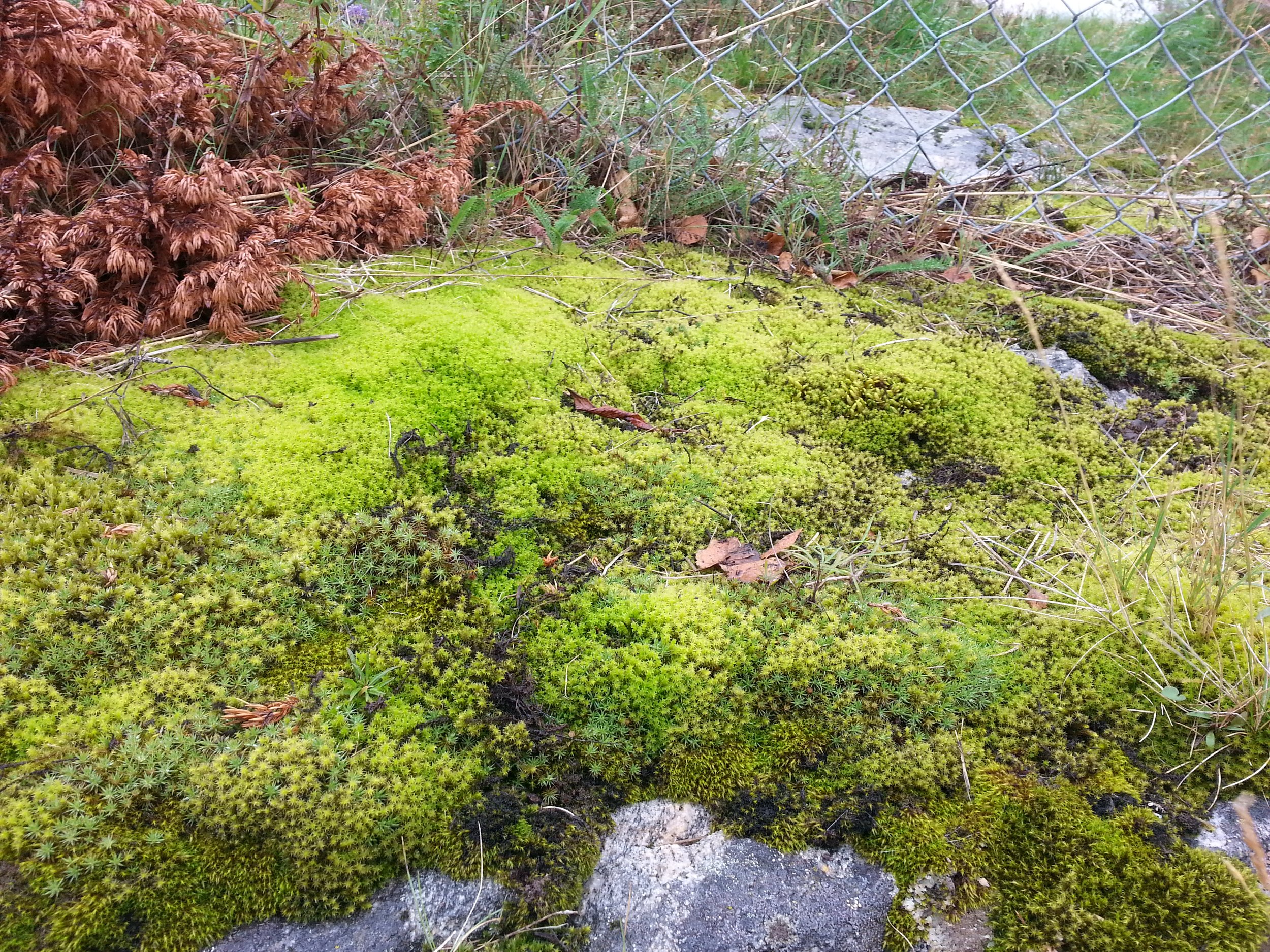
Mosses growing on soil deposited on a sandstone shelf at the Randwick Environment Park, Sydney Australia
Mosses are some of the oldest land plants on the planet, and have been here long before humans. Most of us have heard of mosses and seen them at some point in our lives. This is because mosses grow pretty much everywhere. You will find them growing on the footpath, on the walls of houses, on trees, on roofs, and particularly on soil. It’s on the soil that mosses have a dramatic effect on soil functions and therefore ecosystem health.
We know from previous research that mosses play important roles in specific locations. For example, desert mosses are important for reducing erosion, trapping sediment, and providing a habitat for invertebrates and microbes. Mosses such as sphagnum that dominate boreal forests are not only critical for conserving soil moisture, but are an important food source for vertebrates. Yet, we know very little about the global effects of mosses; whether their effects are site-specific or whether there are general principles that apply to mosses across the globe.
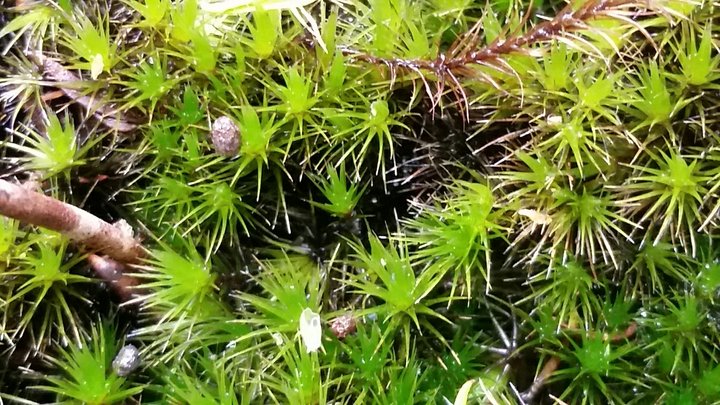
Long hair points at the ends of moss leaves help to funnel water into the centre of the plant, allowing mosses to survive in areas with low rainfall
In order to answer this, we used a global survey across 123 sites in all continents, including Antarctica, and compared the biogeochemistry of soils beneath mosses with both the soil beneath vascular plants and bare soils. We were astonished to find that mosses have a significant effect on a range of soil attributes as broad as carbon and nitrogen, to elements such as zinc and copper. Although the relative effect of mosses on soils was not as great as the relative effect of vascular plants (trees shrubs and grasses), the fact that mosses occur across the globe makes them important drivers of soil biogeochemistry.

Soil surfaces dominated by a rich community of mosses and lichens at Bodo, Norway, north of the Arctic Circle
Our study revealed that globally, mosses occur over an area equivalent to the size of Canada or China and store about 6.43 gigatonnes (billion tonnes) more carbon in the soil than bare soils (soils with no plants). And this is a global underestimate, as some areas were outside our capacity to estimate moss cover and model soil carbon (these areas included the boreal forests of northern Europe and extensive areas of Africa). Our results mean therefore that mosses are important sinks for carbon dioxide, and will likely be more important as CO2 levels in the atmosphere increase over the next century.
Another important result of our study was that the relative abundance of soil-borne plant pathogens was lower in the soil beneath mosses than in bare soil. We are not clear about the exact mechanism behind this anti-pathogen effect, but it is likely that chemicals associated with roots of mosses (rhizoids) secrete chemicals that suppress populations of plant pathogens such as nematodes, which cause substantial damage to plant roots and agricultural crops such as potatoes.
What is clear from this research is that we need more education on the positive benefits that mosses bring to human society. Other than direct conservation initiatives, this could mean including mosses in monitoring programs that aim to assess soil health. This is already happening in some rangeland monitoring programs worldwide. Mosses are likely to play an increasingly important role in soil biogeochemistry as human pressure on land-use increases. They are also likely to be more important than vascular plants as Earth’s temperature gets hotter, drier and more unpredictable.

A soil fungus affects insect-plant interactions by manipulating the insect gut microbiota
By Francesco Pennacchio and Matteo Montagna, University of Naples Federico II, and Morena Casartelli, University of Milan
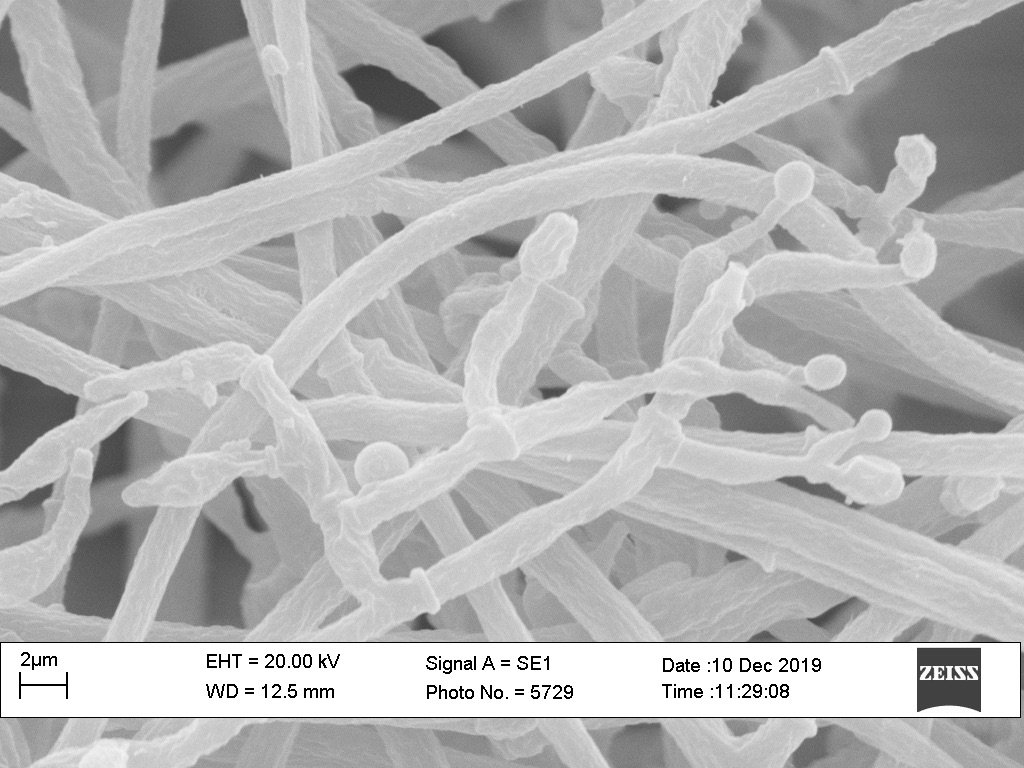
Figure 1. Trichoderma afroharzianum SEM micrograph.
Together with other Italian colleagues, we recently published a scientific paper in PNAS (https://www.pnas.org/doi/abs/10.1073/pnas.2216922120) demonstrating that the resistance of tomato plants to pest insects is driven by a symbiotic soil fungus that alters the insect’s gut microbiota. This beneficial fungus, Trichoderma afroharzianum (Figure 1), lives in the plant root system and helps protect the plant from pathogenic fungi. Due to its well-known biological control mechanism, Trichoderma is widely used as a biocontrol agent in agriculture.

Figure 2. Spodoptera littoralis larva.
We investigated how this beneficial soil fungus affects the survival of larvae of the moth Spodoptera littorals (Figure 2), a pest insect of major agricultural importance. Larvae fed on leaves from tomato plants colonized by T. afroharzianum (treated larvae) exhibited significantly greater mortality compared to larvae fed on leaves from Trichoderma-free plants (control larvae). We found that treated larvae showed an alteration in the composition and functionality of the gut microbiota compared to control larvae. Analysis of the metabolic activity of the microbiota revealed that bacterial pathways that were able to nutritionally support the larvae, including those associated with the biosynthesis of amino acids, were altered in treated larvae. Most of these activities were attributed to the Gram-positive bacterium Enterococcus casseliflavus, whose importance for larval fitness is well known. Interestingly, the oral administration of Enterococcus bacteria isolated from control larvae to those which fed on leaves from tomato plants colonized by Trichoderma, rescued the negative effects, thus restoring larvae survival.
This study reveals a below and above-ground microbial network that is able to affect plant-insect interactions, with a possible impact on the stability and evolution of natural communities. These interactions should be carefully considered for the development of sound strategies for the sustainable management of agroecosystems. Further, they should also be taken into account for in-depth assessments of the ecological impact of biocontrol agents, not only on target and non-target organisms, but also on their associated microbiota.
Figure 3. Schematic representation of the interactions among the plant Solanum lycopersicum, the fungus Trichoderma afroharzianum strain T22, and the phytophagous insect Spodoptera littoralis and its gut microbiome. The colonization of S. lycopersicum roots by the fungus T. afroharzianum strain T22 (1) systemically conditions the plant (2), generating a dysbiosis of the gut microbiome in S. littoralis larvae feeding on tomato leaves with neither structural damages to the midgut epithelium and peritrophic matrix nor alterations in the digestive capacity of the insect. This dysbiosis, among others, affects symbiotic bacteria of the genus Enterococcus and the functional capability of Enterococcus casseliflavus to nutritionally support the insect host with sugars and amino acids (3), with a consequent negative impact on S. littoralis development and survival (4). E: E. casseliflavus bacterial cells; M: microvilli; PM: peritrophic matrix; orange, green, and light blue shapes: insect digestive enzymes.
Breaking good: Soil nematodes as important players for plant performance
Dr. Olivera Topalović, Postdoctoral Fellow at University of Copenhagen, Denmark & Wageningen University and Research, The Netherlands
Dr. Stefan Geisen, Assistant Professor at Wageningen University and Research, The Netherlands
Nematodes are among the most abundant soil organisms, occupying four-fifths of all animals on Earth. Their trophic abilities place them at all levels of the soil food web – from microbivores to predators to insect killers to plant parasites. This wide range of interactions make nematodes important players in soil multifunctionality, including nutrient cycling. Their vast biodiversity of many thousands of species with distinct niches makes nematodes excellent bioindicators of soil health. In agroecosystems, nematodes are mostly considered to be negative, resulting in a huge gap in understanding of the positive roles of nematodes in plant performance.
This is not surprising as plant-parasitic nematodes are important plant pests leading to global yield losses of billions of US $ annually. Damage to plants is caused by direct feeding on belowground and aboveground plant parts. For instance, the infective juveniles of root-knot nematodes, one of the most notorious groups of plant pests, release a cocktail of enzymes at feeding sites in roots that cause proliferation and enlargement of highly nutritious cells – so-called “giant cells”. As a result, numerous galls are formed on the roots, which disrupt normal plant growth and crop yield. In addition to direct feeding, plant-parasitic nematodes form disease complexes with various plant pathogenic bacteria and fungi and support their transport into the roots.

Figure: Contribution of free-living nematodes in microbial regulation of plant parasitic nematodes (Topalović & Geisen, 2023)
In our review “Nematodes as suppressors and facilitators of plant performance”, recently published in the journal New Phytologist, we address these negative aspects of plant-nematode interactions, but also fill some important knowledge gaps in understanding the positive role of nematodes on plant performance. We show that even plant-parasitic nematodes, when present in soil in numbers below damage thresholds, can improve plant performance through the release of root exudates and increased microbial activity in the rhizosphere. We also highlight the more numerous, but certainly less explored, benefits of free-living nematodes in promoting plant performance. This positive contribution is entirely indirect through interactions between free-living nematodes and other soil biodiversity, especially bacteria and fungi. In fact, several studies show increased abundances of some groups of free-living nematodes linked to improved plant growth and reduced disease symptoms under organic and conservation agriculture.
Considering that the majority of bioproducts that are based on microbial isolates usually have low efficiency when applied in the field, we propose to finally address the many questions related to the potential of free-living nematodes themselves as novel bioproducts for application in agroecosystems. We think that a more precise understanding of the importance of free-living nematodes in plant performance and in regulating plant pests and pathogens requires a multidisciplinary approach. This effort will require integrative laboratory and greenhouse studies to investigate nematode interactions with other soil biodiversity and field studies on testing the possibility and efficiency of free-living nematodes as bioproducts. To get a more complete overview on the positive side of soil nematodes and how these might help in more sustainable soils, read the full article here.
Reference:
Topalović, O. & Geisen, S. Nematodes as suppressors and facilitators of plant performance. New Phytologist (2023). https://nph.onlinelibrary.wiley.com/doi/abs/10.1111/nph.18925
O. T. was funded by Novo Nordisk Foundation (grant no. NNF21OC0071015)
Good Things Come to Those Who Wait
By Dr. Frank Ashwood
Soil Ecologist, Soil Sustainability Research Group, Forest Research UK
Forget the parades and Guinness (actually, don’t forget the Guinness), Dublin saw a very different kind of celebration this St Patrick’s week - with folks from all around the world coming together to share their love for soil biodiversity. The long-awaited 3rd Global Soil Biodiversity Conference welcomed over 650 soil ecological researchers, policymakers, and practitioners, to discuss all the major threats, techniques, and opportunities for soil biodiversity conservation and restoration across the globe.

Keynote Speaker Tom Crowther, ETH-Zurich. Photo credit: Frank Ashwood
The sheer scale of the conference, and the inspirational keynote talks from leaders in the field left attendees feeling not only a bit wiser, but also with a palpable sense of belonging to a dynamic and forward-thinking community. To me, one of the golden threads weaving throughout the conference seemed to be how globally focussed much of the current research efforts are, including an increasing appreciation of the importance of soil biodiversity’s role in the restoration of degraded ecosystems around the world.
Perhaps inevitably, a conference on a topic as wide-ranging as ‘soil biodiversity’ consisted of a very broad range of research presentations and posters, and a lot of competing parallel sessions and workshops. The organising committee did a frankly heroic job of trying to group the hundreds of talks by general topic, such as ‘Global Drivers of Soil Biodiversity’, with a wide scope of talks per session. I particularly liked the push in many talks and workshops toward greater use of functional trait approaches and the collaborative development of trait databases for a wide variety of taxa. Whilst I would personally have preferred the sessions to have been based on taxa groups instead (reducing my need to sprint around campus to catch individual talks of relevance to my work), I ultimately think it was formatted well, as it exposed attendees to research topics and taxa from outside their usual circles and thus broadened our horizons and networks. For a social butterfly like myself, the best aspect of the conference was by far the networking opportunities it afforded, and I remarked on social media that it was like physically walking through my Twitter feed (but with only the good bits!). I met so many wonderful soil ecologists from around the world that I’ve only ever had email/social media conversations with, and established a number of exciting potential research collaborations. It was also very nice to see mine and Andy Murray’s macrophotography on display to offer a quiet place for reflection, or a pretty backdrop for a team photograph.
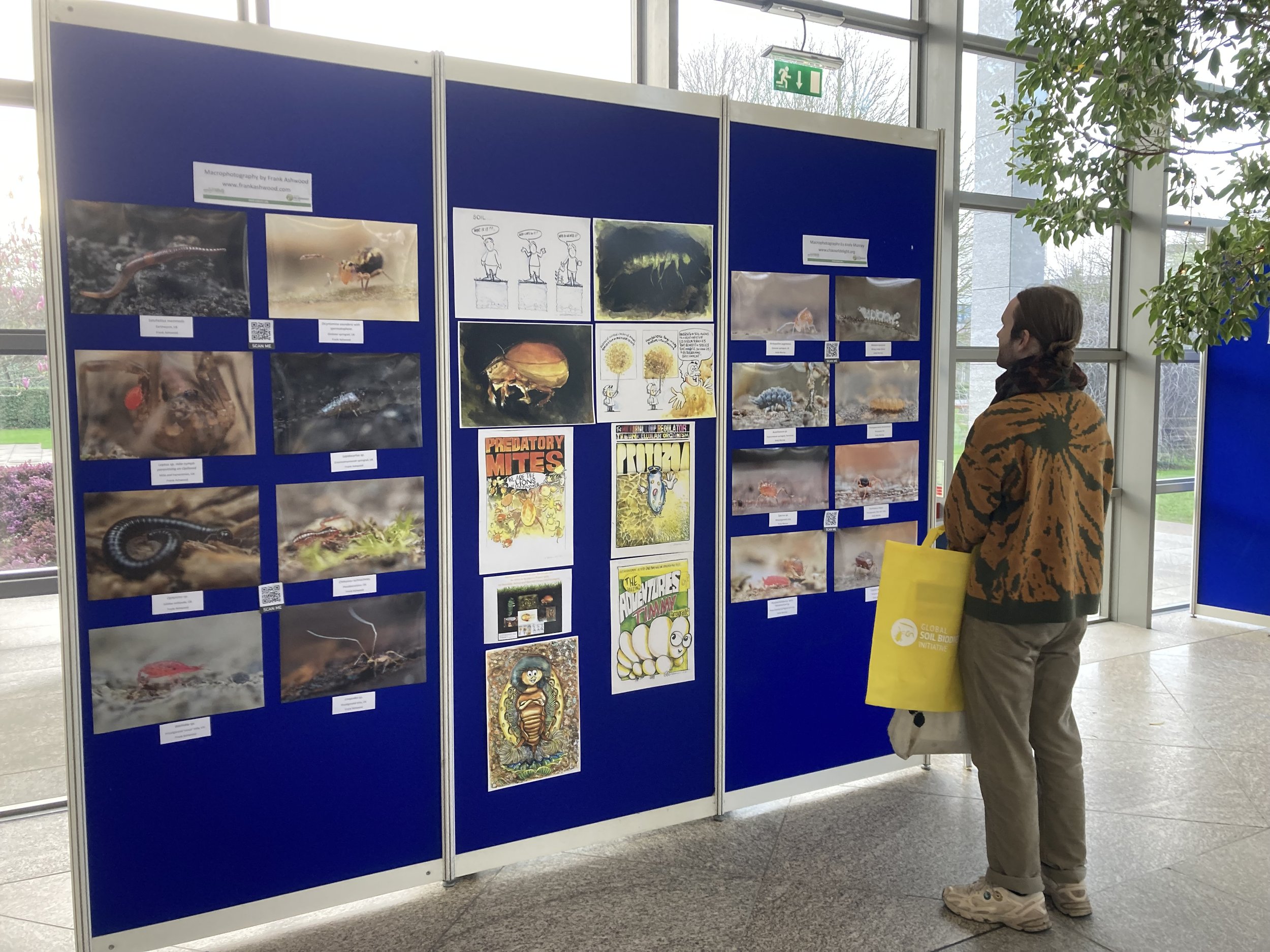
Andy Murray, (@chaosofdelight) macrophotography display. Photo credit: Frank Ashwood

Georg-August-Universität Göttingen Scheu Team. Photo credit: Frank Ashwood
Overall, the positive atmosphere and excitement for soil biodiversity left a lasting impression, and I know I’m not the only attendee who went home with recharged enthusiasm for their work. On my return journey to the airport, the taxi driver was bemused to learn that not only are there 31 species of earthworm in Ireland, but in fact a good portion of the world’s earthworm scientists were in town. I don’t know how many conference attendees stayed on for the St Patrick’s festivities, but if I learned anything at #GSB2023, it’s that we’re all part of a lively and positive community who come together to celebrate the important things – so I’m guessing a fair few did! Here’s to the next Global Soil Biodiversity Conference, it’ll be well worth the wait.
Check out Frank Ashwood’s beautiful soil fauna photography on his webpage: https://www.frankashwood.com/macrophotography and follow him on Twitter
GSB2023 – Finally!
By DR. Franciska de Vries
Professor of Earth Surface Science, Institute for Biodiversity and Ecosystem Dynamics, University of Amsterdam
It’s hard to believe. We started planning the 3rd GSB conference, which was supposed to be in November 2021, such a long time ago! And now, after almost two years of delay, the program is online, I have booked my trip, and I am finally going to meet the rest of the organizing committee and many speakers for the first time in three years.

Back l. to r.: Erin Cameron, Richard Bardgett, Guillaume Patoine, Kris Verheyen, Brajesh Singh, Tesfaye Wubet, Franciska de Vries, Nathaly Rokssana, Don Cowan, Fernando Maestre, Leá Beaumelle, Simone Cesarz, Diana Wall, Witoon Purahong, César Marin
Front l. to r.: Manuel Delgado-Bazquerizo, Alberto Origazzi, Nico Eisenhauer, Carlos Guerra, Anna Heintz-Buschart
But of course I’m not just going to meet people who I already know. I’m very excited to meet new people, and hear about the forefront of soil biodiversity research, education, and policy. Interest in soil biodiversity has seen a remarkable increase in the past few years, which culminated recently by the explicit inclusion of the conservation and sustainable use of soil biodiversity in the decisions of last December’s COP15 meeting . Key elements and activities to accomplish this are mentioned too, and include (1) policy coherence and mainstreaming, (2) encouraging the use of sustainable soil management practices, (3) awareness raising, sharing of knowledge, technology transfer and capacity building, and (4) research, monitoring and assessment. So, the conference really couldn’t be at a better time, as all these key elements will be discussed at the meeting, and scientists, educators, policymakers, and practitioners will all be present.
I’m very curious to see the keynote lectures, which I expect will really be highlighting novel understanding of the drivers of soil biodiversity, how it responds to global change, and the role that soil biodiversity plays in natural and managed ecosystems. And a fantastic set of keynote speakers it is!! But one of the things I’m particularly looking forward to is attending a few of the workshops that are taking place. Workshops are a great way to meet new people and learn new things, and the ones that are taking place at the GSB meeting focus around those key elements mentioned in the COP15-decisions: techniques, education, data sharing and availability, and global collaborative initiatives. I’ll certainly be attending the workshop on the effects of multiple global change factors on soil biodiversity, and probably also one of the SPUN workshops – an exciting new global initiative to map the diversity of fungi.
Of course, I will also pick and mix from the fantastic number of contributed talks, choosing talks by people I know, by old friends and colleagues, and support my own group members who are giving a talk! But I won’t be listening to back-to-back talks all day, and I’m sure to find some time to see Dublin (preferably while running), catch up with friends, and of course attend the welcome reception, poster session, and gala dinner. Will I see you there?
Unearthing the hidden world of soil viruses
By Dr. Janet K. Jansson, Chief Scientist & Laboratory Fellow, Biological Sciences Division, Pacific Northwest National Laboratory
Soil is a rich habitat for microbial life. A highly diverse community of soil microbes are responsible for many of the functions that are linked to soil health, including soil nutrient cycling and support of plant growth. Although we are gaining an increasing understanding of how different cellular microorganisms, such as bacteria and fungi, contribute toward vital functions in the soil environment, the functions carried out by soil viruses remain largely an enigma. This knowledge gap is disconcerting considering that soil viruses are key regulators of microbial populations in all of Earth’s habitats, from oceans to humans. The reason that we know so little about soil viruses is that they are hard to study in the complex soil environment. Free viruses often absorb to soil particles and are hard to extract. Some other viruses that target bacteria, or bacteriophage (phage), may hide within the bacterial host genome. This life strategy is known as lysogeny and the phage are known as temperate phage. Fortunately, new tools, such as whole genome sequencing (metagenomics) are beginning to uncover the identities of soil viruses. Many soil viruses found in soil metagenomes are novel and unlike anything previously described.

Soil viruses are influenced by historical amounts of precipitation as shown by comparing viral types in historically dry, to irrigated, to historically wet soils
(Wu et al., 2021: https://doi.org/10.1128/mBio.02595-21)
Interestingly, differences in the soil environment, such as a change in soil moisture, can influence the types of viruses and their life strategies. For example, recent research suggests that as soil becomes drier, as is expected to happen in many soils due to climate change, there is a transition of soil phage to be lysogenic instead of lysing their hosts. This shift in viral life strategy has implications in how soil bacterial populations are regulated by viruses. By contrast, when soils are wetter, such as in areas with increasing amounts of precipitation, many soil viruses become lytic and kill their bacterial hosts. The process of lysing of bacterial cells releases their cellular contents back into the soil habitat. These dead cell contents can be recycled by other microorganisms – a process known as the viral shunt. The viral shunt keeps the microbial nutrients within the microbial food web, instead of allowing the nutrients to be consumed by higher organisms such as protozoa, worms and plants. How the viral shunt impacts the soil carbon cycle is an exciting area of current research. Our recent publication summarizes current knowledge about soil viral diversity and how soil viruses can potentially be impacted by climate change.
Reference:
Jansson, J.K., Wu, R. Soil viral diversity, ecology and climate change. Nat Rev Microbiol (2022). https://doi.org/10.1038/s41579-022-00811-z
Plant productivity shapes the mineral-protection of surface soil carbon storage regardless of soil age
Dr. César Plaza, Instituto de Ciencias Agrarias (ICA), CSIC
Dr. Pablo García-Palacios, Instituto de Ciencias Agrarias (ICA), CSIC
Dr. Manuel Delgado-Baquerizo, Instituto de Recursos Naturales y Agrobiología de Sevilla (IRNAS), CSIC
Soil organic carbon is essential to soil life and function on the planet. Soil carbon supports the immense microbial diversity under our feet, and fuel multiple ecosystem services, such as climate regulation and soil fertility, that allow us to produce food and help fight and adapt to global warming. Because of this, we need to learn how to predict the changes in soil carbon across space and time.
Importantly, soil carbon, however, is not in a single form, but in a complex mixture of plant and microbial cells and byproducts at different degrees of transformation and decomposition. The association of these organic compounds with soil minerals imposes physical barriers and chemical constraints to the soil carbon decomposer community, and thus govern the capacity of soils to retain carbon from being released back to the atmosphere. Despite the huge importance of understanding how the spatial and temporal dynamics of different fractions of soil carbon change, we are still far from understanding how soil formation and climate interact to explain the current levels of different carbon fractions in our planet.

Figure 1. Researchers conducting a survey in a terrestrial ecosystem. Picture: Manuel Delgado Baquerizo.
To address this question, we leverage the CLIMIFUN global survey, which includes 16 long-term soil chronosequences spanning a wide range of vegetation and climatic types. We found that no matter how old soils are, climate and productivity determine the proportion of mineral-associated and free carbon in surface soils across the globe. In other words, soil development over millennia plays a far less relevant role than plant productivity in explaining soil carbon composition. In highly productive ecosystems, such as tropical and temperate forests, surface soil carbon stocks are dominated by unprotected carbon fractions during pedogenesis. Conversely, in less productive, drier and colder ecosystems, and in croplands, surface soil carbon stocks are dominated by the mineral-associated fraction. We also found that the microbial respiration rates, as well as the temperature sensitivity of soil carbon losses via microbial respiration, increase with the proportion of surface soil carbon stored in the free fraction.
As a whole, we showed that climate and productivity control the proportion of mineral protection of surface soil carbon, and that all the free carbon being accumulated in tropical and temperate ecosystems is highly vulnerable to climate change. These results highlight the need of conserving ecosystem productivity to maintain carbon in surface soils, and thus the multiple ecosystems services relying on it.
Reference:
Plaza, C., García-Palacios, P., Berhe, A.A., Barquero, J., Bastida, F., Png, G.K., Rey, A., Bardgett, R.D., Delgado-Baquerizo, M., 2022. Ecosystem productivity has a stronger influence than soil age on surface soil carbon storage across. Communications Earth & Environment 3, 233. https:// doi.org/10.1038/s43247-022-00567-7
sOilFauna project: How human activities impact soil macrofauna communities and how it relates to primary productivity?
by Dr. Jérome Mathieu, Sorbonne Université, Paris, France &
Dr. Nico Eisenhauer, sDiv, Leipzig, Germany
Understanding the variations of ecosystem functioning and primary productivity across environmental gradients is necessary to anticipate the effects of global change on nature. The effects of human activity on soil macrofauna communities, and how these effects vary across localities is a critical but overlooked aspect of the problem. Indeed soil macrofauna communities underpin numerous ecosystem functions, including primary productivity, through their action on soil and nutrient recycling. The lack of a database on both soil macrofauna communities and ecosystem functioning at a large scale impeded so far the identification of general trends that could help us understand the links between soil macrofauna communities and primary productivity across environmental conditions.
In the project sOilFauna, we will synthesize for the first time the links between human activity, soil macrofauna communities, and primary productivity and how they depend on large-scale gradients such as climate. We are building a comprehensive database the - MACROFAUNA database -, which collates abundance data of 17 soil invertebrate groups produced across the world (Figure 1) with a standardized method. We will address three overarching questions:
1) How are soil macrofauna communities and their diversity organized around the globe?
2) What are the effects of the key agricultural practices and land management on soil macrofauna communities across climates?
3) What are the links between soil macrofauna communities and primary productivity?

Figure 1. a. Location of samples in the sOilFauna Database. b. Characterization of climates of these locations.
The first workshop of the sOilFauna project was held in iDiv – Germany, in May 2022. We designed working hypotheses that could be addressed with the database. We also identified gaps in data and discussed opportunities to invite new collaborators that could join our effort, fill these gaps, and participate in the synthesis. The precise hypothesis and collaboration guidelines for potential contributors are presented in a workshop report published in the journal Soil Organisms (Mathieu & al, 2002). Future collaborators can also refer to the website of the consortium: http://www.globalsoilmacrofauna.com/ and contact the project leaders. The project sOilFauna is funded by sDiv (Leipzig, Germany) from 2022 to 2024.
Reference:
Mathieu, J., Antunes, A. C., Barot, S., Bonato Asato, A. E. ., Bartz, M. L. C. ., Brown, G. G., Calderon-Sanou, I., Decaëns, T., Fonte, S. J., Ganault, P., Gauzens, B., Gongalsky, K. B., Guerra, C. A., Hengl, T., Lavelle, P., Marichal, R., Mehring, H., Peña-Venegas, C. P., Castro, D., Potapov, A., Thébault, E., Thuiller, W., Witjes, M., Zhang, C., & Eisenhauer, N. (2022). sOilFauna - a global synthesis effort on the drivers of soil macrofauna communities and functioning: Workshop Report . Soil Organisms, 94(2), 111–126. DOI: https://doi.org/10.25674/so94iss2id282
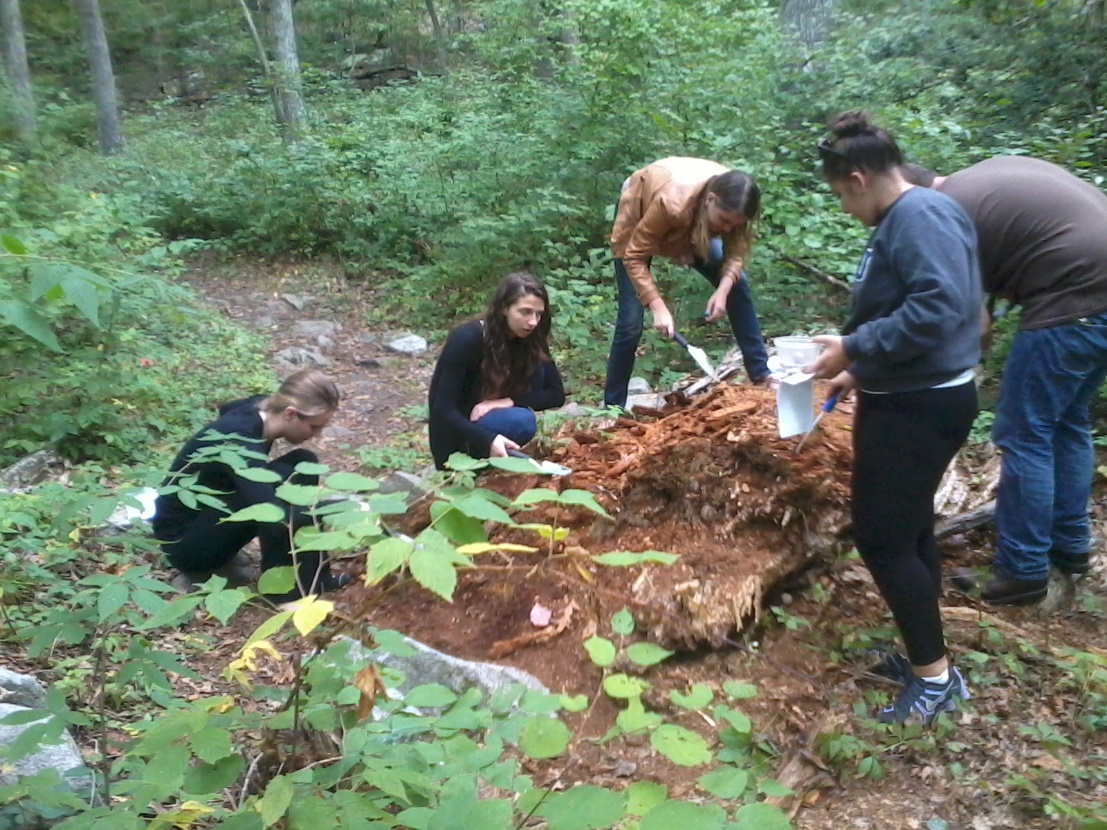
Teaching about the essence of soil biodiversity
Professor Loren Byrne discusses the importance of soil biodiversity in environmental education and “pedogogy for the pedosphere”.
Loren B. Byrne, Professor of Biology and Environmental Science, Roger Williams University, Bristol, RI USA
Ahhh, early September already! In many areas of the northern hemisphere—including Rhode Island where I live—this is when summer is winding down with shorter days, continuously singing insects, and for some, the end of endless free time due the beginning of a new school year. Like many professors at teaching-focused institutions, I’m starting the fall semester with a bittersweet mix of apprehension and excitement for the unknowns and possibilities of working with a new group of students.
In particular, I’m looking forward to teaching soil ecology again (an every-other-year class for me). It’s one of my favorite courses because of the content—of course!—but also because it always generates significant learning experiences for students. The existence of a large soil education gap in most people’s education means that much of what students encounter in a soil ecology class is brand new to them. A semester-long exploration of soil biodiversity and soils as complex environmental systems provides a novel opportunity to learn about organisms, processes, ecological patterns and social-environmental issues that aren’t talked about much, if at all, elsewhere in the curriculum.
This semester I’m approaching my soil ecology class with a new-found focus on what I have recently described as “the essence of soil biodiversity: its complex ecological webs and emergent ecosystem services that support aboveground life and human well-being” (Byrne 2022). I have always started the course with a discussion about soil ecosystem services to help students immediately see why the rest of the course’s topics are important (an example syllabus can be downloaded here). However, that theme hasn’t continued through the whole course as much as it could and maybe should. This semester, I will try to pay more attention to helping students continuously connect topics back to the question of “why care?” in context of society’s well-being and sustainability. Hopefully this will help them develop a more integrated view of soils and their biodiversity as essential parts of healthy, thriving human communities—and further, that soils themselves can even be examined as complex social-ecological systems (Byrne and Szlavecz, forthcoming).
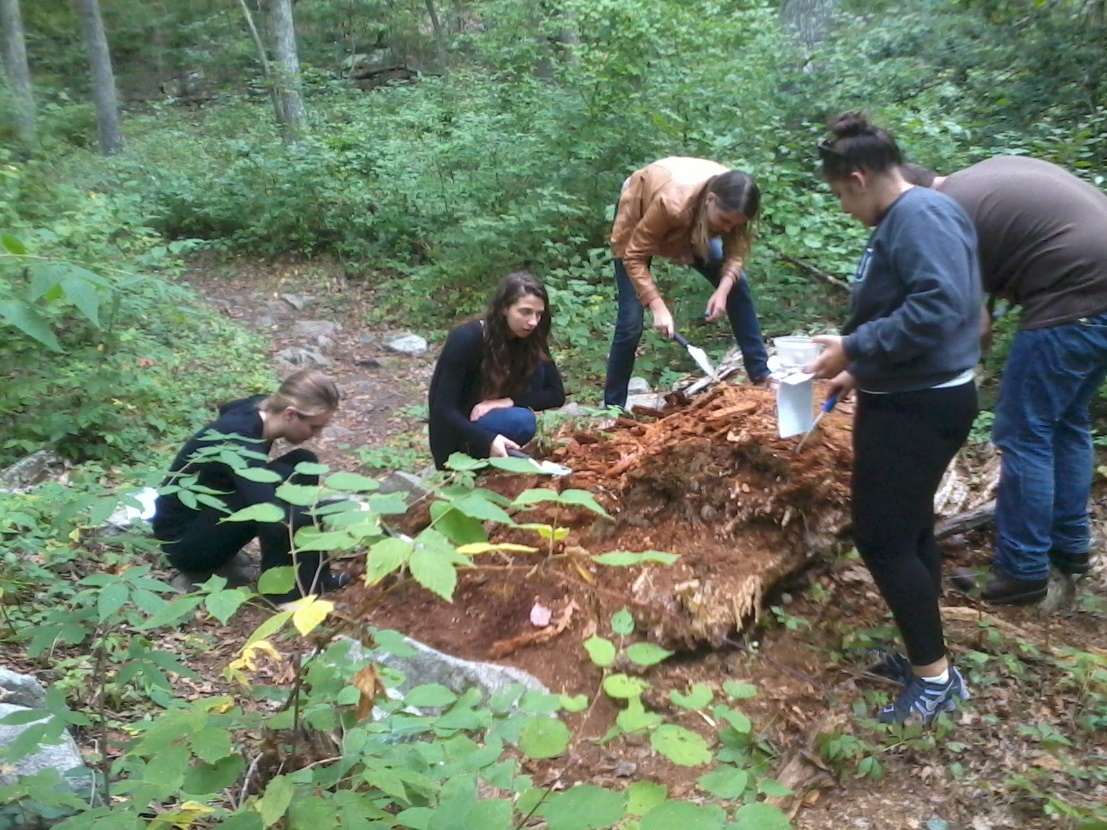
Soil ecology students engage in a soil organism scavenger hunt to learn about the diversity of life in soils. Photo credit: L. Byrne.
Such topical content is only one aspect of any course’s story. Another key factor is the methods—the pedagogy—through which students engage in the learning process. Hearing lectures and even looking through microscopes aren’t enough to generate significant, long-lasting knowledge. Thankfully, soils lend themselves well to creative, easily accessible and adaptable lessons. The goal of soil ecology education should be to “invite students into the soil” and have them experience, first-hand, the mystery, wonder, and joy of interacting with soil life. The GSBI’s and Soil Ecology Society’s education websites are great places to find resources.
As a long-time advocate of learner-centered teaching (Byrne 2016), I have developed many hands-on activities for my soil ecology class that I think help students better understand the essence of soil biodiversity. Some of my favorites include:
· A “soil critter” scavenger hunt in a forest at the very beginning of the course, when students find as many soil organisms as they can even if they can’t identify them by taxonomic name yet;
· Dissecting a soil cube (25cm^3) (literally ripping it apart!) sampled from an old field or lawn to see how plant roots and macroinvertebrates exist in a matrix of soil aggregates and pore spaces, and also develop a “feel” for the soil habitat;

Students dissect their soil samples to experience the soil habitat first hand. To support focusing on the activity and personal reflection, it’s structured as an individual activity with wide spacing among students. Photo credit: L. Byrne
· Having students play the role of “professor for a day” for which they have to prepare a full class lesson for their peers about a taxonomic group of soil organisms;
· An ecological web role playing activity (Byrne 2013, pdf here) in which students, acting as their assigned organism (or abiotic resource), have to find and “consume” their food (other students, or “be eaten” by other students) in the room and then collectively draw a web diagram of the relationships they created (also see an expanded version of this activity by Baum and Thiet (2016)).
Such activities exemplify “pedagogy for the pedosphere” (Byrne et al. 2016, pdf here), a phrase that emphasizes the need to expand soil ecology educational materials and methods to foster society’s soil ecological literacy and sustainable soil management. To that end, I’m excited to be teaching soil ecology this fall because I want to try some new ideas to help students think more critically and deeply about the essence of soil biodiversity. Using untested pedagogical activities generates apprehension too, but I’m optimistic that the following visions, though they only now exist in my imagination, can lead to interesting teaching-learning moments:
· A simple “root ball” experiment with small pots to grow plants from seed in sieved sediments (alongside a no-plant control) to see first-hand how roots bind up soil and help form soil aggregates (maybe with earthworms added to some?); this was inspired by my own observations growing seedlings for my garden this year, when I pulled one of them out of the pot (see image);

Growing seedlings in a small part can reveal how roots help bind soil particles into aggregates and start discussions about the rhizosphere. Photo credit: L. Byrne
· Having students create and care for “mini compost bins” (similar to how young students care for eggs and bags of flour) that they watch develop over a few weeks, hopefully with thriving populations of mites, isopods, worms, and surely some fungal hyphae, alongside interesting changes to the detritus;
· Field work to compare invertebrate communities between rewilded and still-used parts of a golf course with a discussion about the roles of soil organisms in urban restoration projects (Byrne 2021);
· A “spirited” brainstorming session about whether and how people might appreciate soil biodiversity more by invoking connections between soils and spirituality, including but not limited to religion (Winiwarter and Blum (2006); also see here and here).
Some other topics that I don’t yet have novel pedagogical ideas for but are relevant to developing holistic knowledge about the essence of soil biodiversity include:
· Mutualisms and competition in soil communities
· How soil organisms affect C & N cycling
· Relationships between soil organisms and disease ecology
· Effects of pollutants on soil organisms and how organisms remediate pollutants.
I’m sure readers of this blog will be able to add many more topics to this list. That’s relatively easy. The bigger challenge for the soil science community is to create learner-centered teaching activities that help students—of all ages and backgrounds—increase their soil ecological literacy. Because the soil education gap is so wide, this needs to be a large, concerted group effort.
How do you help others appreciate soil biodiversity and its benefits to humanity? Please consider publishing your ideas (e.g., formally in journals or informally via an entry for this blog) so that other educators can benefit from your ideas and experiences. When I teach soil ecology next time, I’d love to find your resource listed on the GSBI’s education webpage and use it in my class!
References
Baum, J., R. Thiet. 2016. Using soil organisms to explore ecosystem functioning, services, and sustainability. Pp. 97-103 in L. Byrne, ed. Learner-Centered Teaching Activities for Environmental and Sustainability Studies. Springer: New York.
Byrne, L.B. 2013. An in-class role-playing activity to foster discussion and deeper understanding of biodiversity and ecological webs. EcoEd Digital Library.
Byrne, L.B. 2016. Learner-Centered Teaching Activities for Environmental and Sustainability Studies. Springer, New York.
Byrne, L.B., R.K. Thiet, V.B. Chaudhary. 2016. Pedagogy for the Pedosphere. Frontiers in Ecology and the Environment 14: 238-240.
Byrne, L.B. 2021. Socioecological Soil Restoration in Urban Cultural Landscapes. Pp. 373-410 in: J.A. Stanturf and M.A. Callaham, eds. Soils and Landscape Restoration. Wiley Publishers.
Byrne, L.B. 2022. The essence of soil biodiversity. Conservation Letters: doi.org/10.1111/conl.12900
Byrne, L.B., K. Szlavecz. Multidimensionality of Biodiversity in Urban Social-Ecological Soil Systems. M. Aronson and C, Nilon, eds. Routledge Handbook of Urban Biodiversity. Forthcoming.
Winiwarter, V., W.E.H. Blum. 2006. Souls and soils: a survey of worldviews. Pp. 107-122 in B. Warkentin, ed. Footprints in the Soil. People and Ideas in Soil History. Elsevier: Amsterdam.
Intensity of Organic Farming Influences Soil Health and Biodiversity
DR. DEREK H. LYNCH
Professor, Dalhousie University, Canada
Organic farming globally, broadly aspires to be an agroecological farming system – i.e. to develop productive farming systems while also maintaining on farm biodiversity and ecological cycles above and belowground. This goal is centred around a general commitment to ‘feed the soil’ – i.e. to maintain the levels of organic matter (soil organic carbon; SOC) in soil and in doing so optimize soil biological life and soil health. These key aspirational goals of organic farming overlap closely with recent global interest in regenerative agriculture and in enhancing SOC storage and soil health on all agricultural lands as a climate mitigation and adaptation strategy

Sampling to assess earthworm abundance and diversity in a seeded organic corn field. Photo credit: Stephanie Lavergne.
But are organic farms narrowly restricted by organic certification regulations and standards with respect to their options for farm management practices as they attempt to achieve these agroecological goals of maintaining SOC, soil health and soil biodiversity? My mini-review, using data primarily from Canada, provides evidence that rather than being a homogenous farming system, a spectrum of intensity of farm management approach exists within all organic farming sectors (whether cropping or livestock based), and that this variation in management approach determines soil agroecological outcomes. Additionally, this variation in intensity of management appears to reflect more strongly differences in farmer philosophy and approach to organic farming, rather that other factors such as the size or scale of the organic farm.
The study demonstrated that, whether livestock or cropping based, within each farming sector, organic farms differ in the diversity of crops and other vegetation managed over time and space on the farm, the amount and frequency of imported and applied nutrients, and the frequency of soil tillage or disturbance. These are key management factors influencing SOC storage in soil and its dynamics (or flux), soil health and soil biodiversity. In general, reduced intensity of organic management and enhanced overall diversity of vegetation on farm (including cash crops, cover crops and even weeds) was found to be linked to improved outcomes with respect to SOC status and soil health (especially soil physical and biological properties). Soil microbial biomass and activity, soil fungal abundance and diversity, including of beneficial symbiotic mycorrhizal fungi, appears to also increase under less intensive management conditions on organic farms. However, the study also notes that lower intensity should not be confused with zero farm inputs. Maintaining and avoiding farm deficiencies in critical nutrients such as phosphorus, which if severe can undermine plant productivity and thus farm carbon cycling, is also a key consideration for optimizing the intensity of management and maintaining soil health and biodiversity on organic farms.
While this study focused on organic farming, refining our understanding of farm management intensity and how it is linked to soil carbon status, soil health and biodiversity may be key to advancing these agroecosystem attributes and services from all of agriculture.
Read the review: Lynch, D.H. (2022). Soil health and biodiversity is driven by intensity of organic farming in Canada. Frontiers in Sustainable Food Systems, 6, 826486. DOI: https://doi.org/10.3389/fsufs.2022.826486
Challenges of and opportunities for protecting European soil biodiversity
ROMY ZEISS
Doctoral Student, German Centre for Integrative Research, iDiv
Belowground biodiversity is neglected in most global biodiversity assessments and conservation actions. How and why do soils have lesser priority for nature conservation? We wanted to get an overview of how policy-makers addressed soil biodiversity and related ecosystem functions in the past and present. We reviewed the current status of soil protection by (1) summarizing past and current soil-related policies (focus: Europe), (2) investigating the effect of current conservation efforts (European protected areas), (3) revealing the role of soil in conservation management (example: German management plans for nature conservation areas).

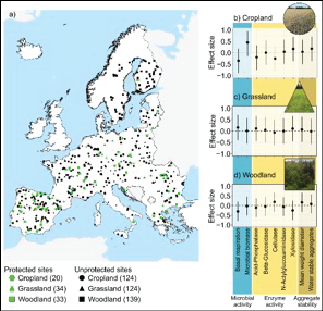
Figure 1: Effect of nature conservation areas on soil functioning (LUCAS soil data). From Zeiss et al. 2022.
First, we found that soil-related policies have still been insufficient for the protection of soil biodiversity. They are mainly addressing soil contamination in agricultural systems, low-binding, not aiming for soil nature conservation but rather other environmental objectives. Second, soils in European nature conservation areas do not perform better in terms of their ecosystem functioning. Third, management in nature conservation areas failed to address soil conservation adequately. Management plans regarded “soil” to describe the site, in its role as habitat for aboveground organisms, without mentioning its intrinsic value or linking this aspect to other values.
To move forward, we proposed eight leverages for a targeted perspective on soil biodiversity conservation: Expand existing activities, consider a full ecosystem approach, set baselines as references, monitor threats to soil biodiversity, define species lists for nature conservation, establish a soil indicator system, and identify priority areas for soil biodiversity.
Read the paper: Zeiss, R., Eisenhauer, N., Orgiazzi, A., Rillig, M., Buscot, F., Jones, A., Lehman, A., Reitz, T., Smith, L. & Guerra, C. A. (2022). Challenges of and opportunities for protecting European soil biodiversity. Conservation Biology. https://doi.org/10.1111/cobi.13930