
Sweet words for soil biodiversity under sugarcane plantations in Africa
Juliette Chassain, University of Cape Town (South Africa)
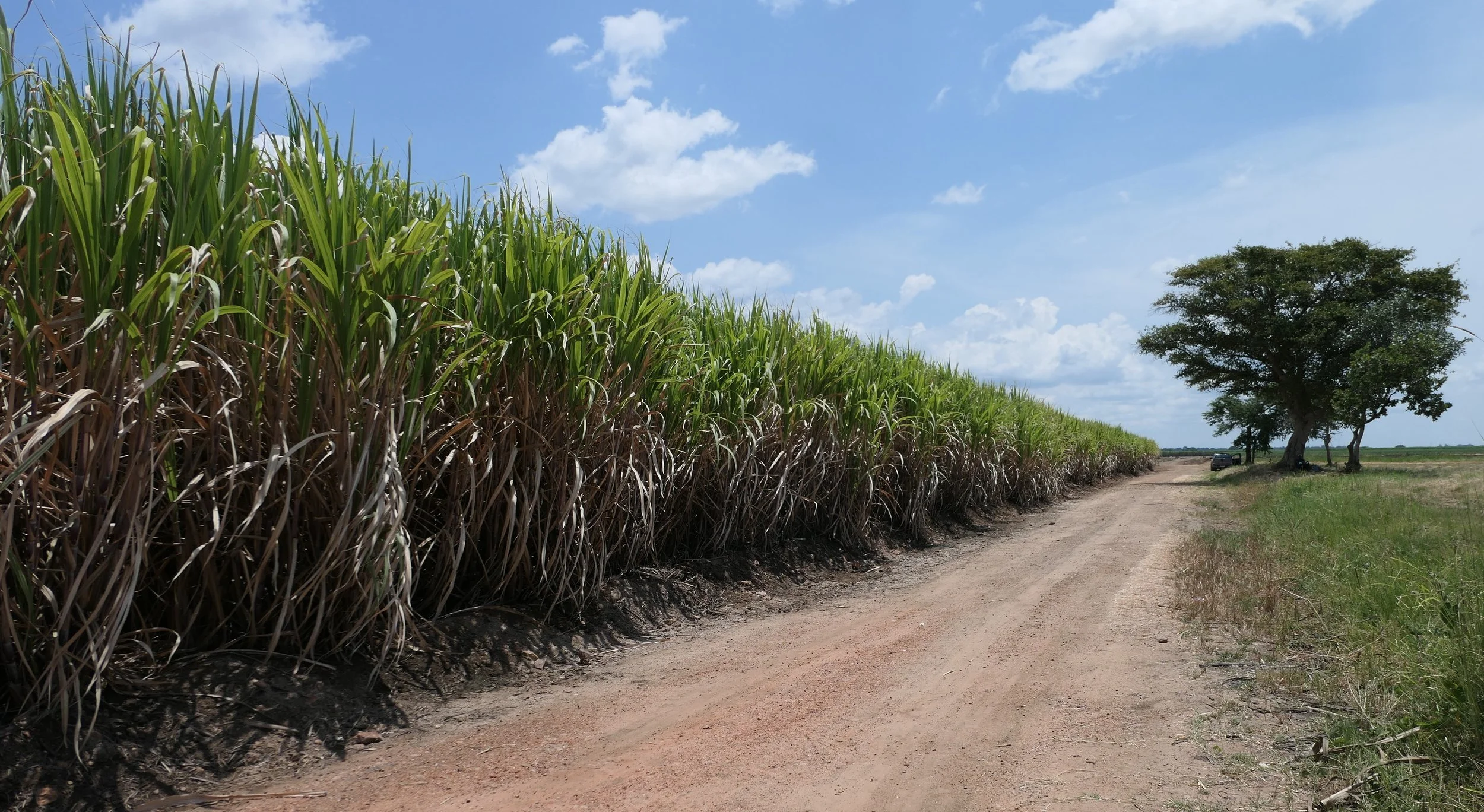
A sugarcane field in subtropical Africa (Zambia)
When thinking about agricultural soils, or more specifically about arable lands, food products such as cereals, vegetables and fruits may come to mind. Upon beginning my research journey in the Paris Basin in France, wheat and maize were the first food products that surfaced in my mind. But as I prepared to move to South Africa, I realized that there was another incredibly common agricultural product whose impact on our soils is easily overlooked: sugar. Yes. What about soils used to produce sugar? Although sugar can be extracted from both sugarcane and sugar beet, sugarcane alone contributes to 80% of the sugar production worldwide. Sugarcane cultivation areas cover up to 1.5 million hectares in Africa and 27 billion hectares worldwide! Hence, it represents an important share of cultivated soils in subtropical and tropical regions. And, surprise, there is very little data on the impact of sugarcane cultivation on soil health - with even less on soil biodiversity.
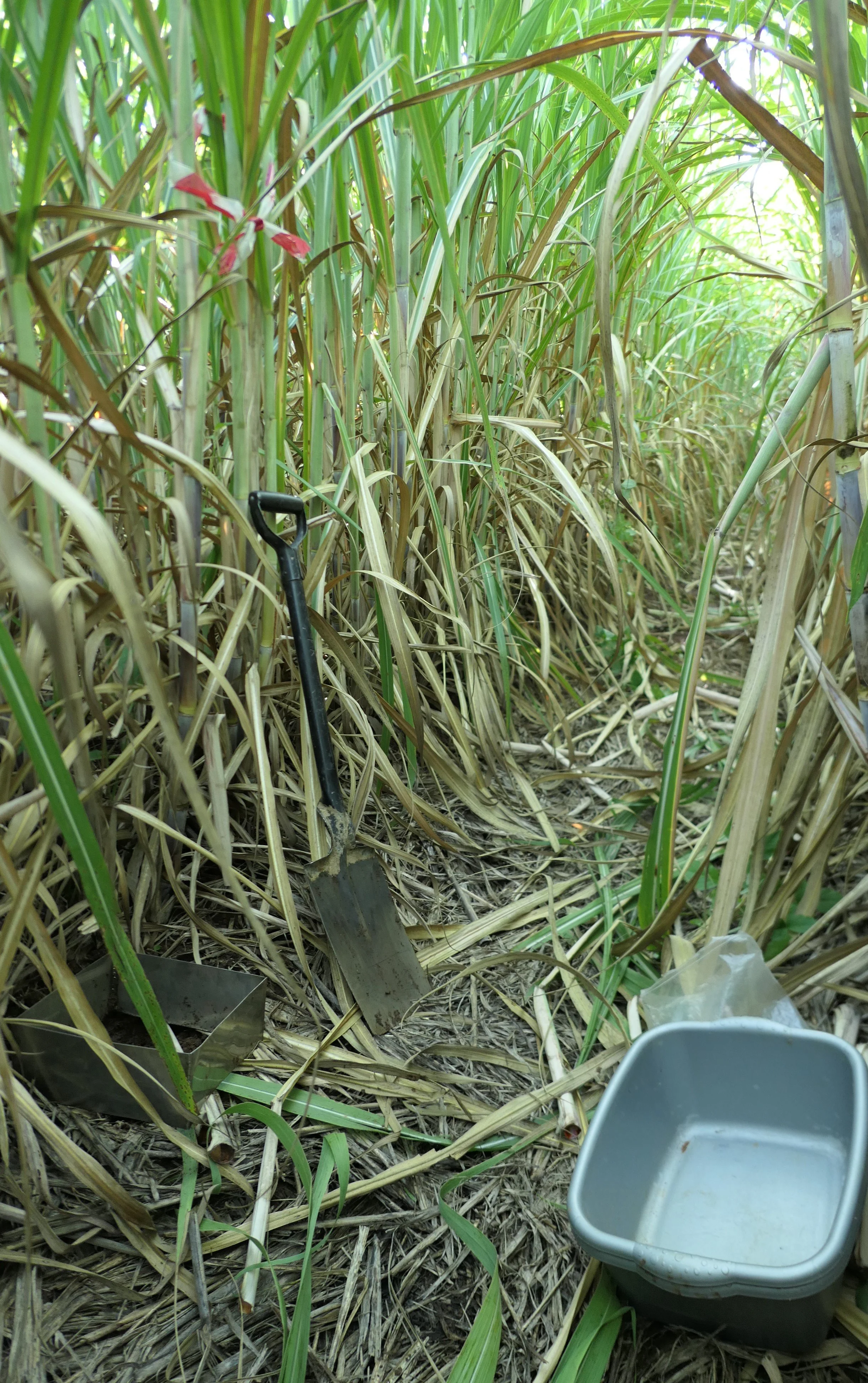
Sampling soil biodiversity in sugarcane fields can be hectic and it’s easy to get lost. Samples are collected on the crop row using shovels, spades, metal frames and corers.
Sugarcane agroecosystems are fascinating and represent a unique environment to study the effect of disturbances on soil biodiversity. At first sight, this giant perennial grass seems to provide relatively stable conditions for soil organisms compared to other crops: it grows to a height of 2 to 4 meters, has a long growth time and undergoes several cycles of harvest and regrowth. However, each harvest is preceded by the burning of the standing cane, and the soil is subjected to deep tillage and left bare before a new plantation is initiated. Over recent years the sugarcane yields have been decreasing and unstable in southern Africa, in part due to degrading soils and extreme climatic events. Given that sugarcane is an important source of local employment, and considering the growing global demand for sugar, this could lead to further soil degradation and biodiversity loss. There is thus an urgent need to assess soil health and soil biodiversity in African sugarcane fields.
In this context, our research project aims to assess soil biodiversity and food webs within sugarcane fields of southern Africa (Zambia, Malawi and Eswatini). Embarking for this adventure, I realized that one must face many challenges to study soil biodiversity in southern African soils and in sugarcane areas. First, there is a massive knowledge gap on soil biodiversity in Africa, with many undescribed species and few local specialists. Then, studies on soil biodiversity in sugarcane fields are scarce, especially with regards to the impact of management practices. However, what can be seen as a challenge is also a great opportunity to address the current limitation in taxonomic knowledge in Africa and to provide a baseline for future assessments using various methods.
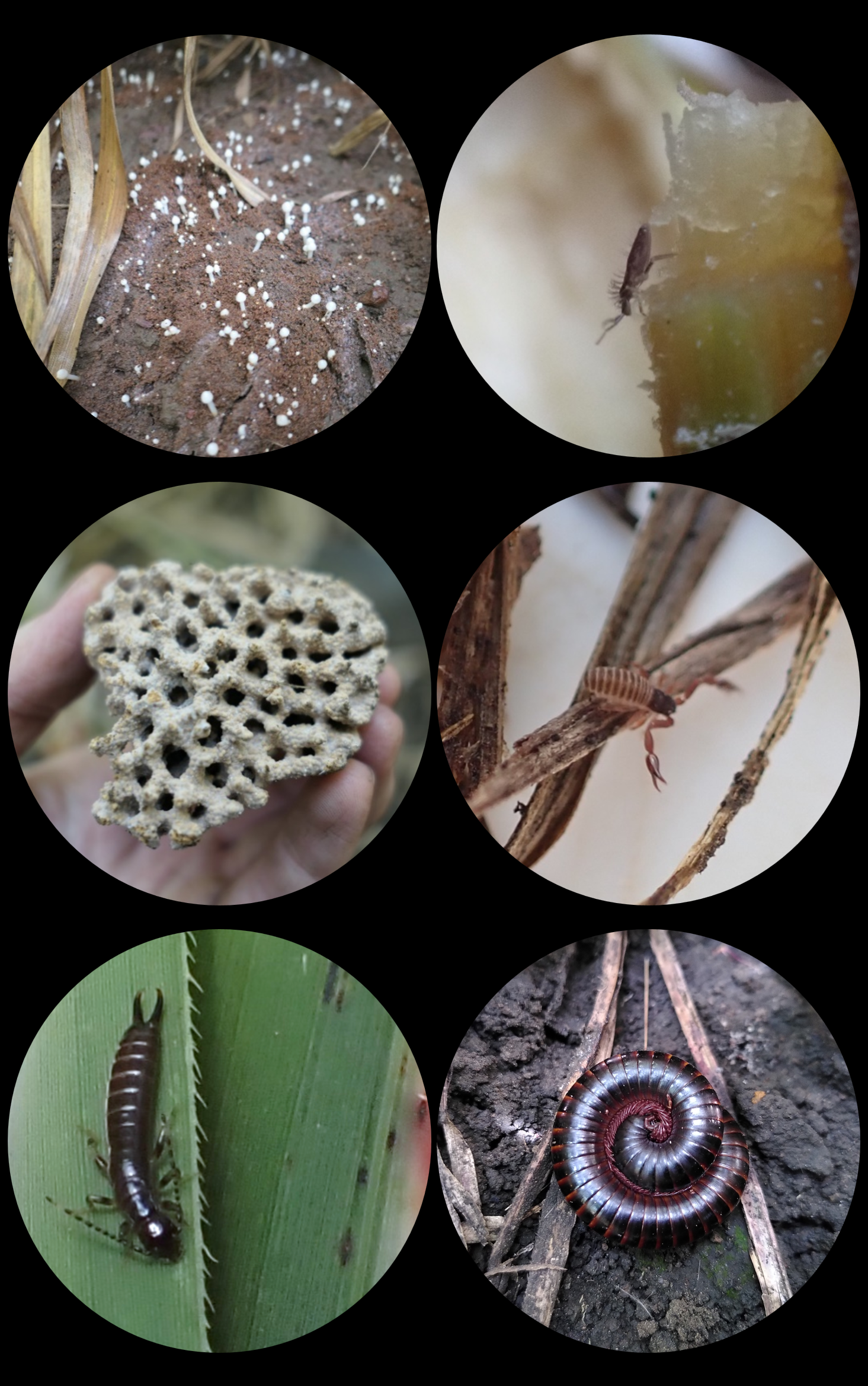
Examples of the soil organisms and structures sampled in sugarcane fields. From left to right and top to bottom: fungi on a termite nest, springtail (Collembola), termite nest, pseudoscorpion (Pseudoscorpionida), earwig (Dermaptera), millipede (Diplopoda). Credits: A. Kummer, S. das Neves & J. Chassain.
Specimens that we collected in sugarcane fields are sent to specialists throughout South Africa, who are eager to discover new species. Aiming towards innovative and relatively faster methods, samples are scanned to train image recognition programs, then some specimens are selected for barcoding and others for stable isotope analyses. This last point is particularly exciting as this will be the first time that complex soil food webs are assessed in sugarcane fields and subtropical areas using stable isotopes.
Overall, our study will provide a baseline understanding of soil biodiversity and food webs in African sugarcane fields and enhance knowledge of how sugarcane production impacts soil biodiversity worldwide. It is an amazing opportunity to assess potential levers to promote soil biodiversity in subtropical areas of Africa. Spoiler alert - the soil biodiversity in sugarcane fields of southern Africa is full of surprises, highly diverse and comprised of many unfamiliar taxa.
Read the project’s first paper here: https://doi.org/10.1016/j.pedobi.2025.151096