
Soil Microbes and Grassland Restoration
Dr. Jennifer Bell, University of Wyoming (United States)
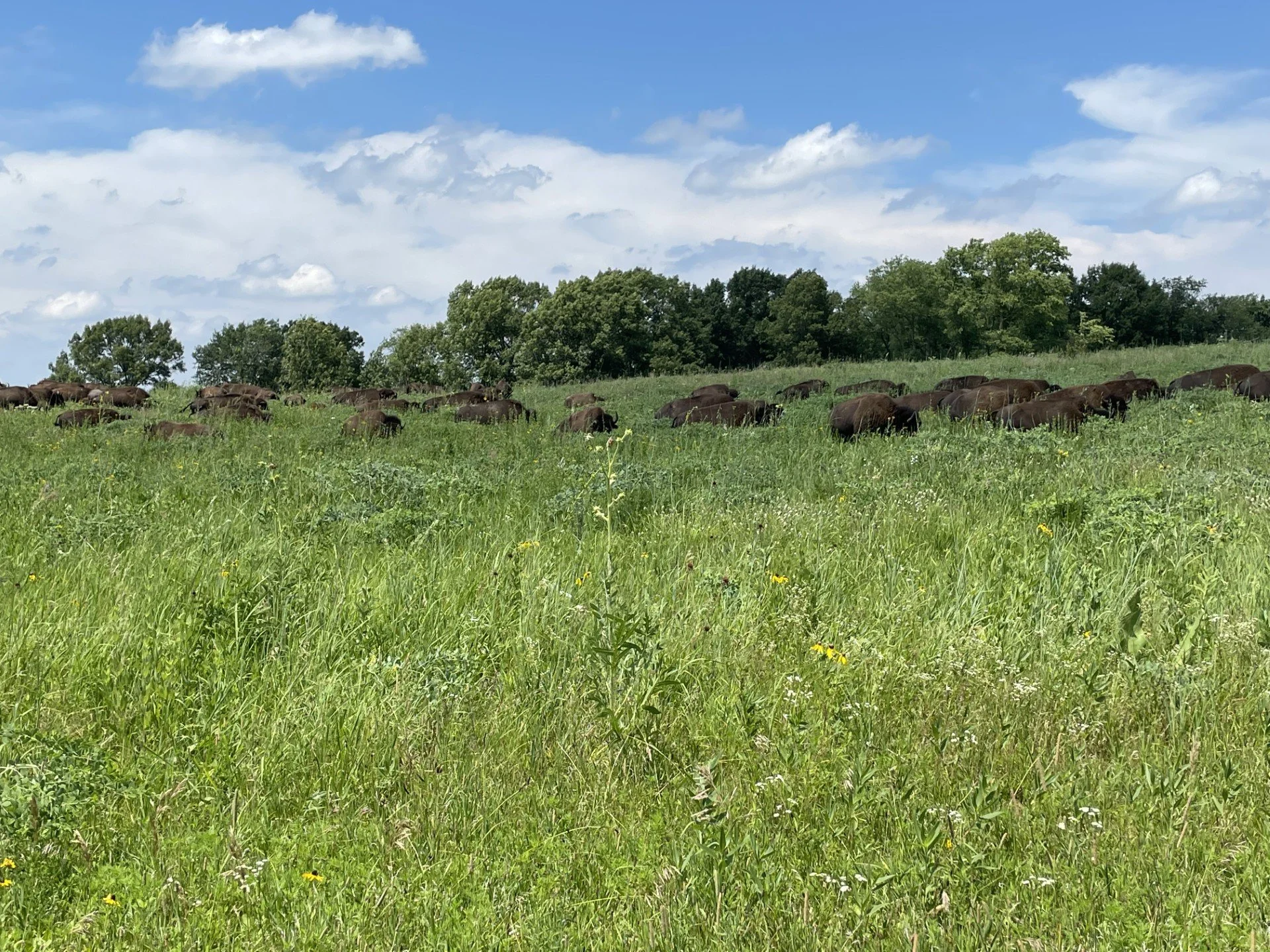
Bison roaming (and laying) at Nachusa Grasslands, Illinois
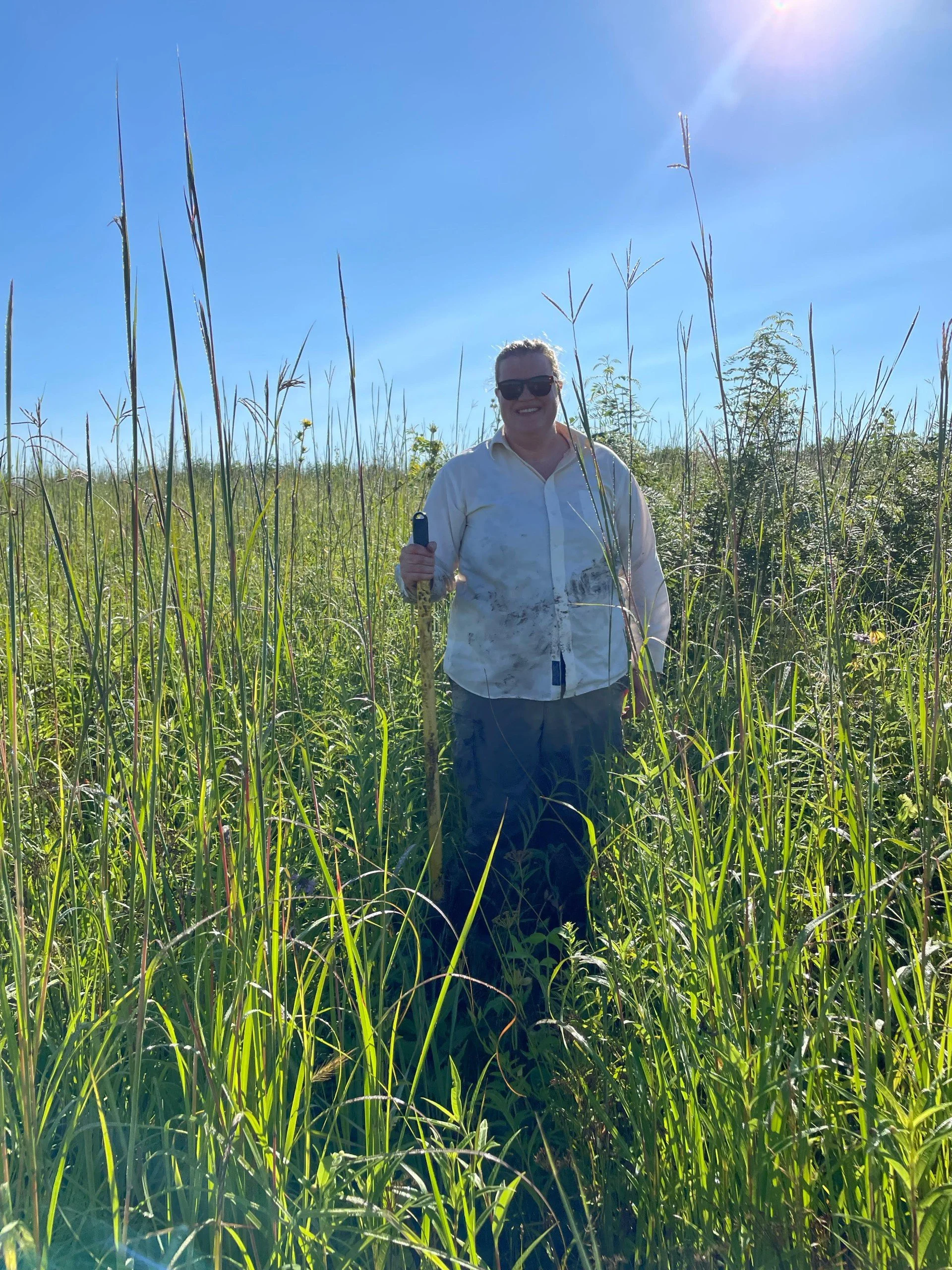
Dr. Jennifer Bell collecting soil samples at Nachusa Grasslands, Illinois
Changes in land use, plant invasion and anthropogenic impacts can cause huge alterations in soil microbial structure and function. These changes can then cascade into larger ecosystem functional shifts, which can then become hard to restore. Further, with climate change, negative impacts are expected to increase, making the need for restoration even greater. I first became interested in the effects of restoration on the soil microbiome structure and function as an undergraduate, working in a soil biogeochemistry lab at the University of Wyoming. During this time, cheatgrass (Bromus tectorum) was invading much of Wyoming’s rangelands. Cheatgrass quickly becomes a monoculture in semi-arid prairies, outcompeting native grasses and significantly decreasing forage availability for both livestock and wildlife. While we did not look at restoring rangelands after invasion, just at the dynamics of cheatgrass invasion was doing, this stoked my interest in invasive species and restoration. Following this interest, I researched the impacts of smooth brome (Bromus inermis), another invasive grass, on mixed grass Canadian prairies during my PhD. We found that these prairies are highly seasonally dominated with the large seasonal fluctuations in climate outweighing the effect of the invasion on ecosystem services. However, smooth brome impacted the soil microbial community assembly processes as well as soil chemistry, which has long term impacts on ecosystem functioning on top of large seasonal fluctuations.
I was finally able to immerse myself in the restoration space during my postdoctoral work on the Morton Arboretum. There, I had the privilege of working on two tallgrass prairie restoration projects. Prior to European colonization, tallgrass prairie covered ~170 million acres in North America, but only about 1% of that remains. This is a unique ecosystem that relies on frequent fire set by humans, but most of it has been converted to agriculture. I was able to work at a large tallgrass prairie restoration site, Nachusa Grasslands (with former GSBI postdoc extraordinaire, Elizabeth Bach), to look at how arbuscular mycorrhizal fungi (AMF) are restored with tallgrass prairie restoration. We found that bison were important drivers of AMF community composition, and diversity recovered quickly after fire.
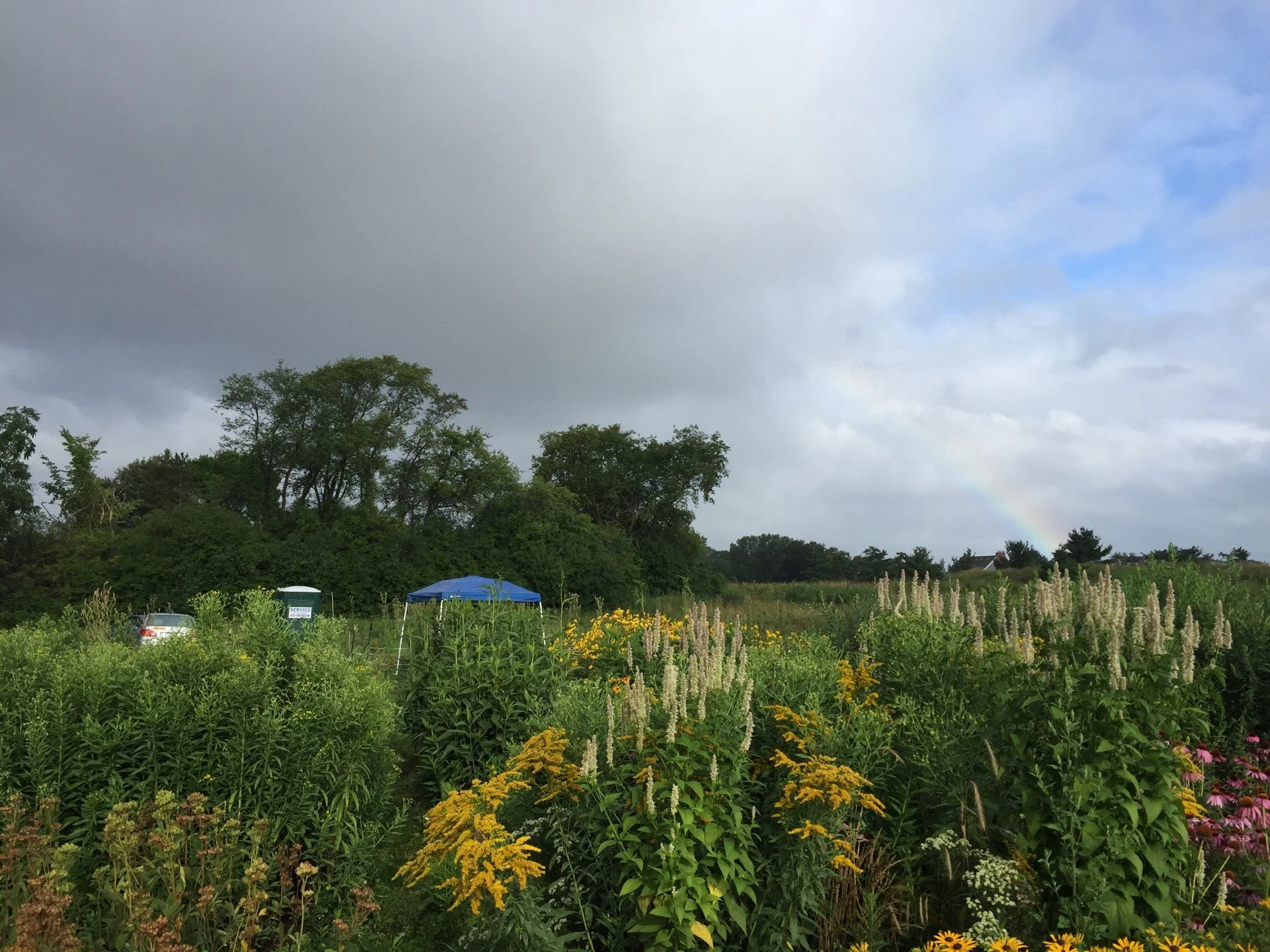
Tallgrass prairie restoration project at Morton Arboretum, Illinois
The second tallgrass prairie restoration project was a large-scale field manipulation at the Morton Arboretum. Andrew Hipp designed an elegant experiment where 127 different tallgrass prairie species were planted both in monoculture and polycultures. Each polyculture was planted with three different levels of phylogenetic diversity (how closely related the plants in the plot were to each other, high diversity or distantly related, medium and low diversity or closely related) and two different levels of trait diversity (high or lots of different functional traits together and low or similar functional traits together). My role was to examine how these levels impacted belowground microbial diversity and functioning. Unfortunately, despite Andrew’s beautiful design, we found that manipulating plant phylogenetic and trait diversity does not influence microbial community structure nor function. We also found that the microbial communities did not differ between monocultures. Instead, we have found that the most important factor in shaping microbial communities is simply plant diversity. It appears it matters not what you plant, but how much biodiversity you incorporate into your restoration!
I am now back at the University of Wyoming. Wyoming’s economy is largely based on mineral extraction and the production of energy. As you can imagine, these activities lead to the ample need for restoration and reclamation. I am currently working on a project involving the use of different soil amendments in coal mine reclamation and another project looking at uranium mine reclamation. The uranium mine ceased operations in the early 1960s, prior to the Surface Mining Control and Reclamation Act of 1977, so the mine was left abandoned. Starting in 2008, the Wyoming Abandoned Mine Lands division began reclaiming the site. So far, we are finding that the reclaimed sites have much lower soil carbon and plant diversity than nearby reference sites. Moving forward we will be sequencing the microbial communities and looking at extracellular enzyme activity in hopes of restoring Wyoming’s rangelands back to proper functioning. Soil and its inhabitants play pivotal roles in restoration, and my lab is excited to continue researching this issue!
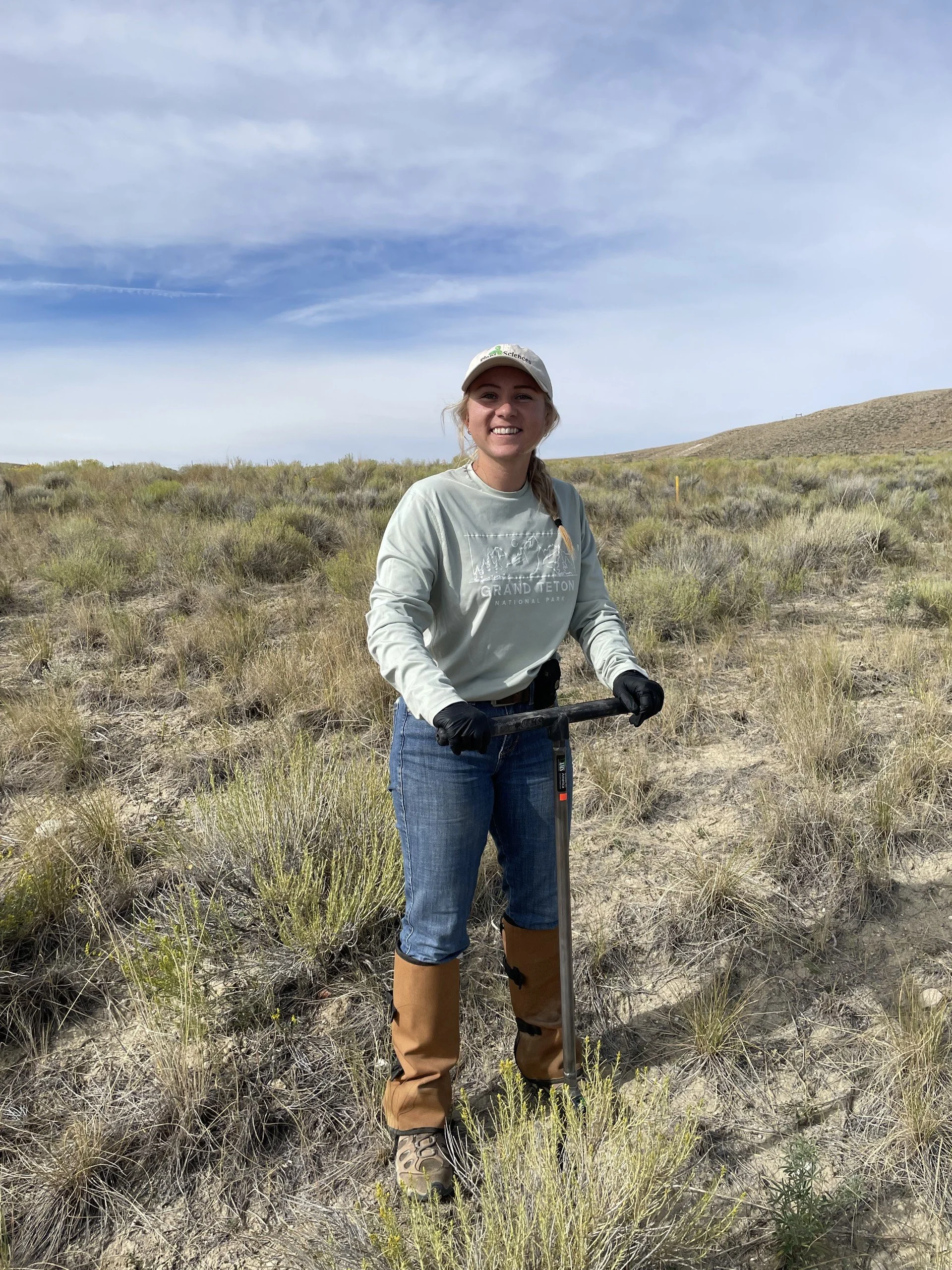
Graduate student, Lindsie Farver, collecting soil samples at a uranium mine reclamation site in Wyoming